
Visa Inc. NYSE:V ended Wednesday’s session slightly lower and traded marginally softer after the closing bell, as investors balanced a broader market pullback (driven by renewed “AI trade” fatigue) with a fresh Visa partnership headline in “agentic commerce” security and the company’s fast-moving push into stablecoin settlement and advisory services.
Visa stock after the bell: where V closed and how it’s trading after hours
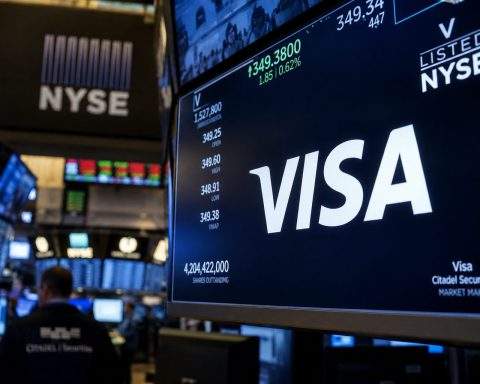
Visa shares closed at $344.41 on Dec. 17, down about 0.2% from the prior close, after trading between an intraday high of $347.79 and intraday low of $343.68. Reported volume was about 7.1 million shares. Visa’s 52-week high is $375.51 and its 52-week low is $299.00.
In after-hours trading, Visa was around $344.00 at 6:00 p.m. ET, down roughly 0.12% from the regular session close. After-hours trading ranged from $344.00 to $344.66 as of that timestamp.
What that tells you at a glance: no major earnings-driven repricing is happening tonight. Instead, the stock’s next move looks more likely to hinge on (1) Thursday morning’s macro data and rates reaction, and (2) how the market digests Visa’s latest “trust layer” announcements around AI-driven commerce and stablecoin rails.
Why Visa dipped today even with company news on the tape
Visa’s day was less about a company-specific shock and more about risk appetite.
U.S. stocks fell broadly Wednesday amid a renewed wave of skepticism around the AI complex—Nvidia slid, Oracle dropped even after seeking to reassure investors, and the pullback bled into index-level weakness. Reuters reported the Dow fell 0.47%, the S&P 500 dropped 1.16%, and the Nasdaq slid 1.81%.
The Associated Press similarly framed Wednesday as Wall Street’s worst day in nearly a month, again pinning much of the pressure on AI-related names and their market weight.
Visa often behaves like a “quality compounder” in this kind of tape—less volatile than high-beta tech—but it’s still an S&P 500 and Dow component, and it’s still sensitive to the macro levers that move consumer spending and travel, especially when yields are shifting.
Today’s biggest Visa headline: securing “agentic commerce” with Akamai
The most notable Visa-specific news dated today is a new collaboration with Akamai aimed at the emerging world of agentic commerce—shopping and paying via AI agents.
Visa and Akamai announced a strategic collaboration integrating Visa’s Trusted Agent Protocol with Akamai’s edge-based behavioral intelligence, user recognition, and bot/abuse protection. The stated goal: give merchants the identity, authentication, and fraud controls to distinguish legitimate AI shopping agents from malicious automation before that activity hits sensitive systems.
Why this matters for Visa investors:
- Trust infrastructure is the monetizable bottleneck. If AI agents start initiating more commerce, the winners likely include platforms that can verify who (or what) is transacting, for whom, and with what permissions—all while keeping fraud losses under control.
- Visa is positioning itself not just as a payments network, but as a policy-and-identity layer that can sit on top of a changing front-end commerce experience.
- Investing.com’s write-up emphasized the partnership’s practical aim: helping merchants identify legitimate AI agents and their intent, link agents to the consumers they represent, and enable secure payment interactions—while also noting Visa’s protocol is intended to work with minimal infrastructure changes.
This is still early-stage in terms of near-term revenue impact, but it’s relevant for how the market values Visa’s “moat” in a world where the checkout experience could look very different by 2026–2028.
The other core narrative in focus: Visa’s stablecoin settlement push
Even though the stablecoin settlement press release is dated Dec. 16, it remains a live catalyst for how investors are thinking about Visa this week—and it’s being used in today’s commentaries and options chatter.
Visa announced it is bringing USDC settlement to U.S. institutions, describing it as a breakthrough for stablecoin integration. The company said its stablecoin settlement volume has accelerated to a $3.5 billion annualized run rate as of Nov. 30.
Two details stand out for “what it changes” in payments plumbing:
- Visa highlighted operational improvements like moving from a traditional five-business-day settlement rhythm to seven-day settlement windows, with potential liquidity-management benefits.
- The initial U.S. launch included partners such as Cross River Bank and Lead Bank settling via USDC on Solana, with broader rollout expected through 2026 (as described in coverage of the announcement).
Also worth noting: Visa’s investor relations newsroom previously announced a Stablecoins Advisory Practice under Visa Consulting & Analytics, aimed at helping banks, fintechs, and merchants plan stablecoin strategy and implementation—explicitly tying the offering to the same $3.5B annualized settlement run rate metric.
Investor takeaway: Visa is trying to ensure that if stablecoins grow (in B2B, cross-border, treasury, or new consumer flows), the company isn’t disintermediated—it’s embedded.
A legal headline investors may have noticed today: a Visa investor suit dismissal
Another “today” item circulating in professional/legal coverage: a Northern District of California order in a securities case involving Visa.
A court order filed Dec. 10 granted Visa’s motion to dismiss with leave to amend and explicitly vacated the hearing scheduled for Dec. 17, 2025. Litigation Support
A Lexology summary (from A&O Shearman’s securities litigation blog) described the court’s ruling as granting a motion to dismiss and finding the complaint did not adequately plead that the alleged omissions caused investor losses.
This isn’t necessarily a near-term price driver, but it’s part of the broader backdrop: Visa continues to operate under ongoing regulatory and litigation scrutiny, even while it wins or narrows certain claims.
Separately, in merchant-fee litigation, Reuters reported earlier this week that major retailers (including Walmart) and trade groups urged a federal judge to reject a proposed antitrust settlement involving Visa and Mastercard, arguing it offers minimal relief on swipe fees and could affect related disputes.
Analyst forecasts and valuation: what Wall Street is implying heading into 2026
Even on a quiet tape, Visa is a heavily covered mega-cap. On valuation and forward expectations, here’s what today’s widely cited aggregators and analyses suggest:
Price targets cluster in the low-$400s
- MarketWatch’s analyst snapshot showed forecasts ranging from $327 to $450, with an average around $401.93 and median around $408 (as shown in its compiled estimates).
- Another compilation (ValueInvesting) listed an average price target of $404.97, with a high estimate of $472.50 and a low estimate of $313.55.
With Visa closing at $344.41, those averages imply mid-teens upside—but the dispersion is meaningful, reflecting uncertainty about how much growth remains in cross-border and how the market prices regulatory risk.
Revenue and EPS growth expectations remain constructive
One forecast snapshot compiled on ValueInvesting shows:
- Revenue estimates around $45.35B (this year) and $49.98B (next year), and
- EPS estimates around $12.92 (this year) and $14.58 (next year).
These aren’t guarantees—they’re consensus-style aggregates—but they help frame why Visa continues to trade like a “premium quality” name even when sentiment rotates away from mega-caps.
Today’s valuation-style argument: “cheaper than it looks”
A Trefis analysis published today argued that while Visa is up about 10% year-to-date, it’s effectively “35% cheaper” than a year ago based on its price-to-sales multiple, and highlighted Visa’s high-margin, cash-generative model as a core part of the thesis. Trefis
What matters before the market opens tomorrow (Thursday, Dec. 18, 2025)
The biggest near-term catalyst for Visa—like most large-cap financial and consumer-exposure stocks—isn’t another company press release overnight. It’s the rates and macro tape in the morning.
1) CPI at 8:30 a.m. ET: inflation data that can move yields quickly
The U.S. Bureau of Labor Statistics’ CPI page lists the Consumer Price Index for November 2025 as scheduled for release on Dec. 18, 2025 at 8:30 a.m. Eastern Time.
Why it matters for Visa:
- Hotter CPI → higher yields → tougher “multiple” environment for high-quality compounders.
- Cooler CPI → yields can fall → supportive for broad equities, and often a tailwind for steady-growth mega-caps.
Important nuance: Reuters has emphasized that recent U.S. data collection has faced disruption, leading to gaps/delays that can complicate interpretation of inflation readings. Reuters
Reuters also noted Wednesday that markets have been trying to assess delayed data after a 43-day federal government shutdown, with investors waiting for Thursday’s inflation reading.
2) Jobless claims and the Philadelphia Fed survey: a “growth temperature check”
Market calendars and previews for Thursday highlight not only CPI but also labor and manufacturing indicators. Investing.com’s preview of Thursday’s events lists CPI, initial jobless claims, and the Philadelphia Fed Manufacturing Index as key releases that could sway markets.
For the Philadelphia Fed specifically, the Philadelphia Fed’s own events calendar shows the Manufacturing Business Outlook Survey dated Dec. 18, 2025 at 8:30 a.m.
Why it matters for Visa:
- Visa’s volumes ultimately reflect commerce activity. Signs of cooling growth can shift expectations for spending and travel.
- Softer macro data can also reinforce a “rate cuts are coming” narrative—which can lift broad equities even if growth expectations soften, depending on the mix.
3) Watch levels from today’s range—and why $350 is the psychological pivot
If you’re tracking Visa tactically into the open, today’s tape provides clean reference points:
- Resistance zone: Today’s intraday high near $347.79 (and the round-number $350 above it).
- Support zone: Today’s intraday low near $343.68 and the after-hours floor around $344 as of 6 p.m. ET.
A CPI-driven rates move can push the stock through either side of that band quickly—especially because premarket liquidity is thinner and the payments group can trade “with the market” during macro shocks.
The bottom line heading into Thursday
Visa stock is ending Dec. 17 in a steady-but-cautious posture: slightly down on the day, slightly softer after-hours, and waiting on a macro catalyst rather than reacting to a single company-specific surprise.
But the company’s headline flow is anything but quiet. Today’s Akamai collaboration shows Visa leaning into AI-commerce identity and fraud controls, while this week’s stablecoin announcements reinforce that Visa is actively upgrading its settlement and advisory capabilities to stay central—even if payment rails evolve.
The next “real” test arrives before the opening bell: CPI and related data at 8:30 a.m. ET will likely determine whether Visa opens Thursday with a tailwind, a headwind, or more of the same sideways grind. Bureau of Labor Statistics+2Federal Reserve Bank of Philadelphia+2
Related articles: NYSE:V