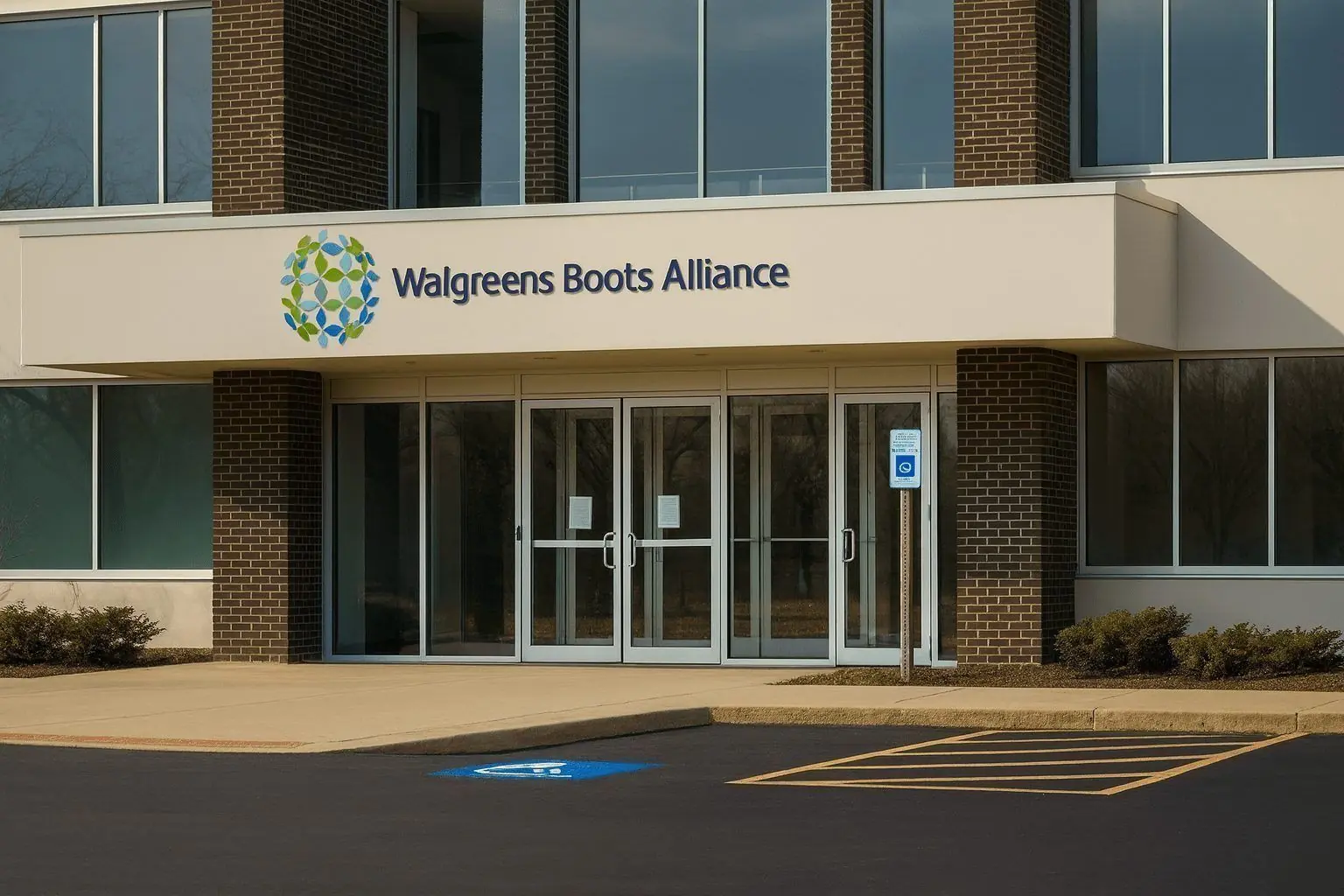
As of December 7, 2025, WBA stock is no longer a normal stock at all. Walgreens Boots Alliance has been taken private by Sycamore Partners, its shares have been delisted from Nasdaq, and the old “WBA” ticker is now basically a historical artifact. Walgreens Boots Alliance+2Stock Titan+2
Yet WBA keeps popping up in headlines — from a December 3 data breach to fresh analysis of its store real estate and even AI-driven “technical signals” published on December 6. Breachsense+2Commercial Observer+2
This piece rounds up the latest news, forecasts and analyses as of 07.12.2025 (December 7, 2025) and explains what that actually means for anyone who used to own — or still thinks they can buy — WBA stock.
Key Takeaways on WBA Stock (December 2025)
- WBA is no longer publicly traded. Sycamore Partners completed its acquisition on August 28, 2025, and Walgreens Boots Alliance common stock has ceased trading and been delisted from Nasdaq. Walgreens Boots Alliance+2Stock Titan+2
- Shareholders received $11.45 per share in cash, plus a non‑transferable right that may pay up to $3.00 per share from future sales of VillageMD-related assets. Walgreens Boots Alliance+2Reuters+2
- Final trading price was around $11.98 per share before the merger closed and trading was halted in late August. Stock Titan
- Recent headlines focus on a December 3 data breach, real‑estate repositioning of former Walgreens sites, and ongoing legal/regulatory and credit risks that now matter more to bondholders and private‑equity watchers than stock traders. SP Global+4Breachsense+4Commercial Observ…
- Most public stock forecasts for WBA (price targets, AI models, etc.) are now largely academic, because the buyout fixed the exit price for common shareholders. TIKR.com+4Fintel+4Ticker Nerd+4
Is WBA Stock Still Trading Today?
Short answer: no.
The long answer is a small corporate soap opera:
- On March 6, 2025, Walgreens Boots Alliance announced a definitive agreement to be acquired by an entity affiliated with Sycamore Partners for $11.45 in cash per share, plus a non‑transferable “Divested Asset Proceeds Right” (DAP Right) worth up to $3.00 per share tied to monetizing its VillageMD stake. Walgreens Boots Alliance+1
- The total transaction value was estimated at up to $23.7 billion, including debt. Reuters+1
- Shareholders approved the deal on July 11, 2025. Walgreens Boots Alliance+1
- According to Nasdaq’s corporate actions bulletin, the merger closed on August 28, 2025; WBA was halted after the August 27 after‑hours session and suspended from Nasdaq effective August 29. NASDAQ Trader+1
StockTitan and other market feeds record $11.98 as the effective last trading price before delisting, and explicitly note that WBA common stock has ceased trading and been delisted. Stock Titan+1
So if you’re looking at a broker app today and see “WBA” as if it were a live Nasdaq stock, that’s either stale data or some oddity in how the platform handles delisted tickers. For normal retail investors, you cannot buy or sell WBA stock anymore; the action moved to cash payouts, CVR‑style rights, and the credit markets.
How WBA Stock Got Here: 2025’s Final Act as a Public Company
From Turnaround Hopes to Deep Trouble
At the start of 2025, WBA was pitched as a high‑risk turnaround story:
- In January 2025, Walgreens reported better‑than‑expected Q1 earnings and a restructuring plan (including closing roughly 1,200 stores), triggering a 20–27% one‑day share price jump and topping the S&P 500 that session. BioSpace+1
- Days later, the U.S. Department of Justice sued Walgreens for allegedly filling “millions” of unlawful prescriptions over more than a decade, sending the stock down over 12% in a single day. Investopedia
- On January 30, Walgreens suspended its quarterly dividend — a big blow for income investors who’d been clinging to the stock for its high yield. Reuters
On the credit side, rating agencies were already nervous:
- S&P Global downgraded Walgreens to ‘BB–’ (junk territory) in late 2024, citing weak earnings and high leverage. SP Global
- In February 2025, Moody’s reaffirmed speculative‑grade ratings but cut the outlook to negative, again flagging leverage and execution risks in the healthcare pivot. Investing.com
By mid‑February, Walgreens had become a sort of case study in how not to bolt a healthcare strategy onto a legacy retail chain — under pressure from litigation, shrinking reimbursement rates, shifting consumer behavior, and a big but messy bet on primary‑care player VillageMD. Fortune+1
Enter Sycamore Partners
Rumors of a private‑equity rescue swirled early in 2025. On March 4, reports that Sycamore Partners was close to a roughly $10 billion take‑private deal sent WBA shares up around 5–6%. Investopedia+1
Two days later, the deal became official:
- Sycamore agreed to pay $11.45 per share in cash, which Reuters described as about an 8% premium to the immediate pre‑announcement price and around a 30% premium to the battered late‑2024 price base. Reuters+1
- Walgreens itself emphasized that, when you include the potential $3 per‑share payout from VillageMD monetization, the total package represented up to a 63% premium vs. the $8.85 closing price on December 9, 2024, the day before media first reported deal talks. Walgreens Boots Alliance+1
Throughout Q2 and Q3 2025, Walgreens kept reporting numbers but with the looming buyout shaping everything:
- In Q2 FY2025, Walgreens beat EPS expectations (adjusted $0.63 vs. consensus around $0.53), but earnings were still down nearly 50% year‑on‑year, and management withdrew full‑year guidance given the pending transaction. Nasdaq+1
- In Q3 FY2025, sales rose about 7.2% year‑over‑year to roughly $39 billion, but operating income slipped and the company recorded more impairment charges. Walgreens Boots Alliance+2BioSpace+2
By June 2025, the company was openly telling investors that the Sycamore deal was expected to close in the second half of 2025, and media coverage shifted from “Is Walgreens cheap?” to “How will private equity carve this thing up?” RTTNews+2Fortune+2
Deal Terms: What WBA Shareholders Actually Got
For people who held WBA through closing, the economics are straightforward on paper and messy in practice.
1. Cash Consideration
- Each share of WBA common stock was converted into $11.45 in cash at closing. Walgreens Boots Alliance+1
- That was locked in once the merger became effective on August 28, 2025. Walgreens Boots Alliance+2Walgreens Boots …
2. Divested Asset Proceeds Right (DAP Right / CVR‑like instrument)
- For every share of WBA, shareholders also received one non‑transferable Divested Asset Proceeds Right, entitling them to up to $3.00 in additional cash per share. Walgreens Boots Alliance
- Those payments, if any, depend on how successfully Walgreens (now under Sycamore) monetizes its debt and equity interests in VillageMD/Summit Health/CityMD. Walgreens Boots Alliance+2Financial Times+…
- There’s no guarantee that holders will receive the full $3.00; it’s contingent on future asset sales and debt recovery.
Because these rights are non‑transferable, they don’t trade on an exchange. You can’t just log in and sell your DAP Right the way you might trade a typical CVR. They now sit in the background of ex‑shareholders’ portfolios as a long, murky “maybe.”
3. Bondholders and the Mega Tender Offer
While equity holders focused on the buyout price, the debt side saw its own flurry of activity:
- Sycamore’s acquisition vehicle, Blazing Star Merger Sub, Inc., launched a series of tender offers for nearly all of WBA’s outstanding notes, from 2025 maturities out to 2050, plus a key 2042 note issued by Walgreen Co. Stock Titan+2PR Newswire+2
- Several deadline extensions and pricing updates followed in August, with participation rates reportedly above 85–98% across most series before settlement on or around the closing date. Stock Titan
In other words, Sycamore didn’t just take the stock private; it restructured the capital stack, buying out a big chunk of the legacy bondholders at negotiated prices.
Latest WBA‑Related News as of December 7, 2025
Even without a public stock, Walgreens Boots Alliance keeps generating headlines. Here’s what’s new around and just before 07.12.2025.
1. December 3, 2025 – Data Breach
Cybersecurity trackers report a data breach at Walgreens Boots Alliance discovered on December 3, 2025, attributed to the threat actor “TridenLocker.” The incident allegedly involves a 2.7 GB data leak connected to walgreensbootsalliance.com. Breachsense
For former WBA equity holders, this doesn’t change your payout, but it raises operational and reputational risk for the private company — something that could matter for creditors and for any future IPO of carved‑out assets.
2. Early December 2025 – Walgreens Real Estate “Up for Grabs”
A Commercial Observer feature from this past week highlights how the Sycamore deal leaves the PE firm in control of a prime portfolio of corner‑lot Walgreens locations across the U.S. Commercial Observer
Key ideas from that coverage:
- With WBA now private, Sycamore can repurpose or sublease stores to other uses like mini‑grocers, discount retailers, or urgent‑care clinics.
- Walgreens’ real estate is framed as one of the core sources of value in the breakup—think less “retail brand” and more “optionality on a lot of hard corners in good locations.”
For anyone trying to understand where value might show up for the DAP Rights or future spin‑offs, these real‑estate moves are worth watching.
3. December 6, 2025 – AI Technical Analysis Still Looking at “WBA”
Stock Traders Daily published a December 6, 2025 piece titled “Technical Reactions to WBA Trends in Macro Strategies,” using AI‑driven technical models on “Walgreens Boots Alliance Inc. (NYSE: WBA)”. Stock Traders Daily
Ironically, many of the trading parameters in that report are “N/A”, which fits the reality: WBA no longer trades on a major exchange. But it shows that quant and AI platforms are still running historical price series, and some may not yet be fully wired to flag delisted tickers as “game over.”
Treat any live‑trading “signals” on WBA with extreme skepticism unless you’ve verified where that ticker is actually trading, if at all.
4. Fall 2025 – The Post‑Buyout Vision
Several fall‑2025 articles dissect what Walgreens looks like under private ownership:
- Becker’s Healthcare and other outlets report that WBA has effectively been split into five standalone companies: Walgreens (U.S. retail), The Boots Group (UK/International retail), Shields Health Solutions, CareCentrix, and VillageMD. Becker’s Hospital Review+2PYMNTS.com+2
- The American Hospital Association highlights four big strategic questions: how aggressively Walgreens will shrink its retail footprint, whether it can make primary care profitable, how it handles legacy legal liabilities, and what long‑term role Boots plays in the portfolio. American Hospital Association+1
This is less “stock news” and more private‑equity case study, but it’s the logical sequel to the 2025 stock drama.
What Happened to All the WBA Stock Forecasts?
Before the buyout closed, WBA had a small cottage industry of price targets and “fair value” models. Those haven’t all vanished from the internet, but they’re mostly fossil record now.
Wall Street Price Targets
Sites aggregating analysts’ calls show that, heading into 2025:
- The average 12‑month price target sat roughly around $10–12 per share, with lows in the high‑single digits and highs around $14–15. Fintel+1
- One such summary (TickerNerd) listed a median target of $11.45 — almost exactly the eventual cash buyout price — and categorized the stock as a value name with mostly Hold ratings and a mix of Underperform and Buy. Ticker Nerd
In hindsight, Wall Street was basically saying: “This is a troubled company that probably trades around $11 unless something big happens.” Something big happened.
Algorithmic & AI‑Based Forecasts
Algorithmic forecast sites kept churning out numbers through 2025:
- Some models projected modest upside to around $11–12 with low daily volatility, as of early December 2025. Panda Forecast+2Panda Forecast+2
- Others, like TIKR’s guided valuation model, highlighted weak long‑term total return potential (even negative in one 2027 scenario), based on low revenue growth (under 2% annually) and thin operating margins around 1.4%. TIKR.com
And yet all of that became academic the moment Sycamore locked in the $11.45 + DAP Right structure. Once a definitive cash deal is signed and closes, equity upside is capped; you’re no longer betting on the fundamentals, just on whether the deal closes and whether any CVR‑style extras pay out.
Forecasts That Still Matter (Sort Of)
The only “forecasts” that still carry real economic weight for former shareholders now are:
- How much value Sycamore can squeeze from selling or restructuring VillageMD and related assets, which drives the DAP Right payouts. Walgreens Boots Alliance+1
- Credit research and ratings outlooks for Walgreens’ remaining debt under private ownership — these will affect refinancing costs and, indirectly, how much cash is left over for equity owners deep in the capital structure. Investing.com+2SP Global+2
Everything else — AI signals, old 2026 price targets, 2030 valuation models — is mostly historical trivia unless WBA or one of its carved‑out pieces returns to the public markets.
What Can Investors Actually Do Now?
Let’s translate this into practical language:
1. Former Common Shareholders
If you held WBA stock through closing, you should now have:
- Cash from the $11.45 per share merger consideration.
- A non‑transferable DAP Right attached to your old position, which might yield cash over time depending on how VillageMD and related assets are monetized. Walgreens Boots Alliance+1
There is no liquid market for these rights, so your main choices are essentially: hold them, forget about them, and occasionally check updates from Sycamore/Walgreens or class‑action law firms tracking CVR‑like payouts.
2. Bondholders and Credit Investors
If you hold WBA or Walgreen Co. notes:
- Many issues were already bought back via tender offers linked to the merger, with high participation rates. If you didn’t tender, you’re now a creditor to a highly leveraged, private company controlled by a PE firm — a different risk profile than a large public blue chip. Investing.com+3Stock Titan+3PR Newswire+3
- Ratings remain speculative grade, and the business still faces litigation, store closures, and intense competition. Fortune+3SP Global+3Investopedia+3
This is more of a distressed/leveraged credit story than a sleepy bond.
3. Equity Investors Looking for “The Next Walgreens”
If you’re simply wondering where to deploy capital now that WBA is gone from the public universe, the relevant comparables are other listed pharmacy and retail healthcare names, not WBA itself. Think:
- U.S. retail and pharmacy peers
- Healthcare services companies and real‑estate‑heavy retailers
- Any future IPO or spin‑off Sycamore might launch from the Walgreens, Boots, or Shields/CareCentrix/VillageMD assets down the line. Becker’s Hospital Review+2Financial Times+…
Those are separate research projects with their own risks, but that’s where the live tickers are.
The Bigger Story: Walgreens as a Private‑Equity Experiment
Stepping back, 2025’s WBA saga is less about a single stock and more about:
- How a company that was once worth over $90 billion could see its market value sink to under $10 billion in roughly a decade. Fortune+1
- How aggressive M&A (Boots, VillageMD, Summit Health), opioid and prescription‑control litigation, and delayed store rationalization turned a “boring dividend stock” into a high‑beta restructuring bet. Fortune+2Investopedia+2
- How private equity now tries to unlock value by doing, in private, the radical surgery that public‑market investors no longer trusted management to execute in public.
For everyday investors, the main WBA lesson by December 2025 is surprisingly simple:
Once a definitive cash buyout for a troubled stock is signed and closes, the “stock story” ends.
What remains — covenants, credit spreads, asset sales, data breaches, and store re‑tenants — belongs more to bankers and bond analysts than to stock pickers.