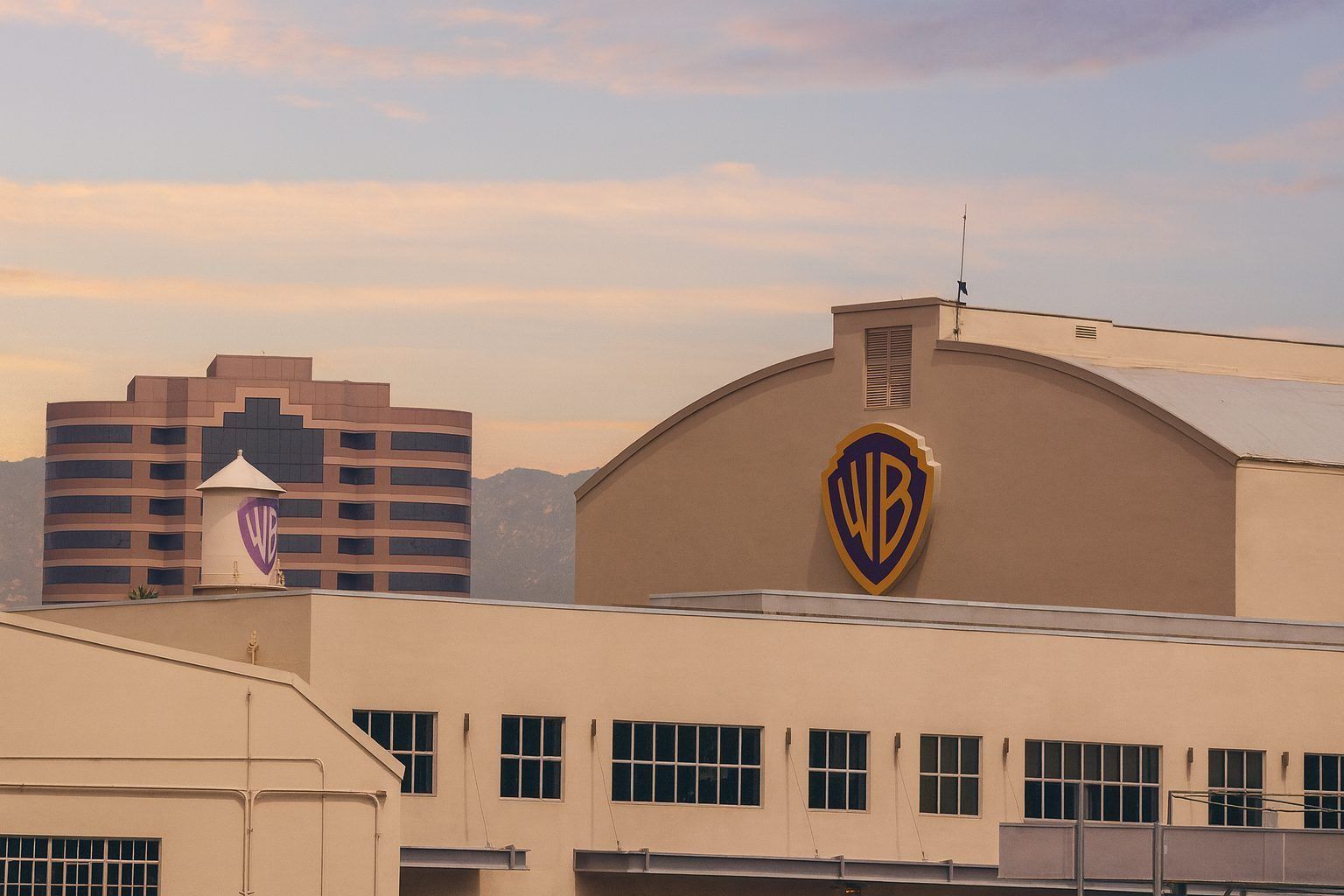
Warner Bros. Discovery, Inc. Series A shares (NASDAQ: WBD) head into Monday’s U.S. session as one of Wall Street’s most event‑driven names, caught between a record‑size takeover bid from Netflix and mounting political and regulatory scrutiny.
After a powerful year‑to‑date rally and a fresh round of headlines over the weekend, here’s what traders and longer‑term investors need to know about WBD stock before the market opens on December 8, 2025.
Quick takeaways for WBD before the bell
- Stock near 52‑week highs: WBD opened Friday at $26.08, up about 6.3% and trading close to its 52‑week high of $26.10, after a roughly 130% year‑to‑date surge driven by takeover speculation and improving fundamentals. MarketBeat+1
- Deal values WBD above the current price: Netflix has signed a definitive agreement to acquire Warner Bros. (studios plus HBO/HBO Max) for an equity value of $72 billion and enterprise value of $82.7 billion, equating to $27.75 per WBD share: $23.25 in cash plus $4.50 in Netflix stock.WV News+3Los Angeles Times+3InvestmentNews… At Friday’s $26.08 level, that implies roughly 6–7% headline upside before factoring in risk.
- Premarket pullback on Trump comments: Early Monday, WBD is indicated down about 1.7% in premarket trading after U.S. President Donald Trump said he intends to be involved in the merger review and warned the combined market share “could be a problem.”CoinCentral+2Reuters+2
- Regulatory and legal pressure rising: A shareholder‑rights firm (Monteverde & Associates) has launched an investigation into whether WBD’s board secured a fair price, while Paramount/Skydance has publicly complained in a letter to the board that its own rival bid was not treated fairly.WV News+2The Times of India+2
- Valuation debate is intense: Despite takeover excitement, WBD now trades at a triple‑digit price/earnings multiple (around 120–130x) and is flagged as overvalued by ~22% in some discounted cash flow models, which put intrinsic value near $20 per share.Longbridge SG+1 Algorithmic models cited by Bitget cluster in the $19.60–$20.29 range.Bitget
- Analysts still say “Moderate Buy”, but price targets lag: MarketBeat data show an overall “Moderate Buy” consensus with an average target around $21.9, now below the actual share price.MarketBeat+1
In short: WBD is trading like a merger‑arbitrage story with stretched valuation, rich upside if the Netflix deal closes on current terms, and meaningful downside risk if politics or regulators derail it.
Market backdrop: a calm tape around a noisy stock
Before zooming in on WBD, it helps to frame the broader tape:
- U.S. stock futures are modestly higher this morning as investors wait for this week’s Federal Reserve rate decision, with S&P 500 and Nasdaq futures up roughly 0.2–0.3% and the index sitting just below a record high.Investopedia+1
In other words, the macro backdrop is constructive but not euphoric — which makes WBD’s stock action even more dominated by deal news, not by the cycle.
Premarket snapshot: WBD cools after a euphoric run
On Friday:
- WBD opened at $26.08, up about 6.3% and effectively at its 52‑week high.
- MarketBeat’s snapshot shows WBD’s market cap around $64.6 billion, P/E near 137x, and a 52‑week range of $7.52–$26.10.MarketBeat
- Longbridge/S Simply Wall St note the stock is up around 130% year to date, making it one of the top performers in U.S. media.Longbridge SG
Monday premarket:
- CoinCentral reports WBD shares are down about 1.7% in premarket trading following Trump’s weekend antitrust comments, while Netflix is slightly higher.CoinCentral
- InvestmentNews also notes Netflix stock was about 1.5% higher premarket after Friday’s 3% drop on the deal announcement, reflecting some relief that the market may be reassessing the cost and synergies.InvestmentNews
That leaves WBD trading below the $27.75 deal price, but not by a wide margin — a classic “tight spread” that can widen quickly on bad news.
Inside the Netflix–Warner Bros. Discovery deal
Deal structure and price
According to company statements and coverage from the Los Angeles Times and InvestmentNews, the key terms are:WV News+3Los Angeles Times+3InvestmentNews…
- Equity value: ~$72 billion.
- Enterprise value: ~$82.7 billion (including WBD’s substantial debt).
- Per‑share consideration:
- $23.25 in cash, plus
- $4.50 in Netflix common stock,
for a total of $27.75 per WBD share at signing.
- Termination fee: Netflix has agreed to a multibillion‑dollar breakup fee (reported around $5–5.8 billion) if regulators ultimately block the transaction.Bitget+1
At Friday’s $26.08 level, that offer implies roughly $1.67 of gross upside, or about 6–7%, before adjusting for:
- Fluctuations in Netflix’s share price (which affect the stock portion), and
- The probability that the deal closes on current terms.
What’s actually being sold?
The deal is targeted specifically at Warner Bros.’ studios and direct‑to‑consumer streaming:
- Netflix would acquire the film and TV studios, HBO and HBO Max, and related streaming services.Los Angeles Times+1
- Linear cable networks, including CNN, TNT, HGTV, Food Network, and others, will be separated into a new, publicly traded company called Discovery Global, expected around mid‑2026.Los Angeles Times+1
From WBD’s perspective, shareholders are effectively being paid for the premium studio and streaming assets while the legacy networks are carved out into their own entity.
Timeline
The companies have guided that:Los Angeles Times+2InvestmentNews+2
- The Discovery Global spin‑off will occur first, likely in Q3 2026.
- The Netflix–Warner Bros. deal is expected to close in the second half of 2026, subject to shareholder votes and regulatory approvals in the U.S. and overseas.
That long runway is why WBD still trades at a discount to the deal price — investors are being asked to price almost two years of closing risk.
Political and regulatory risk moves to center stage
Trump’s warning: “could be a problem”
On Sunday, President Trump told reporters he expects to be involved in the decision on whether the Netflix–WBD deal is approved, pointing to the combined company’s market share and saying it “could be a problem.”Reuters+2Mobile World Live+2
Key points from multiple reports:
- Trump confirmed he recently met Netflix co‑CEO Ted Sarandos.Mobile World Live+1
- He signaled that the Justice Department and other regulators will scrutinize whether the merger concentrates too much power in streaming video.Reuters+1
- CoinCentral notes WBD shares fell 1.7% in premarket trading after the comments, while Netflix gained around 1%.CoinCentral
Trump’s remarks don’t guarantee the deal will be blocked, but they raise the perceived hurdle rate and help explain Monday’s early risk‑off move in WBD.
Lawmakers, unions and Hollywood pushback
Opposition isn’t only coming from the White House:
- The Los Angeles Times and other outlets highlight growing concern from unions and industry groups that the deal could further concentrate power over content and jobs in Hollywood.Los Angeles Times+1
- Sen. Elizabeth Warren has described the deal as an “anti‑monopoly nightmare,” according to coverage cited in the Wikipedia summary of the proposed acquisition.Wikipedia
- Hollywood unions including the Writers Guild and SAG‑AFTRA are calling for rigorous antitrust review and, in some cases, outright opposition.Wikipedia
Regulators like the U.S. Justice Department and the European Commission will ultimately weigh these concerns, but sustained political heat can lengthen timelines and increase the odds of structural remedies or conditions.Mobile World Live+1
Shareholder lawsuits and rival bidders
Legal and competitive noise adds another layer of uncertainty:
- Monteverde & Associates, a class‑action firm, announced it is investigating whether WBD directors breached fiduciary duties by agreeing to the Netflix terms, and explicitly cites the $23.25 cash + $4.50 stock consideration.WV News
- Paramount/Skydance has publicly argued its own bid — reportedly in the $28–$30/share zone, including a $30/share proposal after Netflix’s offer — was superior and not fairly considered.Seeking Alpha+2The Times of India+2
For WBD stock, this mix of political, regulatory, and legal friction is exactly what deal‑arbitrage traders are trying to handicap when they decide whether a ~6% spread is attractive.
Fundamentals still matter: How healthy is WBD without the deal?
Latest earnings snapshot
WBD’s latest reported quarter (Q3 2025) gave a mixed picture:
- Earnings: The company reported a loss of $0.06 per share, missing one consensus estimate of a $0.04 loss, though some other services had expected a wider loss.Yahoo Finance+1
- Revenue: Around $9.05 billion, slightly below analyst expectations of ~ $9.17 billion and down about 6% year‑on‑year.MarketBeat+1
- Margins: Net margin was just over 1%, highlighting how thin profitability remains despite cost cuts.MarketBeat
Segment trends
From WBD’s own communications and third‑party analyses:Warner Bros. Discovery IR+2AInvest+2
- Direct‑to‑Consumer (DTC)/Streaming
- Revenue continues to grow as the Max streaming platform scales.
- Management has pushed hard on cost discipline, bringing streaming to sustainable profitability on an adjusted basis.
- Studios
- Warner Bros. has benefited from a strong slate over the past year, helping drive multi‑billion‑dollar global box office and supporting licensing revenue.
- Networks (cable channels)
- Legacy linear TV remains under pressure from cord‑cutting and softer advertising, weighing on overall growth.
Balance sheet and cash flow
Debt and leverage are central to the story:
- Longbridge/S Simply Wall St and other sources note that WBD’s debt load has at times exceeded $40 billion, and remains in the high tens of billions even after recent repayments.Bitget+1
- WBD has been using free cash flow and cost cuts to reduce net debt, bringing leverage down, but it is still significantly more levered than many peers.AInvest+1
These fundamentals help explain why WBD became a takeover target in the first place — a rich IP library and global scale, but constrained by heavy leverage and structurally challenged cable assets.
Street view: ratings, targets, valuations and flows
Analyst ratings and price targets
MarketBeat’s latest round‑up shows:MarketBeat+1
- Rating distribution:
- 3 analysts rate WBD “Strong Buy”,
- 12 rate it “Buy”,
- 12 rate it “Hold”, and
- 1 rates it “Sell”.
- Consensus: Overall rating of “Moderate Buy”.
- Average price target: About $21.92 per share, notably below the current ~$26 level.
- Target range: From roughly $10 on the low end to around $28–30 at the high end, reflecting the binary nature of the deal.Bitget+1
Barrington Research downgraded WBD from “outperform” to “hold” on December 6, explicitly citing the big post‑deal rally, soft recent results (revenue down 6% year‑on‑year) and the rich valuation, even as the overall consensus remains positive.MarketBeat
Valuation models: DCF and quant forecasts
Simply Wall St’s DCF‑based work (via Longbridge) and Bitget’s quant analysis converge on a similar message:Longbridge SG+1
- A two‑stage discounted cash‑flow model pegs WBD’s intrinsic value around $20.08, implying the stock is roughly 22% overvalued at current prices.
- WBD’s P/E multiple of ~124–137x towers above the entertainment industry average (~21x) and even broader high‑growth peer groups.
- Algorithmic, data‑driven models for 2025 cluster WBD’s expected price in the $19.60–$20.29 range, assuming no dramatic change in the deal’s perceived odds.
Separately, a Seeking Alpha screening piece (based on RSI) recently flagged WBD as one of the most overbought media and entertainment stocks after its 130% YTD surge, underscoring that momentum has been extreme.Seeking Alpha+1
Institutional and insider activity
Recent filings and commentary show a mixed picture of conviction and profit‑taking:MarketBeat+1
- North Growth Management Ltd. cut its WBD position by 45.9% in Q2, selling 471,000 shares and ending the quarter with 556,000 shares.
- At the same time, major institutions such as Norges Bank, Nuveen, and Apollo initiated sizable positions earlier in the year, contributing to institutional ownership near 60%.
- Insider selling has picked up:
- CFO Gunnar Wiedenfels sold 530,793 shares in September, trimming his stake by about 31.8%.
- CAO Lori C. Locke sold 5,000 shares in December.
- In total, insiders have sold roughly 1.2 million shares worth about $23 million over the last three months.
For some investors, that pattern looks like “buy‑the‑rumor, trim‑after‑the‑rally” behavior from both institutions and insiders.
Key storylines for today’s WBD trading session
Here are the main things traders and investors are likely to watch as the market opens:
- New antitrust or political headlines
- Any further comments from Trump, key senators, or state attorneys general about the Netflix–WBD deal could widen or narrow the spread in minutes.
- Watch for signals on whether regulators prefer structural remedies (asset sales), behavioral conditions, or outright opposition.Reuters+2Mobile World Live+2
- Movement in the deal spread
- With WBD at ~$26 and the offer at $27.75 (plus whatever happens to Netflix’s share price), the gross upside is not huge relative to the regulatory risk.
- A sharp widening could signal growing skepticism; a narrowing might indicate rising confidence in closure or expectations of a sweetened bid.
- Paramount and other rival bidders
- Paramount/Skydance has already fired off a sharply worded letter; any hint of a renewed or higher offer, or formal complaints to regulators, would be a major catalyst.Seeking Alpha+2The Times of India+2
- Shareholder and class‑action activity
- Monteverde & Associates’ investigation is likely the first of several law‑firm press releases. If an activist investor emerges or organized shareholder opposition forms ahead of the December 22 shareholder vote cited in the legal notice, that could further complicate the path to closing.WV News
- Macro sentiment and rates
- With the Fed expected to cut rates again this week, risk assets, including media and tech, remain sensitive to any surprise on inflation or policy.Investopedia+1
What this all means for different types of investors
(This section is for general information only and is not personalized investment advice.)
Short‑term traders and event‑driven funds
- WBD is trading as a classic merger‑arbitrage/headline stock.
- Intraday moves are likely to be driven by news flow, not incremental shifts in earnings estimates.
- Key variables: perceived odds of deal approval, expectations of competing bids, and changes in the implied spread relative to regulatory risk.
Longer‑term media and entertainment investors
If you’re looking beyond the next few weeks, the key questions are:
- If the Netflix deal closes:
- You’re effectively evaluating Netflix + Warner Bros. + HBO as a combined streaming powerhouse, plus whatever value remains in Discovery Global’s linear networks.
- Returns will depend on how well Netflix monetizes WBD’s franchises and how regulators shape the combined entity’s power in content and distribution.Los Angeles Times+2InvestmentNews+2
- If the deal fails or is radically reworked:
- WBD could revert toward fundamentals‑driven valuation bands that several models place closer to $18–$22 per share, or toward any new bid level if another buyer steps in.Bitget+2Longbridge SG+2
- Debt, the trajectory of Max streaming, and the decline of linear TV would move back to the forefront.
Given the spread is now relatively tight, market participants are effectively voting on how confident they are that regulators and politicians will ultimately let this mega‑deal happen.
Bottom line
Heading into the December 8, 2025 open, Warner Bros. Discovery stock sits at the crossroads of a historic Hollywood merger, elevated valuation, and fast‑escalating political scrutiny.
- The Netflix offer still values WBD above where it trades today, but the gap is narrow, reflecting both optimism about closing and anxiety about antitrust pushback.
- Premarket pressure following Trump’s comments shows just how quickly that balance can shift.
- For now, news, not numbers, will likely dominate WBD’s tape — but the underlying fundamentals and debt load will matter again if the Netflix bet doesn’t pay off.
If you’re watching WBD today, keep one eye on the deal math and the other on breaking headlines out of Washington and Hollywood.