Sydney, Jan 7, 2026, 17:22 AEDT — Market closed
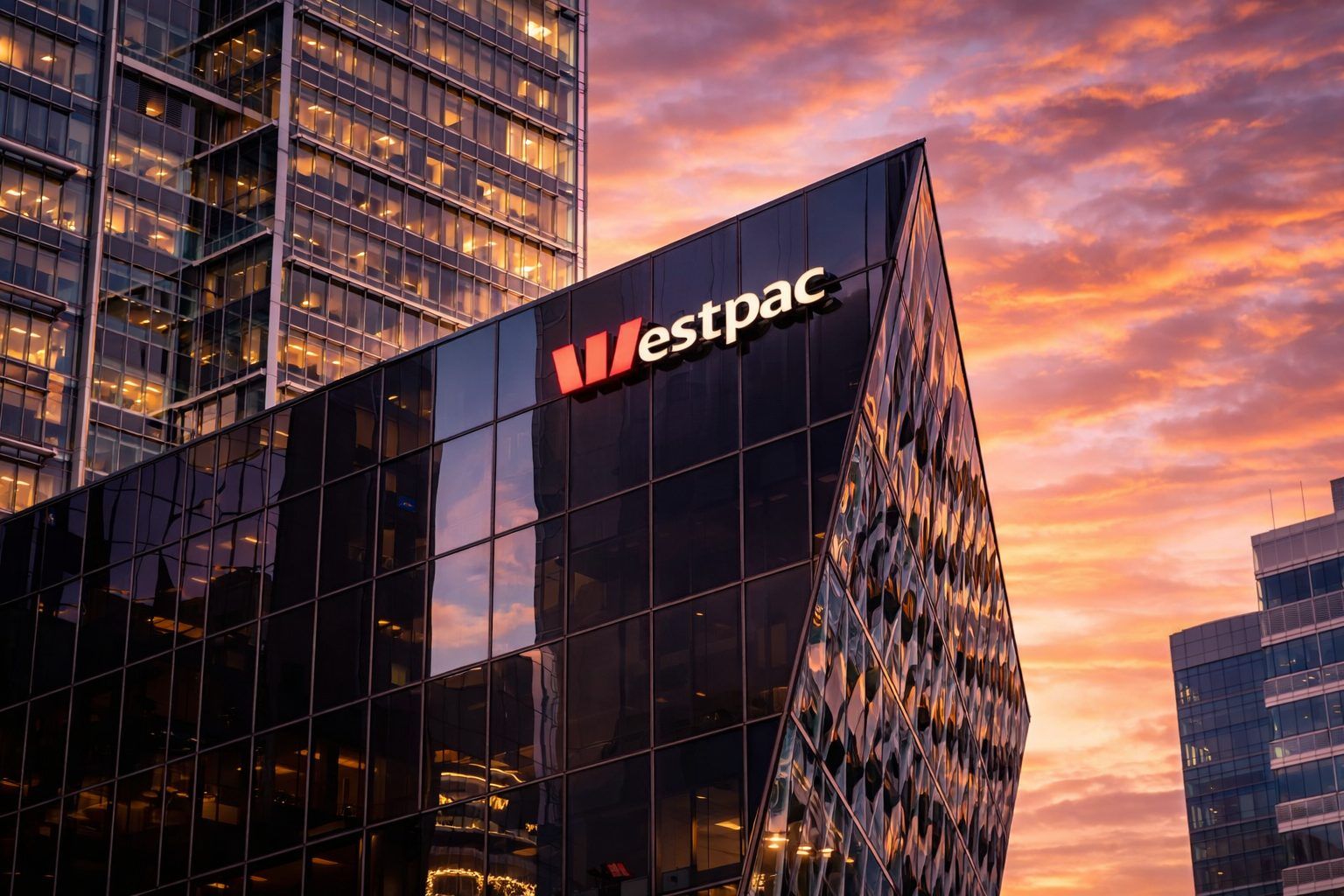
Westpac Banking Corp (WBC.AX) shares ended down 1.75% at A$37.52 on Wednesday, as investors sold Australia’s big banks late in the session. The stock traded between A$37.52 and A$38.30 and is about 7% below its 52-week high. Intelligent Investor
The move followed a softer-than-expected inflation report that pushed interest-rate expectations back into the spotlight — a key driver for bank earnings and loan demand. Data from the Australian Bureau of Statistics showed annual consumer price inflation eased to 3.4% in November from 3.8% in October. Australian Bureau of Statistics
Underlying price pressure, however, remained sticky. The trimmed mean — a “core” inflation gauge that strips out big price swings — rose 0.3% on the month and was up 3.2% year-on-year, leaving markets still pricing roughly a one-in-three chance of a rate rise in February, according to Reuters.
The benchmark ASX 200 finished 0.15% higher, but banks were among the few laggards after the CPI release. Westpac shed 1.8% and National Australia Bank fell about 2%, while miners and healthcare stocks helped prop up the broader market, market data showed.
The bank weakness extended a pullback seen earlier in the week. Fund managers were rebalancing portfolios and questioning valuations after strong recent runs, Moomoo market strategist Michael McCarthy said. AAP News
Westpac’s slide also left it sitting on the day’s low, a level traders often watch as near-term support. The stock’s 52-week range spans A$28.44 to A$41.00, Investing.com data showed. Investing.com Australia
For rate-sensitive stocks, attention is turning to the Reserve Bank of Australia’s next policy decision, due at 2:30 p.m. AEDT on Feb. 3. The RBA’s cash rate target — its benchmark policy rate — currently sits at 3.60%.
Westpac’s next company catalyst is its first-quarter results announcement on Feb. 13, with interim results and a dividend update scheduled for May 5, its financial calendar shows. Westpac
A key risk for the banks is that “core” inflation stays too firm to give the RBA comfort, forcing tighter policy that could pressure borrowers and lift bad-debt worries. A sharper slowdown in housing activity would add another drag on credit growth.