
New York—It’s May 15, 2026, 10:13 a.m. EDT.
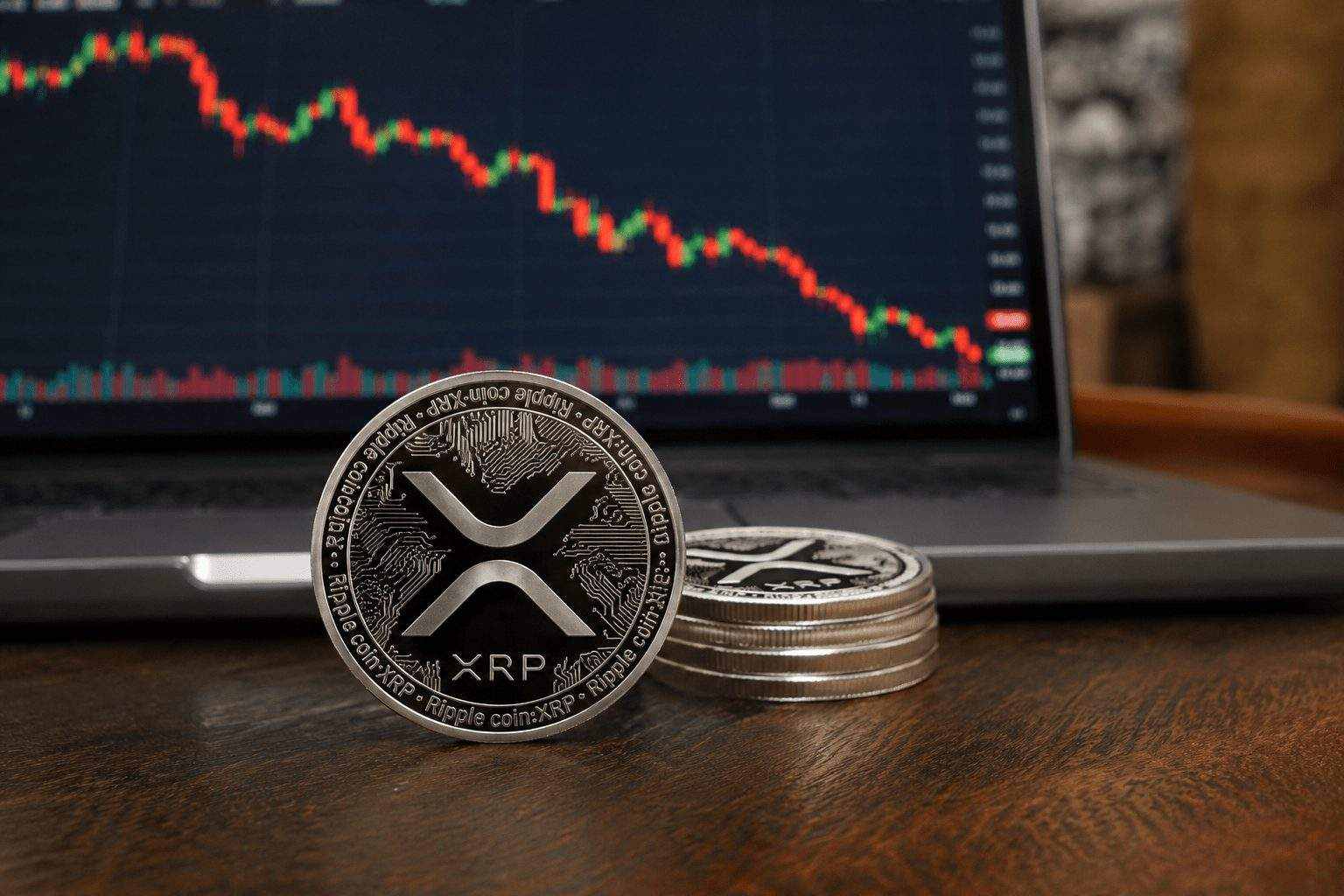
XRP pulled back Friday, hovering around $1.44 after briefly tapping the $1.54-$1.55 range. Regulatory headlines had sparked a rally earlier, but that gave way as traders shifted focus back to macro pressures—rising bond yields, scaled-back Fed cut bets, and tightening risk appetite. Over 24 hours, XRP dropped 0.64% according to CoinMarketCap, with Bybit marking a session high close to $1.54 and a low near $1.43.
The policy boost landed, but crypto still hasn’t broken out. On Thursday, the U.S. Senate Banking Committee pushed H.R. 3633, the Digital Asset Market Clarity Act of 2025, through with a 15-9 vote and sent it to the Senate floor.
Right now, rates are driving the action. According to Reuters on Friday, U.S. Treasury yields climbed to their highest levels in about a year, as traders began factoring in the possibility that the Federal Reserve could hike rates in response to inflation fueled by energy shocks from the Iran war. Daniel von Ahlen, senior macro strategist at GlobalData TS Lombard, described markets as bracing for “much more volatile inflation climate.” On top of that, global yields have reached levels “high enough to hurt sentiment,” DBS’s senior rates strategist Eugene Leow said. Reuters
XRP got caught out by the move, having already surged. The token jumped to a two-month peak at $1.55 on Thursday, then slipped back to around $1.46, CoinDesk said, noting increased futures trading as well.
Derivatives contributed further to the squeeze. CoinGlass pegged XRP futures volume at $6.83 billion for the past 24 hours, with spot trading hitting $1.46 billion, and open interest clocking in at $2.96 billion. Liquidations in XRP futures stood around $17.1 million. Open interest reflects the total value of active futures contracts, while liquidations refer to forced trade closures when traders run out of margin.
XRP wasn’t the only one under pressure. Bitcoin hovered close to $79,065, sliding for the day. Ether, too, lost ground, trading near $2,216. The retreat in XRP, then, fit into the broader slump across risk assets—this wasn’t just about one token.
Macro desks echoed similar views across markets. Tim Graf, State Street Markets’ head of macro strategy for EMEA, told Reuters the combination of rate markets and lingering above-target inflation might be enough to trigger a pullback. ING’s Padhraic Garvey pointed to delivered inflation as “front and centre.” Reuters
The Fed wasn’t offering much relief. Kansas City Fed President Jeffrey Schmid, in comments reported by Reuters, called “continued inflation” the top risk to the economy on Thursday—a notably hawkish signal from a policymaker who doesn’t have a vote this year. Reuters
Repricing pressure was already mounting ahead of Friday. UBS Global Wealth Management delayed its forecast for Fed rate cuts, now seeing them in December 2026 and March 2027 instead of September and December 2026. The move, the firm said, came on the back of persistent inflation and a labor market that isn’t letting up. According to Reuters, CME FedWatch reflected an 87.4% chance that the Fed skips a September cut.
Prediction markets echoed that view. On Polymarket, traders pegged zero Fed rate cuts for 2026 as the favorite, pricing it at 67%. The odds for a single cut stood at 16%. Another Polymarket market, meanwhile, gave a 35% probability to a Fed rate hike in 2026.
Kalshi’s pricing for XRP hardly pointed to a breakout—far from a surge, the odds landed at 30% for the token to clear $1.60 in May, with the same 30% chance it slides under $1.30 this month. Traders leaned neither way.
Regulation remains a tailwind, but it’s not carrying things this session. Reuters broke down the Senate crypto bill, noting it lets certain crypto firms raise as much as $50 million annually—capping at $200 million—without the need to register with the SEC. That trims down the hurdles for some token fundraising.
The bearish case hinges on a straightforward risk: this could just be a modest sell-the-news dip, provided yields retreat or the Senate starts to gain traction. The flip side looks harsher. Should optimism for rate cuts erode further and leveraged bets keep coming off, XRP might have a hard time defending that $1.40-$1.45 band—territory that was seen as a breakout zone just days ago.
Today’s XRP slide isn’t about any new Ripple blowup. The coin simply lost steam after its Clarity Act rally fizzled. Bond yields, shifting Fed bets and how futures traders are lined up are running the show right now.
Related articles: Cryptocurrency