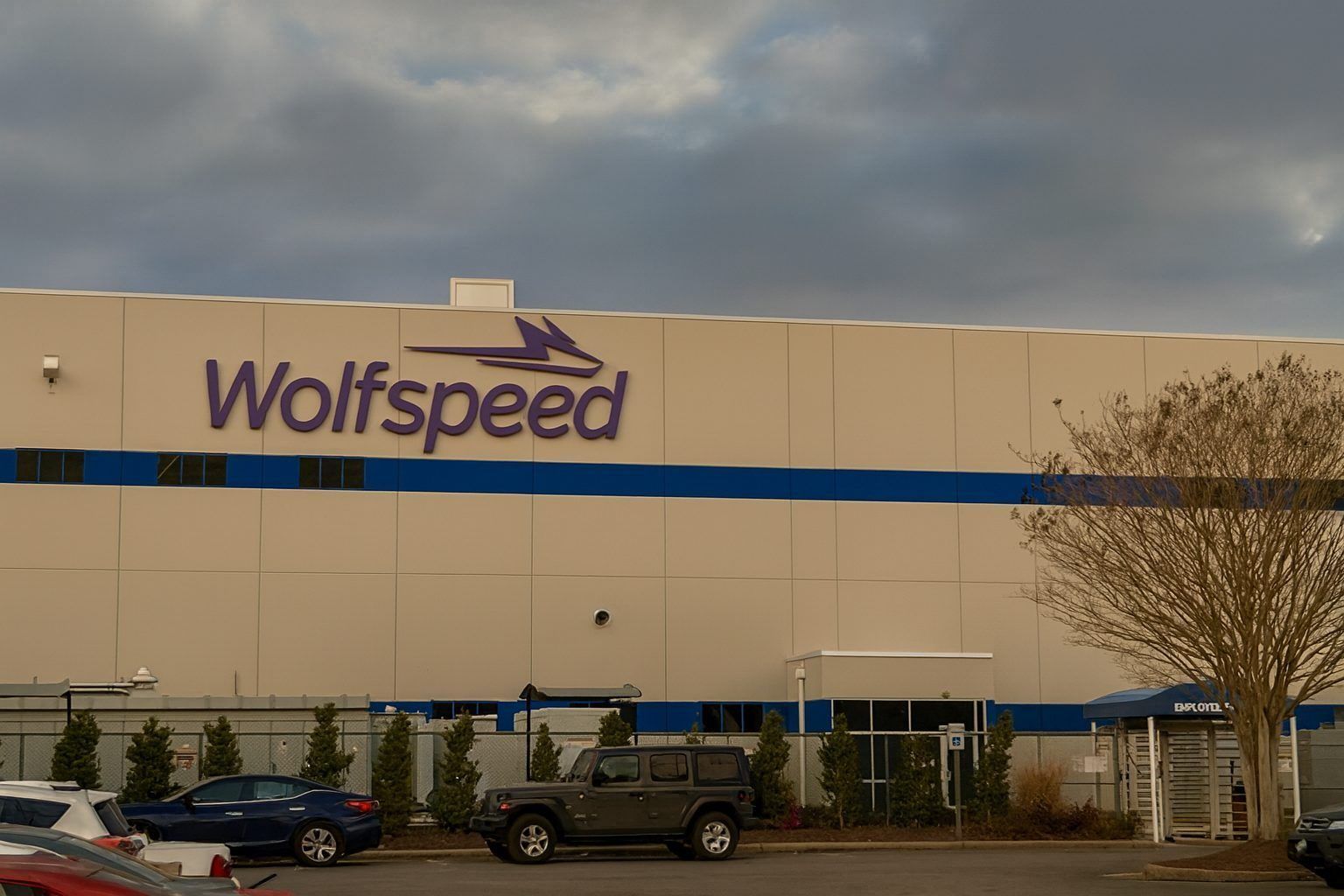
Wolfspeed Inc. (NYSE: WOLF) has gone from near‑penny‑stock distress to one of the most hotly debated semiconductor turnaround stories on Wall Street. After exiting Chapter 11 in late September and securing a nearly $700 million tax refund from the U.S. government this week, the silicon‑carbide specialist now sits on more cash than its entire equity is worth at today’s share price.
Here’s a detailed look at the latest news, earnings, and forecasts for Wolfspeed stock as of 6 December 2025.
Where Wolfspeed Stock Stands Today
Wolfspeed shares finished the latest session around $22 per share, giving the company a market capitalization of roughly $570 million. Over the past year, the stock has traded between about $8 and $36.60, with today’s intraday range near $21.8–$23 and volume slightly below its 1.5 million‑share daily average.
Those numbers matter because they sit next to a dramatically changed balance sheet:
- The company now has about $1.5 billion in cash and short‑term investments after its latest tax refund.
- Even after restructuring, Wolfspeed still carries roughly $2.1 billion of new notes and other debt obligations, according to recent analysis of its capital structure.
Taken together, that means the equity market is valuing Wolfspeed’s operating business at only a modest premium to its net cash position, despite the company owning several modern fabs and decades of silicon‑carbide know‑how.
The $698.6 Million IRS Refund That Changed the Story
On 1 December 2025, Wolfspeed announced it had received $698.6 million in cash tax refunds from the Internal Revenue Service. The money comes from the Advanced Manufacturing Investment Credit (AMIC) under Section 48D of the U.S. tax code – a CHIPS and Science Act incentive aimed at domestic semiconductor manufacturing.
Key points from the company’s disclosure and regional coverage:
- The refund is part of roughly $1 billion in Section 48D credits Wolfspeed expects to monetize over time; it had already received $186.5 million tied to earlier fiscal years.
- $192.2 million of the new cash is earmarked to retire about $175 million of outstanding secured debt, with the balance supporting general corporate needs and capex.
- After the payment, the company’s cash balance is approximately $1.5 billion, a major liquidity buffer as it ramps its 200mm silicon‑carbide manufacturing footprint.
Local business coverage in North Carolina framed the refund as a crucial boost for a company that emerged from bankruptcy in late September, allowing Wolfspeed to pay down debt and continue investing in high‑power chips for data centers, aerospace and defense, industrial energy, and the EV market.
A widely shared research note described the refund as a “lifeline,” pointing out that when the check arrived, Wolfspeed’s market cap was around $550 million—less than the refund itself. With roughly $1.5 billion in cash and around $2.1 billion in debt, the analysis argued that the market is effectively assigning little value to Wolfspeed’s plants, IP, and customer contracts once the balance sheet is netted out. Investing.com
Crucially for shareholders, this is non‑dilutive capital: the money comes from tax credits, not from issuing new stock.
From Near‑Collapse to a “New” Wolfspeed: 2025 in Fast‑Forward
Wolfspeed’s dramatic pivot this year explains both the skepticism and the renewed speculative interest around WOLF stock.
- Early 2025: The company, formerly known as Cree, was weighed down by about $6.5 billion in debt against roughly $1.3 billion in cash, according to research citing TipRanks and other data providers. The stock plunged more than 90% as investors questioned its ability to refinance upcoming maturities.
- June 30, 2025: Wolfspeed announced plans to file for Chapter 11 bankruptcy protection under a pre‑packaged restructuring support agreement that aimed to cut total debt by about 70% and reduce annual cash interest expense by around 60%.
- September 8–12, 2025: A U.S. bankruptcy court approved Wolfspeed’s reorganization plan, clearing the way for a quick exit from Chapter 11. News of the approval sent the stock soaring as traders bet on a successful recapitalization.
- September 29, 2025: Wolfspeed formally emerged from Chapter 11, canceling all old common shares and issuing new equity in the reorganized company. Existing shareholders were allocated only 3–5% of the new Wolfspeed, with the rest going to creditors and new investors.
Post‑emergence, Wolfspeed shifted its legal domicile to Delaware and kept trading under the WOLF ticker, but investors should recognize that the stock now represents a restructured company with a very different capital stack than the pre‑bankruptcy Wolfspeed.
Q1 FY26 Earnings: Revenue Holds Up, Margins Still Deeply Negative
On 29 October 2025, Wolfspeed reported results for the first quarter of fiscal 2026, its first full quarter navigating the post‑bankruptcy transition.
Headline numbers:
- Revenue: $196.8 million, slightly above Wall Street expectations of about $195 million and roughly flat year‑on‑year.
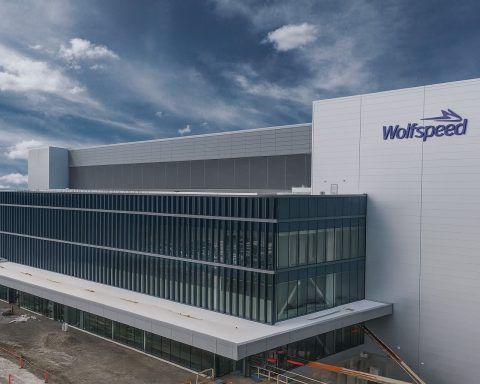
- Mohawk Valley Fab: Contributed $97 million of revenue – nearly double the prior year – highlighting progress in ramping the company’s new 200mm device facility in New York.
- Non‑GAAP EPS: Loss of $0.55 per share, better than the roughly $0.75 loss analysts had expected and an improvement from a $0.91 loss a year earlier.
- Margins: GAAP gross margin was ‑39%, and non‑GAAP gross margin was ‑26%, versus positive 3% in the year‑ago period. Management attributed the pressure to $47 million of under‑utilization costs at the Mohawk Valley and Siler City facilities plus about $29 million in inventory and transition‑related charges.
- Cash and Liquidity (pre‑refund): Wolfspeed ended Q1 with about $926 million in cash, cash equivalents and short‑term investments, before the Section 48D refund pushed that figure to roughly $1.5 billion.
Guidance for Q2 FY26 called for revenue between $150 million and $190 million, a sequential decline driven by one‑time “last‑time buys” ahead of the planned closure of the older Durham 150mm fab, as well as customer second‑sourcing and ongoing industry softness. Fintool+1
Free cash flow remained firmly negative at about ‑$100 million, and the company warned that weakness in the broader power‑semiconductor market could persist through fiscal 2026.
Strategy: Betting the Future on 200mm Silicon Carbide
Despite the red ink, Wolfspeed’s management insists the core strategic thesis is intact: a vertically integrated, U.S.‑based supply chain for silicon‑carbide (SiC) wafers and power devices aimed at high‑growth electrification end‑markets.
Recent strategic milestones:
- Manufacturing footprint:
- Accelerated ramp of the Mohawk Valley 200mm fab in New York for next‑generation SiC power devices.
- Ongoing build‑out of the John Palmour (JP) materials center in Siler City, North Carolina, to supply 200mm wafers into Mohawk Valley.
- Planned closure of the legacy 150mm device fab in Durham by the end of calendar 2025 and cancellation of a proposed new fab in Saarland, Germany, to concentrate resources on the 200mm platform.
- End markets: Wolfspeed is deliberately diversifying away from an EV‑only narrative toward AI data‑center power, aerospace and defense, industrial and energy infrastructure, while still supporting automotive programs with OEMs such as General Motors and Mercedes‑Benz.
- Leadership refresh:
- New CEO Robert Feurle has emphasized three priorities: profitability, technology leadership, and operational excellence.
- In October, the company appointed Matthias Buchner, a veteran of Infineon’s power‑semiconductor business, as SVP Global Sales & Chief Marketing Officer, effective 1 December 2025. His mandate is to expand Wolfspeed’s customer base across automotive, renewable energy, industrial and AI‑driven infrastructure.
- Other recent hires include a new CFO and COO with deep semiconductor and manufacturing backgrounds, as Wolfspeed rebuilds its post‑restructuring leadership bench.
This strategic pivot aims to turn Wolfspeed’s heavy upfront capex into a competitive moat, but it also increases execution risk: until fabs like Mohawk Valley reach high utilization, margins will remain under pressure.
What Analysts and Models Are Saying About WOLF
Wall Street price targets
Consensus data compiled by several platforms shows a broadly cautious Street view:
- According to MarketBeat and StockAnalysis, WOLF carries a “Reduce/Hold” consensus rating. MarketBeat+1
- The average 12‑month price target is about $10.50, implying roughly 50% downside from the current ~$22 share price. Targets range from $3 on the low end to $30 at the high end, highlighting wide disagreement about the company’s future.
Some fundamental analysts, including those using discounted‑cash‑flow models, argue that the stock could be severely undervalued relative to long‑term growth potential, while others warn that persistent losses and high leverage justify a steep discount. A recent Simply Wall St note, for example, emphasized that Wolfspeed’s annual revenue growth is running in the high single digits but that net losses remain significant, leaving the path to profitability uncertain.
Technical and sentiment indicators
Short‑term trading services remain wary:
- Technical site StockInvest.us currently labels Wolfspeed a short‑term “sell candidate”, noting mixed signals – a positive three‑month MACD but a bearish longer‑term trend. Their model places key Fibonacci support near $21–22 and resistance in the mid‑$23 range. StockInvest
- Data aggregated by StockTitan shows short interest around 28% of the free float, lower than the roughly 49% levels highlighted earlier this year by Finimize but still high enough to fuel sharp squeezes in either direction.
In short, both technical and fundamental analysts acknowledge that Wolfspeed stock remains high‑risk and highly volatile, even after the liquidity boost.
The Bull vs. Bear Case After the IRS Windfall
Bull case: cash runway and structural tailwinds
Supporters of WOLF argue that the recent developments have fundamentally de‑risked the story:
- Liquidity runway: With about $1.5 billion in cash and a lighter debt load after Chapter 11 and the tax refund, Wolfspeed appears to have a multi‑year runway to complete its 200mm ramp without resorting to emergency equity raises.
- Technology leadership: Wolfspeed has been shipping 200mm SiC devices ahead of many competitors and has decades of materials expertise plus a large design‑win backlog, giving it a potential cost and performance advantage as the market matures.
- Secular demand: Long‑term trends in EVs, fast‑charging, grid modernization, renewable energy and AI data centers all point toward growing need for high‑efficiency power semiconductors where SiC excels.
- Valuation gap: At a market cap similar to its cash balance and well below the replacement cost of its fabs and IP, some analysts describe Wolfspeed as being priced “as if the business itself were worth almost nothing” after netting out debt – leaving significant upside if the turnaround succeeds. Investing.com+1
Bear case: profitability, leverage and policy risk
Skeptics counter with several hard realities:
- Deeply negative margins and cash burn: Even after restructuring, Wolfspeed is running negative gross margins and burning close to $100 million in free cash per quarter, with management expecting softness through at least fiscal 2026.
- Still‑large debt load: Cutting debt by ~70% still leaves around $2+ billion of notes outstanding, and future interest rates or refinancing terms could be challenging if the company doesn’t reach sustainable profitability in time.
- Execution risk on 200mm ramp: Under‑utilization charges at Mohawk Valley and Siler City are already hitting margins. Any delays in yields, customer qualifications or end‑market demand could prolong losses.
- CHIPS‑Act and policy uncertainty: Wolfspeed’s long‑term plan assumes billions in U.S. government loans, grants and tax credits for its Siler City mega‑fab and related projects. Some of that support has been slower to arrive than initially expected, and political changes could alter the availability or timing of future funds.
- Competitive pressure: Rivals like Infineon, STMicroelectronics, ON Semiconductor and Rohm are all investing heavily in their own SiC capacity, potentially pressuring prices and margins as supply grows.
Given these cross‑currents, it’s not surprising that many analysts maintain conservative price targets even after the IRS windfall.
Key Catalysts to Watch for WOLF Investors
Looking ahead from December 6, 2025, several events could shape the trajectory of Wolfspeed stock:
- Fiscal Q2 2026 earnings: Investors will be watching whether revenue lands near the upper or lower end of the $150–$190 million guidance range, and whether non‑GAAP gross margins show any improvement from the current ‑26%.
- Fresh‑start accounting: Management expects to adopt fresh‑start accounting next quarter, effectively “resetting” the financial statements for the reorganized company. How the market interprets the new balance sheet and income statement will be important for valuation. Fintool
- Utilization at Mohawk Valley and JP Siler City: Progress towards higher wafer‑start utilization and better yields would directly reduce under‑utilization charges and could be a turning point for margins.
- Additional Section 48D refunds and CHIPS funding: Wolfspeed still expects to monetize the remaining portion of approximately $1 billion in 48D credits, and the status of up to $750 million in CHIPS grants for Siler City remains a medium‑term swing factor.
- Further capital‑markets activity: The company recently filed a new Form S‑1 registration statement, which could pave the way for future share offerings or other transactions tied to its post‑restructuring capital structure.
Bottom Line: A High‑Beta Turnaround Story With Binary Feel
As of December 6, 2025, Wolfspeed is a classic high‑beta semiconductor turnaround:
- The balance‑sheet risk has improved markedly thanks to Chapter 11 and the Section 48D refund, giving the company time to execute its 200mm strategy.
- Operational and demand risks remain elevated, with negative margins, heavy cash burn and a still‑large debt load.
- Analyst forecasts are split, with an average target well below the current share price but a wide range of outcomes based on differing views of execution and end‑market strength.
For traders and investors tracking WOLF, the stock is likely to remain volatile, reacting sharply to each new data point on fab utilization, government funding, and the pace of electrification demand. Anyone considering exposure should weigh their own risk tolerance and time horizon carefully and, if needed, consult a qualified financial advisor.
This article is for informational purposes only and does not constitute investment advice or a recommendation to buy or sell any securities.