
As of the close on 5 December 2025, TeraWulf Inc. (NASDAQ: WULF) is trading around $14.50 per share, giving the company a market capitalization of roughly $6.1 billion. The stock is up more than 150% year‑to‑date and over 600% above its 52‑week low of $2.06, yet still below a recent high near $17.
Behind that surge is a dramatic transformation: TeraWulf is shifting from being “just” a bitcoin miner to positioning itself as a Google‑backed, AI‑focused data center and high‑performance computing (HPC) infrastructure provider. At the same time, the company is layering on billions of dollars in debt and equity‑linked financing, and analysts are sharply divided on whether WULF stock still offers upside.
This article breaks down the latest WULF stock news, forecasts, and analysis as of 7 December 2025, with an eye on what could matter most for investors heading into 2026.
What TeraWulf Is Now: From Bitcoin Miner to AI/HPC Operator
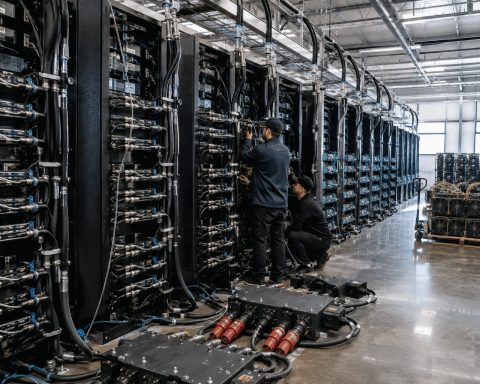
TeraWulf develops, owns and operates digital infrastructure in the United States, historically focused on bitcoin mining powered largely by hydro and nuclear energy. Its flagship Lake Mariner campus in Western New York sits on the site of a retired coal plant and has been gradually repurposed into a large‑scale, low‑carbon data center hub.
In 2025 the company accelerated a pivot toward AI and HPC hosting:
- It acquired Beowulf Electricity & Data entities to consolidate energy and infrastructure assets, enabling integrated power and compute operations.
- It signed major HPC colocation agreements with Core42, a G42‑affiliated AI and cloud provider, targeting about 72.5 MW of colocation capacity, with revenue ramping in the second half of 2025.
- It began framing itself in investor materials as a next‑generation HPC/AI data center operator, with bitcoin mining becoming just one line of business.
In short, WULF stock is no longer just a leveraged bet on bitcoin. It’s increasingly a leveraged bet on the AI compute shortage.
AI Mega‑Deals, Fluidstack and Google: The New Growth Engine
The core of the WULF bull case is a series of AI and HPC contracts that have transformed TeraWulf’s future revenue mix.
Fluidstack contracts and Lake Mariner build‑out
In August 2025, TeraWulf announced two 10‑year agreements with Fluidstack, an AI cloud platform, to deliver over 200 MW of AI‑optimized capacity at the Lake Mariner campus. These contracts are expected to generate roughly $3.7 billion in revenue over their initial term, with extensions that could bring the total to about $8.7 billion.
To support this, TeraWulf is building a new data center building, CB‑5, at Lake Mariner:
- CB‑5 adds around 160 MW of critical IT load, with operations currently targeted for the second half of 2026.
- Including CB‑5, Fluidstack’s contracted IT load at Lake Mariner rises to around 360 MW, making it one of the largest AI/HPC campuses in the U.S.
Earlier reporting indicated that TeraWulf’s contracted revenue backlog from these and prior deals had already reached about $6.7 billion, with potential to scale toward $16 billion if extension options are fully exercised.
More recent coverage, including a widely cited Yahoo Finance analysis, now pegs TeraWulf’s long‑term AI/HPC contract value around $7.7 billion, reflecting additional agreements and option exercises.
Abernathy, Texas JV: 25‑year AI data center revenue
In October 2025, TeraWulf and Fluidstack announced a joint venture to develop a 168 MW AI‑optimized data center in Abernathy, Texas. TeraWulf owns a 51% stake, and the project is expected to generate around $9.5 billion in revenue over 25 years.
That deal pushed TeraWulf’s contracted HPC capacity to over 510 MW and came with a key backer: Google is supporting about $1.3 billion of Fluidstack’s lease obligations tied to this expansion.
Google’s expanding stake and financial backstop
Google’s involvement with TeraWulf has deepened throughout 2025:
- Earlier in the year, Google agreed to backstop a portion of Fluidstack’s leases at Lake Mariner, gaining tens of millions of warrants that equated to roughly an 8% stake in TeraWulf at the time.
- By late summer, Google had increased its equity interest to about 14% and boosted its total financial commitment (across backstops and guarantees) to roughly $3.2 billion.
Google’s support effectively serves as a credit enhancer for TeraWulf’s projects, making it easier to raise large amounts of debt and signaling confidence from a major tech company in TeraWulf’s zero‑carbon, AI‑ready infrastructure strategy.
The Cost of Hyper‑Growth: Debt, Convertibles and Dilution
The flip side of that growth story is an increasingly complex – and heavily leveraged – capital structure.
Multi‑billion‑dollar debt stack
According to a recent Zacks‑authored analysis republished by Nasdaq, as of 30 September 2025 TeraWulf had roughly:
- $2.5 billion in total assets
- $2.2 billion in total liabilities, including about $1.06 billion in convertible notes and substantial warrant liabilities.
Zacks notes that during Q3 and shortly thereafter, TeraWulf lined up more than $5 billion in additional financing, including: Nasdaq+1
- Approximately $3.2 billion in 7.75% senior secured notes due 2030
- Over $2 billion in low‑coupon convertible notes maturing between 2031 and 2032
Separate filings and press releases also describe a convertible senior notes offering initially sized at $500 million and later upsized toward $850 million, aimed at funding data center expansion and general corporate purposes.
This debt‑heavy funding model is central to the bear case on WULF: it enables rapid buildout of AI infrastructure, but it also locks in significant future repayment and refinancing risk at a time when interest rates remain elevated.
Mandatory conversion of preferred stock
On 25 November 2025, TeraWulf announced it is exercising its right to force the conversion of all outstanding Series A Convertible Preferred Stock into common equity.
Key details:
- The mandatory conversion date is 9 December 2025, with settlement on 11 December 2025.
- Each preferred share will convert into 141.9483 common shares, provided the stock met pricing triggers (130% of the $10.00 conversion price over at least five trading days).
- Preferred shares will stop accruing dividends after the conversion date.
The company describes this as a milestone in simplifying its capital structure and improving transparency.
However, trading commentary and hedge‑fund coverage highlight concerns about near‑term dilution. An InsiderMonkey piece noted that WULF fell around 7% on 3 December as investors reacted to the impending conversion and potential jump in common share count.
Valuation alarms: rich multiples and Zacks “Sell” rating
In a widely shared piece titled “Should Investors Exit WULF Stock at a High P/S Multiple of 18.24x?”, Zacks argues that: Nasdaq+1
- WULF’s 12‑month price‑to‑sales multiple of about 18.2× far exceeds both its industry and broader finance‑sector averages.
- Balance‑sheet leverage has “materially elevated” risk, given the combination of convertible notes, new senior secured debt and large non‑cash warrant liabilities.
- The stock’s Zacks Rank is #4 (Sell), reflecting downward earnings revisions and repeated earnings misses.
Other data providers that aggregate fundamentals show similarly stretched numbers, with some estimating a price‑to‑sales multiple in the high teens to mid‑30s, depending on whether trailing or forward revenue is used and how warrant‑related accounting is treated.
Q3 2025 Earnings: Strong Revenue, Huge GAAP Loss
TeraWulf reported third‑quarter 2025 results in November, accompanied by an updated investor presentation and SEC Form 10‑Q.
Key takeaways from Q3 (quarter ended 30 September 2025):
- Revenue: about $50.6 million, up roughly 87% year‑over‑year, as the company deployed more mining capacity and recorded its first meaningful HPC revenue.
- HPC contribution: Zacks and other outlets note that initial HPC/AI colocation revenue was about $7.2 million in the quarter, with the rest still driven largely by self‑mined bitcoin.
- Adjusted EBITDA: roughly $12.6 million, a sharp improvement versus the prior year and a sign that the underlying data center operations are turning profitable at the operating level.
- GAAP net income: a net loss of approximately $455 million, driven primarily by a $424.6 million non‑cash loss from the remeasurement of Google‑related warrants and the derivative component of 2031 convertible notes.
Several analyst notes and Zacks commentaries emphasize that WULF has missed EPS expectations in each of the last four quarters, with an average negative surprise above 80%.
The tension is clear: WULF is growing top‑line rapidly and beginning to produce positive EBITDA, but GAAP results are dominated by complex financing and derivative accounting that generate huge swings in net income.
How WULF Stock Has Traded in Late 2025
Price action around these announcements has been volatile:
- WULF is up about 156% year‑to‑date and roughly 79% over the past year, according to aggregated performance data.
- The stock has swung wildly around news of Google’s increased backing, the Fluidstack deals, Q3 earnings and the preferred share conversion. Some sessions saw double‑digit intraday moves as retail traders and institutions digested rapidly evolving headlines.
- Recent Zacks downgrades and dilution worries triggered pullbacks, including a 4–7% drop after the preferred conversion announcement and valuation‑focused articles.
Trading‑oriented platforms such as StocksToTrade and Google Finance have repeatedly flagged WULF as a high‑volume, news‑driven name, with option activity and short‑term sentiment shifting quickly as new analysis lands.
Analyst Ratings and WULF Stock Forecasts for 2026
Price targets: medians, ranges and upside potential
Different data aggregators show slightly different counts, but they tell a similar story: Wall Street is broadly bullish, with notable dissent from quant/value frameworks like Zacks.
According to TradingView and other forecasting tools: TradingView+2Ticker Nerd+2
- The average/consensus 12‑month price target for WULF is around $21–23 per share.
- The range of targets is wide, from about $9.50 on the low end to $26.00 on the high end.
- With the stock near $14.50, the median target implies roughly 60% upside, while the lowest target suggests potential downside of about 35%.
A breakdown of recent analyst calls illustrates the breadth of opinion: Investors+3Ticker Nerd+3Seeking Alpha+3
- B. Riley Securities (Nick Giles): Buy, $23 target.
- Rosenblatt Securities (Chris Brendler): Buy, $24 target, highlighting TeraWulf’s expanding AI backlog and power pipeline.
- Needham (John Todaro): Buy, around $21 target.
- Oppenheimer (Tim Horan): Outperform, $20 target, initiated after the Abernathy JV announcement.
- Roth MKM: Recently raised the high‑water target to $26, citing a larger‑than‑expected power and HPC capacity pipeline.
Ticker‑level aggregators like TickerNerd currently classify WULF as a “Strong Buy” based on 17 analysts, with 12 Buy, 1 Hold and no Sell ratings, while MarketBeat’s methodology describes the consensus as “Moderate Buy.” Ticker Nerd+2MarketBeat+2
Earnings forecasts and revisions
On the earnings front, Zacks and related research tools project that: Nasdaq+2Tiblio+2
- Q4 2025: consensus expects a loss of roughly $0.12 per share, a slightly larger loss than was forecast a month earlier.
- Full‑year 2025: projected loss of about $1.51 per share, a significant downward revision versus prior expectations and much worse than the roughly $0.19 per‑share loss recorded in 2024.
TradingView’s forecast data broadly align, showing expectations for continued losses in the near term, modest revenue growth quarter‑over‑quarter, and a gradual shift in mix toward HPC/AI revenue.
Several Seeking Alpha contributors, by contrast, focus less on near‑term EPS and more on 2026–2027 cash‑flow potential from AI leases. One recent article argues that TeraWulf could: Seeking Alpha+1
- Sign 250–500 MW of new HPC leases per year, if demand and power availability cooperate.
- Achieve net operating income (NOI) margins north of 70% on HPC projects, which would be higher than many established data center REITs.
That more optimistic view frames current weakness as a “dip‑buying opportunity” ahead of a 2026–2027 AI earnings ramp, though it explicitly acknowledges the company’s heavy leverage and execution risk.
The Bull Case vs. the Bear Case on WULF Stock
Bullish arguments
Supporters of WULF stock highlight several key points:
- AI compute scarcity: Hyperscalers and AI cloud platforms are scrambling for low‑carbon, high‑density data center capacity. With over 510 MW of contracted HPC load already in the pipeline and room to scale further, TeraWulf is perceived as a scarce asset.
- Google as a strategic anchor: Google’s multi‑billion‑dollar backstops and growing equity stake are seen as a strong external validation of TeraWulf’s sites, engineering team and power contracts.
- Long‑term revenue visibility: Multi‑year, even multi‑decade lease structures with Fluidstack and other AI clients give TeraWulf an unusually visible revenue backlog compared to traditional crypto miners, whose revenue depends heavily on bitcoin price cycles.
- Zero‑carbon narrative: Locating data centers near nuclear and hydro resources aligns TeraWulf with corporate net‑zero goals and emerging regulations on data center emissions.
Some long‑only funds and stock‑picking services have added WULF to AI or “crypto‑plus‑AI” baskets, and 24/7 Wall St. recently included TeraWulf among “crypto mining stocks to buy now” alongside peers like Cipher Mining and IREN. Tiblio+1
Bearish arguments
Skeptics focus on valuation, balance‑sheet risk and concentration:
- Leverage and funding risk: With liabilities already in the multi‑billion‑dollar range and more than $5 billion in new notes and convertibles planned or issued, TeraWulf is highly sensitive to credit conditions, refinancing windows and project execution.
- Expensive stock: A price‑to‑sales multiple north of 18×, and potentially much higher on some measures, leaves little room for execution missteps. Zacks specifically flags WULF’s Value Score of “F” and maintains a Sell rating, calling the stock “overvalued” relative to peers and sector averages. Nasdaq+2Tiblio+2
- Customer concentration: TeraWulf’s long‑term revenue plans rely heavily on a small group of hyperscale customers – notably Fluidstack (backed by Google) and Core42. Any renegotiation, delay or default on those contracts could seriously weaken the bull thesis.
- Regulatory and power‑grid constraints: AI data centers are energy‑hungry, and Zacks notes that TeraWulf faces regulatory, environmental and infrastructure risks around power availability, permitting and grid integration – especially in regions already sensitive to data center expansion.
- Earnings track record: Persistent GAAP losses, frequent EPS misses and sharply deteriorating 2025 earnings estimates suggest the path to sustainable profitability is still uncertain, even as the top line grows.
In short, bulls see a future AI infrastructure champion subsidized by today’s balance sheet pain; bears see a highly leveraged, richly valued story stock that could stumble if AI demand or capital markets waver.
Key Catalysts to Watch for WULF in 2026
For readers tracking WULF stock beyond the immediate headlines, several developments are likely to matter most over the next 12–18 months:
- Preferred Conversion Impact (December 2025)
- Final share count after the 9 December mandatory conversion and how the market digests that dilution in late December and early 2026.
- Debt Issuance Timing and Terms
- Closing and pricing of the planned 7.75% senior notes and longer‑dated convertibles, including any covenant changes or upsizing/downsizing.
- AI/HPC Ramp‑Up Milestones
- Construction and commissioning progress at CB‑5 (Lake Mariner) and the Abernathy JV in Texas.
- Updates on the MW of power actually energized and revenue‑generating versus contracted capacity.
- Contract Wins or Expansions
- Additional AI/HPC leases with Fluidstack or new hyperscale customers and whether TeraWulf can sustain a pace near its own goal of 250–500 MW of new HPC leases per year.
- Regulatory and Energy Market Developments
- Any new rules or grid constraints affecting large data centers, particularly in New York and Texas, and how those might alter project economics.
- Shift in Earnings Quality
- Whether future quarters show improving cash flow and EBITDA alongside shrinking non‑cash derivative and warrant losses, which would make WULF’s financials easier for investors to interpret.
Bottom Line: WULF as a High‑Beta Bet on the AI Compute Crunch
As of 7 December 2025, WULF stock sits at a crossroads:
- Structurally, TeraWulf now looks less like a pure crypto miner and more like an early‑stage AI data center platform with a heavy tilt toward zero‑carbon power and a marquee hyperscale partner in Google.
- Financially, the company is pursuing that opportunity with a high‑leverage, high‑complexity capital structure, large non‑cash accounting swings and no near‑term GAAP profitability in sight.
- On Wall Street, many fundamental analysts see substantial upside based on multi‑billion‑dollar AI contracts and long‑duration leases, even as quantitative and value‑oriented services warn that the stock is expensive and risky at today’s levels.
For investors and traders watching WULF, the coming year will likely hinge on whether TeraWulf can convert its $7–8+ billion backlog into stable, high‑margin cash flows without tripping over its own leverage, dilution, or regulatory hurdles.
Related articles: NASDAQ:WULF