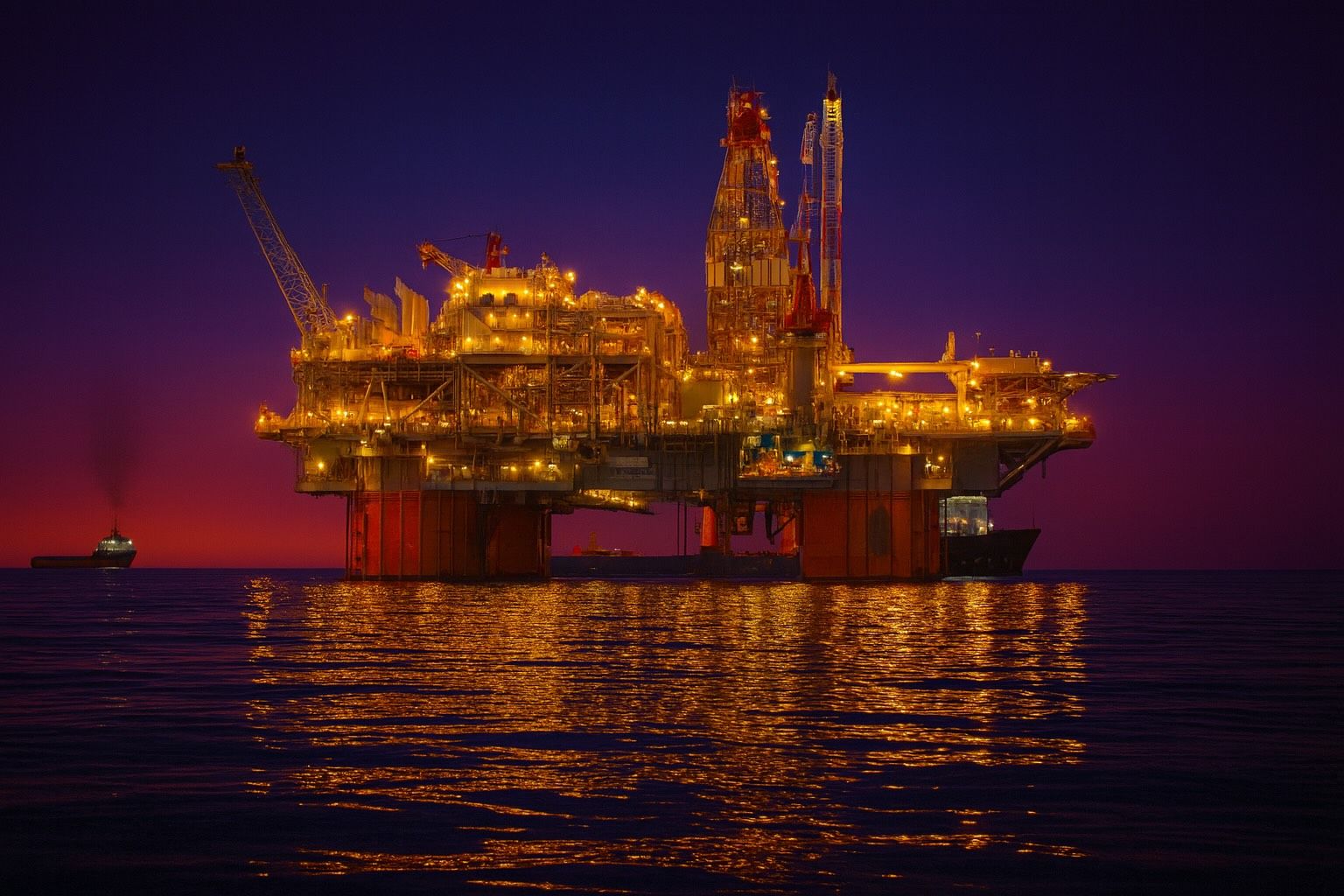

- $5B investment approved: BP has given final approval (FID) to the Tiber-Guadalupe deepwater project in the U.S. Gulf of Mexico, a new floating production platform set to begin oil output by 2030 bignewsnetwork.com reuters.com. The platform will handle about 80,000 barrels per day (bpd) from six wells in the Tiber field and two tied-back wells in nearby Guadalupe bignewsnetwork.com oilprice.com.
- Large reserves: The Tiber-Guadalupe development is expected to tap roughly 350 million barrels of recoverable oil-equivalent resources reuters.com egyptoil-gas.com. It will be BP’s seventh Gulf production hub and the second new offshore platform approved in under two years (following the Kaskida project) egyptoil-gas.com egyptoil-gas.com.
- Cutting costs: By reusing more than 85% of the engineering design from its nearby Kaskida project, BP estimates it will save about $3 per barrel in development costs bignewsnetwork.com egyptoil-gas.com. The shared design and subsea equipment will boost efficiency during construction and operations.
- High-pressure tech: The platform and wells are built for ultra-high pressures (up to 20,000 pounds per square inch, “20K”) in these deep reservoirs bignewsnetwork.com reuters.com. This high-pressure drilling is a recent breakthrough: Chevron’s Anchor field was the first to use 20K technology in the Gulf reuters.com. BP and its partners have pioneered special rigs, thick-casing wellheads, and subsea systems that must pass stringent safety tests egyptoil-gas.com.
- Production targets: Tiber-Guadalupe, together with Kaskida, is key to BP’s plan to lift U.S. Gulf production to over 400,000 barrels oil-equivalent per day (boe/d) by 2030 egyptoil-gas.com reuters.com (up from about 341,000 boe/d in 2024 bignewsnetwork.com). Combined with onshore fields, BP aims for more than 1 million boe/d in the U.S. by 2030 reuters.com, roughly half of its global output goal.
- Strategic pivot: This decision reflects BP’s recent strategy shift back toward oil and gas. Earlier in 2025 BP slashed planned renewable spending by over $5 billion and committed $10 billion a year to oil & gas reuters.com aljazeera.com. CEO Murray Auchincloss said the changes are a “radical shift” toward an “unwavering focus on growing long-term shareholder value” aljazeera.com reuters.com. The new Gulf project is part of BP’s effort to close the gap with higher-return competitors like Shell and Exxon bignewsnetwork.com reuters.com.
- Industry and climate reaction: BP Gulf executive Andy Krieger hailed the project as proof of the company’s “commitment to the Gulf of America” and said it will help “ensure secure, reliable energy supply” while delivering “long-term value” for BP oilprice.com. Some industry analysts note the Gulf’s untapped “Paleogene” deepwater play could hold up to 10 billion barrels of oil discovered resource, justifying the investment oilprice.com spglobal.com. By contrast, environmental groups warn the move endangers climate targets. 350.org’s Matilda Borgstrom said BP’s decision “clearly demonstrates why…corporations…cannot be trusted with fixing the climate crisis,” warning that more drilling “increases the risk of climate impacts for us all” aljazeera.com. The Carbon Tracker think tank similarly cautioned that sanctioning such “large, high-cost projects” could put investor capital at risk if climate policies tighten carbontracker.org.
Project Details and Timeline
BP’s announcement marks a milestone in the Gulf of Mexico, a region long known for deepwater oil riches. The Tiber-Guadalupe platform will be located roughly 300 miles southwest of New Orleans, at water depths over 6,000 feet bignewsnetwork.com spglobal.com. BP originally discovered the Tiber field in 2009 and the Guadalupe field in 2014; combining them with six new wells (Tiber) and two tie-back wells (Guadalupe) gives the hub its 80,000 bpd capacity bignewsnetwork.com oilprice.com. First oil is targeted for 2030, after a multi-year construction and commissioning phase. According to BP, the project is fully funded within its $5 billion budget and “fully accommodated” within its disciplined spending plan offshore-mag.com egyptoil-gas.com. Over time, additional drilling phases could follow if early production justifies expansion.
BP’s Strategic Shift to Oil & Gas
BP’s sanction of Tiber-Guadalupe comes amid a broad strategic pivot. In February 2025, BP cut its renewable energy budget and raised its oil-and-gas investment to $10 billion annually reuters.com aljazeera.com. The company now targets 2.3–2.5 million boe/d globally by 2030 (up from 2.36 million in 2024 reuters.com). A significant portion of this growth is focused on the U.S., where BP plans to exceed 1 million boe/d by 2030 reuters.com. CEO Murray Auchincloss told Reuters the move is a “reset BP” prioritizing cash flow and shareholder returns reuters.com aljazeera.com. The Gulf of Mexico is central to this plan: BP produced about 341,000 boe/d from the Gulf in 2024 and now aims to push that past 400,000 boe/d by decade’s end bignewsnetwork.com reuters.com. Industry observers note BP has lagged Shell and Exxon in investor returns, and the company is under pressure (including from activist investors) to boost earnings bignewsnetwork.com reuters.com. Sanctioning a string of offshore megaprojects like Kaskida and now Tiber-Guadalupe is one way BP hopes to catch up.
Advanced Offshore Technology
Tiber-Guadalupe will be one of the world’s most advanced offshore platforms. BP is leveraging technology it developed for the Kaskida field. By reusing over 85% of Kaskida’s engineering design and equipment, BP reduces new construction needs and achieves roughly $3 per barrel lower development costs bignewsnetwork.com egyptoil-gas.com. The floating production, storage and offloading (FPSO) unit will handle the high flow rates and is engineered for extreme conditions. Crucially, the wells must operate at pressures up to 20,000 psi, far above the ~15,000 psi typical of older Gulf fields offshore-mag.com reuters.com. To manage this, BP and its partners have pioneered “20K” technology: huge drilling rigs, reinforced well casings, and beefed-up subsea valves and pipelines egyptoil-gas.com spglobal.com. Chevron’s nearby Anchor field, which started production in late 2024, demonstrated that 20K drilling can be done safely reuters.com. BP will run independent tests on all pressure-critical equipment before wells go online. These technical advances open up the ultra-deep “Paleogene” formation of the Gulf – a frontier play thought to contain billions of barrels of oil historically trapped by the high pressures spglobal.com oilprice.com.
Industry Impact and Reactions
The Tiber-Guadalupe sanction was quickly covered by energy media and analysts. BP’s Gulf of America head Andy Krieger said the investment “demonstrates our commitment to the Gulf of America” and will help deliver “secure, reliable energy supply” and “long-term value for BP” oilprice.com. Indeed, BP expects this hub – along with Kaskida and other Gulf projects – to anchor its position as a leading producer in the region. According to BP materials, Tiber-Guadalupe is one of 8–10 major projects worldwide planned to start between 2028 and 2030 egyptoil-gas.com oilprice.com. These include expansions at existing platforms (like Atlantis and Argos) and other new developments.
Not everyone agrees with BP’s direction. Climate campaigners argue the move undercuts global emissions goals. 350.org’s Matilda Borgstrom said BP’s shift “clearly demonstrates why… corporations… cannot be trusted with fixing the climate crisis,” and warned that “pumping money into more oil and gas increases the risk of climate impacts for us all” aljazeera.com. The nonprofit Carbon Tracker similarly noted that sanctioning new, expensive oil projects is exactly the kind of bet that could backfire if climate policies tighten. Carbon Tracker warned BP’s focus on oil “will likely see the sanctioning of potentially large, high-cost projects — exactly the type which will put investor capital at risk” carbontracker.org.
Financial markets will also judge BP’s gamble. Some investors have raised BP’s share price targets, citing the prospect of higher production. Others note that BP’s Gulf strategy is a bet on oil demand remaining strong even as electric vehicles and renewables grow. For now, BP is sticking with its forecast that global oil demand will continue rising into the late 2020s.
Outlook
The Tiber-Guadalupe project cements BP’s deepwater Gulf strategy for the coming decade. If all goes according to plan, BP will have two new 80,000 bpd Gulf fields online by 2030, boosting its offshore portfolio and earnings. This $5 billion investment is being marketed as a win for energy supply and efficiency – using cutting-edge technology to access previously unreachable oil. But it also illustrates the tension between short-term energy needs and long-term climate goals. As BP moves ahead, it faces questions about whether these massive deepwater projects will ultimately deliver profits and value (as management predicts) or become stranded assets under stricter future climate regulations.
Sources: Reports by Reuters reuters.com reuters.com, industry trade press offshore-mag.com oilprice.com, and energy news sites bignewsnetwork.com egyptoil-gas.com reuters.com. BP’s own statements and executive quotes are cited, as well as analysis from climate watchdogs aljazeera.com carbontracker.org. All information is up-to-date as of late September 2025.
Related articles: NYSE:BP