
- Stock Price (Nov 1, 2025): ~$2.20investing.com. Last week (Oct 24: $1.82) the stock jumped ~+20% to Oct 31 closeinvesting.com, and over the month it surged roughly +330% (from ~$0.51 on Oct 1investing.cominvesting.com). The intraday range Oct 31 was $1.54–$2.40investing.com. Year-to-date (2025) RANI is up on the strength of recent deals and data.
- Latest News: In mid-Oct Rani announced a $1.085 billion licensing deal with Chugai Pharmaceutical (for an oral version of a rare-disease biologic) and raised $60.3 million in a private placementts2.techreuters.com. On Oct 30 it unveiled preclinical data showing an oral semaglutide pill (RT‑116) is “bioequivalent to injections” in dogsglobenewswire.com. These catalysts drove the late-Oct rally, including a 51.7% one-day spike on Oct 31ts2.tech.
- Business: Rani is a clinical-stage biotech founded by Mir Imran, focused on its RaniPill® platform to turn injectable biologic drugs (peptides, proteins, antibodies) into oral capsulesnasdaq.comranitherapeutics.com. It has no approved products yet (no meaningful revenue; trailing-12-month revenue only ~$1.2M). Rani’s strategy is R&D of pill formulations (often via partnerships) until products or partnerships generate future sales.
- Pipeline: Leading programs include RT‑114 (a dual GLP‑1/GLP‑2 obesity drug) and RT‑116 (oral semaglutide for diabetes/obesity). Both have shown injectable-level bioavailability in preclinical studiesir.ranitherapeutics.comglobenewswire.com. Rani expects to start a Phase 1 trial of RT‑114 in late 2025ir.ranitherapeutics.com. Other programs target osteoporosis (RT‑102, a PTH analog) and inflammation (RT‑105 TNFα inhibitor) via its capsule.
- Finances: Q2 2025 (ended Jun 30) results showed just $10.2M cash on hand and a net loss of $11.2M for the quarterir.ranitherapeutics.com. R&D and SG&A were roughly $5.5M and $5.0M, respectivelyir.ranitherapeutics.com. The company has no product revenue yet and was “burning cash on R&D” at ~ $30M/yearir.ranitherapeutics.com. The Oct financing ($60.3M) plus Chugai’s $10M upfront and expected $18M milestone are said to fund operations into 2028ts2.techir.ranitherapeutics.com.
- Analysts & Outlook: Wall Street is very bullish. H.C. Wainwright just initiated coverage with a Buy and $11 targetts2.tech, and Maxim Group lifted its target to $10. All covering analysts rate RANI a Buy (average 12‑month target ~$10–$11ts2.tech), implying ~300–450% upside. For example, Nasdaq/Fintel notes the mean target ~$10.71, ~467% above the late-Oct price. However, experts caution RANI is a high-risk microcap: it has no revenues and steep losses, and TipRanks flags it “Underperform” on its risk profile. After a parabolic rally, some traders warn profit-taking could follow.
- Sector Comparison: Rani’s rally far outpaces broader biotech. The iShares Biotechnology ETF (IBB) was up only ~19% YTD through Oct 30ishares.com, and large-cap biotech stocks (e.g. Amgen, +1% Oct) saw modest gains. RANI’s move reflects its unique oral‑pill niche and recent newsflow. (There are few direct peers – Rani’s RaniPill platform is broadly similar to Oramed’s oral insulin/GLP-1 efforts, but Rani is further along in clinical validation.)
Stock Performance and Recent Movement
Rani shares have exploded in the last month. On Oct 1, 2025 RANI traded around $0.50. A landmark collaboration announced Oct 17 with Japan’s Chugai (up to $1.085B deal) and a simultaneous $60M financing sent the stock soaring. Intraday Oct 17 it jumped from $0.47 to $2.39 (+248%)ts2.tech. By Oct 31 the stock closed at $2.20, a 51.7% gain on that day alonets2.tech. This means RANI is up roughly +20% in the past week (from ~$1.82 on Oct 24 to $2.20) and about +330% in Octoberinvesting.cominvesting.com.
This rally propelled RANI well above Nasdaq’s $1 minimum bid (it closed $1.64 on Oct 17, regaining compliance)ts2.tech. Volatility and volume have been extreme: in mid‑October daily volume hit 100–200 million shares (vs ~0.3M typical earlier)ts2.tech. All told, RANI’s late‑Oct performance turned it from a near-penny stock into a mid-cap biotech in two weeks.
Recent News and Catalysts
Oct 17, 2025: Rani announced a collaboration and license deal with Chugai Pharmaceutical (a Roche subsidiary) for an undisclosed rare-disease antibody program. The deal could pay Rani up to $1.085 billion (with $10M upfront, $75M dev milestone, $100M sales milestone for the first target, plus options on five more targets)ts2.tech. This landmark pact makes Rani, a once-sub-$1 stock, central to Japan’s pharma innovation. Reuters noted the deal “potentially valuing the collaboration at $1.09 billion”reuters.com. In comments, Chugai’s research head Dr. Tomoyuki Igawa said Rani’s technology “opens up new possibilities for the administration of biologics… we expect to create entirely new value in the form of oral therapies”ts2.tech. Rani’s CEO Talat Imran called it a “pivotal moment for Rani” and an opportunity to develop “transformative oral therapy” for patientsts2.tech.
Simultaneously on Oct 17, Rani disclosed an oversubscribed $60.3M private placement at $0.48/share (with warrants) led by top biotech investors (Samsara BioCapital, RA Capital, etc.)ts2.tech. Notably, founder Mir Imran also participated. Proceeds from this financing (plus a Chugai $10M upfront and a projected $18M tech‑transfer milestone) are expected to fund the company through 2028ts2.tech. Management said the new cash “would meaningfully strengthen our balance sheet and extend our cash runway into 2028… enabling us to pursue our goal of oral biologic therapies with far greater resources and stability than before”ts2.tech.
Oct 23, 2025: Rani confirmed the closing of the $60.3M financing and announced two new board members (biotech vets Abe Bassan and Vasudev Bailey) representing lead investors.
Oct 30, 2025: Rani released the abstract for a presentation at ObesityWeek 2025. It showed its oral semaglutide pill (RT‑116) in dogs was “bioequivalent” to injected semaglutide and achieved similar weight lossglobenewswire.com. This preclinical obesity data – published just before market open Oct 31 – likely fueled that day’s 51% jump. (Rani is pre-commercial, so newsflow comes from data and deals, not product sales.)
Aside from these, there have been no major FDA filings or revenue announcements yet. The company continues to pursue trial readouts: a Phase 1 for RT‑114 (a dual GLP‑1/GLP‑2 agonist) is slated for later in 2025ir.ranitherapeutics.com, and older programs (e.g. RT‑102 for osteoporosis) remain in earlier stages.
Company Overview and Technology
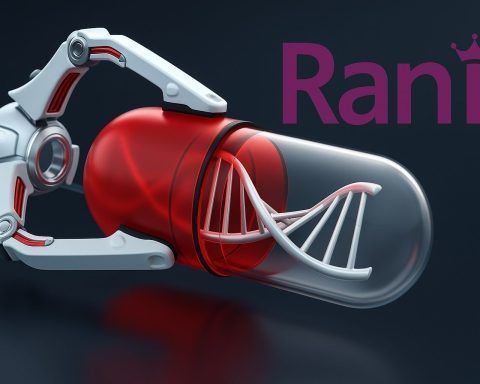
Rani Therapeutics NASDAQ:RANI is a clinical-stage biotech founded by serial innovator Mir Imran. Its mission is to replace injectable biologic drugs (peptides, proteins, antibodies) with oral capsulesnasdaq.com. The company’s core asset is the RaniPill® – an ingestible capsule that carries a tiny “microneedle” which, upon reaching the intestine, automatically injects the drug into the gut wall. Because the intestine lacks sharp pain receptors, the process is designed to be painlessts2.tech. According to Rani, this platform has repeatedly shown safety, tolerability and drug bioavailability comparable to injections in both animal and early human studiesnasdaq.comglobenewswire.com.
Rani’s pipeline covers multiple high-value areas: endocrine/metabolic (obesity, diabetes, osteoporosis), immunology, and rare disease. For example, RT‑114 and RT‑116 target obesity/diabetes via oral GLP-1 agonists; RT‑102 is an oral PTH analog for osteoporosis; RT‑105 is an oral TNFα-inhibitor antibody for autoimmune disease; RT‑101 (octreotide) was a proof-of-concept. The company partners when possible – e.g. its Chugai deal focuses on a rare-disease antibody that Rani will turn into an oral drugts2.tech. Until commercialization, Rani finances itself through equity raises and licensing deals.
Founder Mir Imran emphasizes patient compliance: “Millions must take injections…with pills, compliance is much higher than with injections”ranitherapeutics.com. The company’s strategy is to solve the needle problem – a major barrier for patients – and then either launch drugs itself or license them to big pharma.
Pipeline and Clinical Updates
Rani’s leading programs are the oral GLP-1/GLP-2 agonists and oral semaglutide. In July 2025 Rani reported preclinical (canine) data for RT‑114 (a novel dual GLP-1/GLP-2 obesity drug) showing its RaniPill delivered the drug as effectively as a subcutaneous shotir.ranitherapeutics.com. CEO Talat Imran said this “bioequivalence” to injections highlights RT‑114’s potential to revolutionize obesity treatmentir.ranitherapeutics.com. A Phase 1 study of RT‑114 is expected in the second half of 2025ir.ranitherapeutics.com.
Similarly, RT‑116 (Rani’s pill form of semaglutide) was presented at ObesityWeek 2025 with compelling data: in dogs, the oral dose produced essentially the same blood levels and weight-loss effect as an injected doseglobenewswire.com. This proof-of-concept paves the way for human trials of oral GLP-1 drugs.
Other pipeline points: RT‑102 (oral PTH) completed a Phase 1 trial in 2022, and Rani is planning Phase 2 after showing strong Phase 1 results. RT‑105 (oral TNFα antibody for psoriasis/arthritis) was slated for Phase 1 in 2023. RT‑101 (octreotide) was safely tested in Phase 1 with good bioavailability. For diabetes, Rani also envisions oral insulin or basal insulin programs. In partnership news, Rani has a 2024 research collaboration with Chugai (announced Aug 2024) to work on two undisclosed molecules, confirming the platform’s broad utility.
Financial Position and Recent Results
Rani remains pre-revenue and has been burning cash on R&D. Its latest financials (Q2 2025) showed cash of only $10.2 million (down from $27.6M at end-2024) and a net loss of $11.2M for the quarterir.ranitherapeutics.com. Quarterly R&D spend (~$5.5M) and G&A (~$5.0M) have been fairly steadyir.ranitherapeutics.com. The company’s balance sheet was stretched; only a few months earlier it warned of low cash and possible Nasdaq delisting if not remedied.
However, the Oct 2025 financing dramatically changed the picture. The $60.3M private placement gave Rani nearly four times its Q2 cash. Combined with the $10M Chugai upfront and a likely $18M tech-transfer milestone (total ~$88M), the company now states it has a multi-year runway (into 2028)ts2.tech. After these transactions, pro forma cash (including expected payments) exceeds $80–90M, meaning Rani should be funded through several phases of clinical work. Until then, Rani has “no revenue and consistent net losses”, relying on equity and deals for funding.
For context, key metrics show Rani’s tiny revenue and large losses: trailing-12-month revenue ~$1.2M (mainly licensing) and a net loss ~-$29.7M. Cash burn is on the order of $10–12M per quarter. With the new funds, analysts believe Rani’s balance sheet is now relatively healthy for an early-stage biotech.
Analyst Commentary and Stock Outlook
Investor sentiment is overwhelmingly bullish. After the Chugai partnership, H.C. Wainwright initiated coverage on Oct 21 with a Buy rating and an $11 price targetts2.tech. The report cited Rani’s disruptive platform and upcoming obesity programs as key drivers. Maxim Group similarly upped its target from $5 to $10 (Buy) on Oct 20. In sum, the consensus among covering analysts is Strong Buy, with 12‑month targets averaging ~$10–$11ts2.tech – implying 300–450% upside from current levels. For example, Nasdaq data (via Fintel) shows a mean target of $10.71.
Company management and industry partners share this optimism. CEO Talat Imran said the recent financing “reflects growing confidence in our strategy” and will let Rani “pursue our goal of oral biologic therapies with far greater resources”ts2.tech. Chugai’s Dr. Igawa praised Rani’s tech as a way to create “entirely new value” in oral drugsts2.tech.
That said, most analysts caution that RANI is extremely speculative. As TS2 notes, “the stock’s extreme volatility…makes that clear” and risk remains high. Rani is still a sub-$200M market cap company with no products, so any setbacks (trial failures, delays, dilution) could trigger sharp falls. Price technicals are equally wild: implied volatility on RANI’s options is in the 150–200% range, and short interest has been substantial. Short-term, traders warn profit-taking or pullbacks are likely after such a run. But in the long term, many analysts believe the company could justify a much higher valuation if its platform and pipeline deliver on their promise.
Biotech Sector Comparison
In the broader biotech context, RANI’s moves stand out. The iShares Biotech ETF (IBB), a proxy for U.S. biotech stocks, rose only ~19.2% year-to-date through Oct 30ishares.com. Even high-growth biotech and obesity-drug peers have seen far more modest gains. RANI’s 2025 surge reflects sector tailwinds (interest in obesity/GLP-1 therapies) but especially its own news. It outperformed established obesity-med names (like Novo Nordisk or Lilly) by a wide margin in late Oct. Few pure-play peers exist; other early-stage oral biologic developers (e.g. Oramed Pharmaceuticals) have far lower valuations and no comparable deals. In short, Rani is a highly idiosyncratic outlier in biotech right now: riding a tsunami of positive headlines while much of the sector is only inching higher.
Sources: Official company releases and filingsir.ranitherapeutics.comnasdaq.com, Reutersreuters.com, Nasdaq IRglobenewswire.comnasdaq.com, analysis from TechSpace2/TS2 (financial news)ts2.techts2.techts2.tech, and market data from Investing.com and iSharesinvesting.comishares.com. These are supplemented by expert reports (e.g. H.C. Wainwright) as cited.
Related articles: NASDAQ:RANI