Earth has a tiny new traveling companion. Here’s what’s actually confirmed—and what isn’t—about 2025 PN7, plus how it fits into the bigger story of quasi‑moons and mini‑moons.
What happened today
Coverage of Earth’s “extra moons” picked up again on November 18, 2025, with fresh explainers highlighting that our planet frequently hosts transient mini‑moons and quasi‑moons—small natural bodies that either briefly orbit Earth or share our year around the Sun. The broader context matters: Earth’s newly discussed quasi‑moon 2025 PN7 is real, but it’s not a second Moon. It’s an asteroid in a special co‑orbital dance with Earth, and modeling suggests it will keep us company into the 2080s. Geo News
What a “quasi‑moon” is (and how it’s different from a mini‑moon)
A quasi‑moon (or quasi‑satellite) is an asteroid that orbits the Sun, not Earth, but its year is so Earth‑like that from our vantage point it seems to loop around us. It’s a gravitational illusion caused by a 1:1 orbital resonance with Earth. By contrast, a mini‑moon is a small object temporarily captured by Earth’s gravity and placed in a short‑lived true orbit around our planet before escaping again. NASA documented this behavior in earlier quasi‑moon examples such as 2016 HO3, which has been a stable companion for a century and should persist for centuries more.
Meet 2025 PN7: the small asteroid pacing Earth
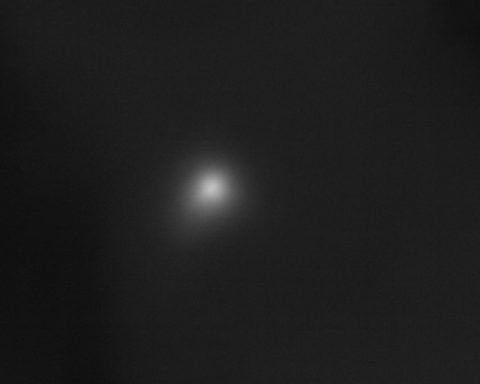
- What it is: 2025 PN7 is a near‑Earth asteroid ~19 meters (≈62 ft) across, faint enough to require large telescopes. It’s the latest known quasi‑moon of Earth.
- How it was found: It was first reported in late August 2025 by the Pan‑STARRS survey in Hawaiʻi; the Minor Planet Center (MPC) published the official discovery circular as MPEC 2025‑Q232 on Aug. 29. NASA’s JPL Small‑Body Database lists the object and its Earth‑like orbital period.
- How long it stays: Dynamical studies indicate PN7 has been in a quasi‑satellite configuration since the mid‑1960s and is expected to leave the configuration around 2083. That’s decades—not forever.
Important nuance: Several outlets have framed this as “NASA confirms a new second moon.” NASA maintains the orbital data, but the quasi‑moon classification comes from astronomers’ analyses—including a short paper in Research Notes of the AAS—not a NASA proclamation. EarthSky put it plainly: that headline is “not quite right.” EarthSky
Is 2025 PN7 dangerous?
No. Current solutions show no impact risk while it shares our orbit; it simply paces Earth at safe distances in a slow, resonant dance. That’s consistent with expert commentary quoted in recent coverage and with how quasi‑moons behave.
Today’s angle: Earth often has “extra” small companions
A November 18 explainer emphasizes that Earth frequently hosts transient small satellites—both temporarily captured mini‑moons and longer‑lived quasi‑moons—and that they’re scientifically valuable for studying orbital dynamics and the near‑Earth environment. This frames PN7 as the latest in a recurring pattern, not a one‑off marvel.
How many quasi‑moons do we know about?
Counting can be tricky because co‑orbital states evolve, but recent reporting places Earth’s tally at about seven known quasi‑moons (with more expected as surveys improve). Notable examples include 469219 Kamoʻoalewa (2016 HO3) and (164207) 2004 GU9.
Why scientists care: from origins to missions
- Origins: Some quasi‑moons may be ordinary near‑Earth asteroids nudged into Earth‑like orbits; others might be lunar fragments blasted off the Moon long ago—Kamoʻoalewa shows lunar‑like silicates in its spectrum. PN7’s composition remains unconfirmed.
- Missions: China’s Tianwen‑2 launched on May 28, 2025 to rendezvous with Kamoʻoalewa and return samples in 2027—a mission that could pin down whether some quasi‑moons truly are lunar chips.
- What’s next: The Vera C. Rubin Observatory is expected to net many more tiny, faint co‑orbitals over the next few years, giving us a richer census of Earth’s small companions.
A note on “confirmation” and peer review
The widely cited analysis of PN7’s dynamics appeared in Research Notes of the AAS (RNAAS)—a rapid‑communication venue that is moderated but not peer‑reviewed in the traditional sense. That makes it ideal for timely orbital results, but it’s also why careful outlets avoid phrasing this as a formal NASA “declaration.” The scientific bottom line—PN7’s quasi‑moon behavior—rests on the orbital solutions and integrations that can be independently checked as more data arrive. AAS Journals
The out‑there hypothesis you might see in feeds
A minority viewpoint argues PN7 could be space hardware—for example, debris from the 1964 Soviet Zond 1 mission—based on coincident timelines. That idea is speculative and would need spectroscopy (color/reflectance signatures) to test; for now, PN7 is treated as a natural asteroid.
Quick facts: 2025 PN7 at a glance
- Type: Near‑Earth asteroid; quasi‑moon of Earth (co‑orbital, Sun‑orbiting).
- Size: ~19 m diameter (estimate from brightness).
- Discovered:Late August 2025 by Pan‑STARRS; MPC circular issued Aug. 29, 2025.
- How long with us: Likely mid‑1960s → ~2083 in a quasi‑satellite state.
- Risk: None identified; it’s not a second Moon and does not affect tides.
Why today’s renewed attention matters
Quasi‑moons and mini‑moons aren’t mere curiosities—they’re nearby laboratories for orbital physics, targets for low‑cost missions, and potential planetary‑defense testbeds because their relative speeds are low. Today’s reminders that Earth often has small companions help reset expectations: PN7 isn’t a one‑time headline; it’s another window into a busy neighborhood we’re only just learning to survey properly.
Sources and further reading
- Today (Nov. 18, 2025): On Earth’s frequent mini‑moons/quasi‑moons and why they matter.
- Background explainer: National Geographic on PN7 and the long history of Earth’s “maybe‑moons,” including likely timelines for PN7 (~1960s to ~2083) and the expectation that Rubin will find more. National Geographic
- Discovery & orbital data: MPC discovery circular (MPEC 2025‑Q232) and NASA JPL Small‑Body Database lookup for 2025 PN7.
- “Not quite NASA confirmation”: EarthSky’s clarification about what’s confirmed and how. EarthSky
- Size/visibility & context: Live Science on PN7’s faintness and likely decades‑long quasi‑moon tenure.
- Kamoʻoalewa evidence: Lunar‑like silicates study in Communications Earth & Environment (2021).
- Tianwen‑2 mission milestones: Reuters and Space.com on launch and sample‑return timeline.
This article synthesizes reporting and primary sources to reflect the state of knowledge on November 18, 2025. As orbital solutions are refined, details such as PN7’s long‑term behavior may be updated by MPC/NASA databases and future peer‑reviewed papers.
Related articles: NASA