
Scientists are racing to understand a mysterious fungus thriving in Chernobyl’s ruins – and whether its superpower can be turned into a shield for deep‑space explorers.
Why a Chernobyl fungus is suddenly everywhere in the news
Over the last few days, a cluster of high‑profile stories has pushed an obscure organism into the global spotlight:
- BBC Future ran a feature on “the mysterious black fungus from Chernobyl that may eat radiation”, asking whether it could one day shield space travellers from cosmic rays. electricity info+1
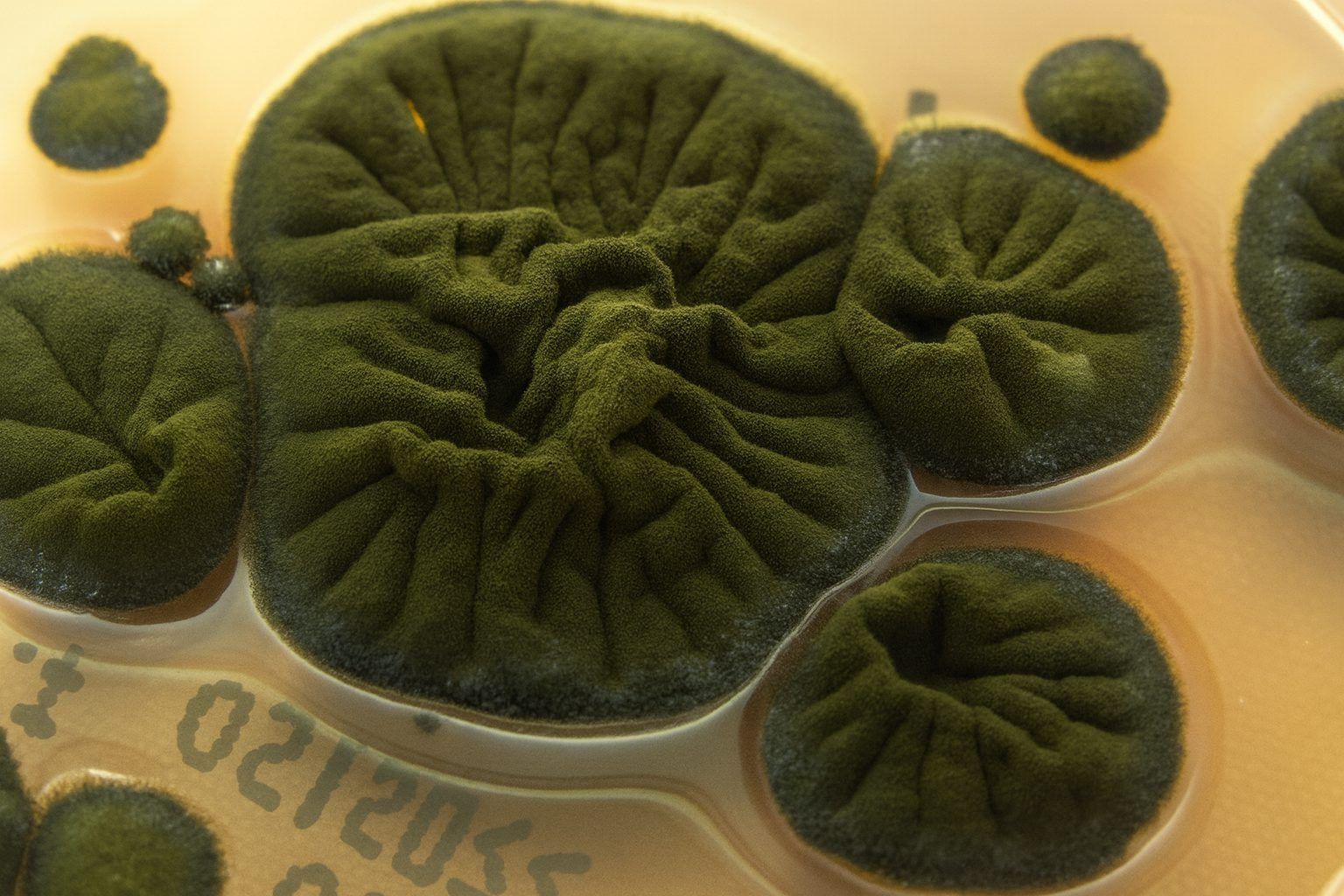
- ScienceAlert followed up with a deep dive on Cladosporium sphaerospermum, the velvety black mould clinging to the inner structures of Chernobyl’s ruined reactor, highlighting its bizarre ability to flourish under intense ionizing radiation – and the mystery of how it does it.
- Caliber.Az connected the Chernobyl discovery directly to safe space colonization, describing how the same type of fungi has already been tested on the International Space Station (ISS) and explored by NASA as a potential biological radiation shield.
- Broadcasters such as WION amplified the story with viral headlines like “Where humans die, fungus thrives”, cementing Chernobyl’s “radiation‑eating fungus” as one of late‑2025’s most talked‑about science themes. Facebook+1
At the same time, new peer‑reviewed research in 2025 has shown that fungal melanin – the dark pigment that makes these organisms black – can protect advanced plastics from space radiation when tested in low Earth orbit, giving the media narrative real scientific teeth.
Taken together, these developments have transformed a curiosity from Chernobyl into a serious candidate in the search for sustainable radiation shielding for future lunar bases and Mars habitats.
What exactly did scientists find inside Chernobyl?
The story begins in the 1990s, years after the 1986 disaster at the Chernobyl Nuclear Power Plant.
- In 1990, engineers noticed patches of dark mould growing inside the ruined reactor structures – one of the most radioactive built environments on Earth.
- In 1997, Ukrainian mycologist Nelli Zhdanova entered the site to systematically sample the fungi living in and around the reactor. She and her colleagues eventually identified around 200 species of melanin‑rich fungi, many of which showed a striking behaviour: they grew toward radioactive material rather than away from it, a phenomenon called radiotropism.
One of the most intriguing species isolated from Chernobyl’s interior walls was Cladosporium sphaerospermum – a dark, slow‑growing, globally distributed mould that just happens to be exceptionally rich in melanin and comfortable in harsh, dry, cold environments.
In radioactive soil and on contaminated surfaces, these fungi didn’t just survive; many grew better in high‑radiation conditions than in relatively normal ones. That raised a radical question:
Could some fungi actually use radiation as an energy source, in a way loosely analogous to how plants use sunlight?
This idea – radiosynthesis – has driven nearly three decades of research.
Does the fungus really “eat” radiation?
The phrase “radiation‑eating fungus” is catchy, but it can be misleading. What scientists have shown so far is more subtle – and in some ways more interesting.
Melanin as both shield and possible energy harvester
In the mid‑2000s, radiopharmacologist Ekaterina Dadachova and immunologist Arturo Casadevall studied melanized fungi, including strains connected to Chernobyl. When they exposed these fungi to high levels of ionizing radiation, three things stood out: ScienceAlert+1
- They grew faster than genetically similar fungi kept at lower radiation levels.
- The melanin itself changed, with its electronic properties shifting in ways that suggested improved ability to transfer electrons – a key step in energy metabolism.
- The fungi’s melanin‑rich cell walls provided extra protection against radiation damage, acting somewhat like a microscopic, self‑regenerating shield.
From these results, the team proposed that in some fungi, melanin might be capturing energy from ionizing radiation and feeding it into the cell’s metabolism – a process they likened to a dark, radiation‑powered cousin of photosynthesis.
What we don’t know yet
The new ScienceAlert article makes a critical point: despite decades of work, full radiosynthesis has not been conclusively demonstrated. Researchers have not yet shown a complete, radiation‑powered pathway that:
- Fixes carbon using ionizing radiation alone,
- Or yields a clear net energy gain in the absence of other nutrients.
In other words:
- Yes, Chernobyl fungi clearly tolerate radiation, grow better in it, and use melanin in unusual ways.
- No, we cannot yet say they literally “eat” radiation the way plants harvest light – the metaphor shouldn’t be taken too literally.
What is clear, and central to the current news coverage, is that melanin‑rich fungi have evolved a powerful toolkit for surviving and even thriving in extreme radiation. That alone makes them extremely attractive for space exploration.
From reactor walls to orbit: fungi on the International Space Station
Chernobyl is not the only place where these organisms have been tested.
The ISS experiment: a thin fungal shield in space
In 2018, scientists sent Cladosporium sphaerospermum to the International Space Station, where it was grown in a small bioreactor with radiation sensors underneath. Over 26–30 days, the team compared: Frontiers+2georgetownspace.org+2
- Fungal growth in orbit vs. identical cultures on Earth
- Radiation levels passing through a 1.7 mm layer of fungus vs. a fungus‑free control
Key findings:
- The fungus grew about 1.2 times faster in orbit than in the ground control, hinting at a possible radiation‑linked or stress‑linked growth advantage.
- The thin fungal layer reduced measured radiation by roughly 2–5% compared with the control.
Those may sound like small numbers, but remember: this was less than 2 mm of biomass.
Based on those results and physical modelling, several groups have suggested that a ~20–21 cm‑thick layer of this fungus (or a similar melanin‑rich material) could, in principle, reduce the annual radiation dose on the Martian surface down toward Earth‑like levels, especially when combined with soil or regolith.
Why this matters for astronauts
Radiation is one of the biggest obstacles to long‑term human presence beyond Earth:
- Galactic cosmic rays and solar energetic particles can damage DNA, increase cancer risk and harm the nervous and cardiovascular systems.
- Traditional shielding – thick walls of metal, water or plastic – is very heavy, making it expensive to launch.
A biological shield that is:
- Self‑growing,
- Self‑repairing, and
- Made from local resources (e.g., feedstock grown on Mars or the Moon)
would be a game‑changer for mission design.
2025’s big research leap: fungal melanin as a space‑grade material
The story in late 2025 is not just about living fungi — it’s also about their pigment.
In May 2025, a team led by Radames J. B. Cordero published a study in PNAS examining polylactic acid (PLA) biocomposites infused with fungal melanin and other melanins. These samples were mounted outside the ISS for about six months and then compared with Earth‑bound controls.
Their results showed that:
- PLA mixed with fungal melanin suffered less mass loss and surface damage than plain PLA in orbit.
- The melanin‑infused materials shielded an underlying PVC layer from radiation and environmental degradation better than controls.
Put simply: melanin made the plastic tougher and more radiation‑resistant in real space conditions.
This bridges the gap between:
- The “living shield” concept (growing fungal layers or mycelium bricks), and
- Engineered materials, where melanin is used like a high‑tech additive inside 3D‑printed parts, coatings or structural panels.
Other 2025 work has proposed bio‑inspired architectural coatings that incorporate fungal melanin as a lightweight radiation‑protective layer for buildings on Earth, with obvious relevance to habitats in high‑radiation environments such as the Moon or Mars.
NASA’s “myco‑architecture”: growing habitats instead of hauling them
Long before this year’s news cycle, NASA’s Myco‑Architecture Off Planet concept laid out what a fungal future in space might look like.
In a 2018 NASA feature, astrobiologist Lynn Rothschild outlined a vision where: NASA
- Lightweight inflatable shells are launched from Earth.
- These shells are seeded with fungal mycelium and dried nutrients.
- Once on the Moon or Mars, astronauts add water and warmth.
- The mycelium grows throughout the shell, forming a solid, fibrous wall that can later be heat‑killed to stabilize the structure.
Mycelium‑based materials are:
- Strong and light,
- Naturally insulating and fire‑resistant,
- And, if made from melanin‑rich fungi, potentially radiation‑absorbing.
In Rothschild’s words, it’s like replacing the “turtle” model – hauling your entire protective shell from Earth – with a living construction kit that grows most of the structure on site, using far less launch mass.
The fresh 2025 melanin‑PLA results, along with new coverage in BBC Future, ScienceAlert and Caliber.Az, suggest that this idea is moving from speculative concept to viable technology path.
Latest coverage at a glance (up to 1 December 2025)
Here’s how the current wave of reporting fits together:
- BBC Future – “The mysterious black fungus from Chernobyl that may eat radiation” (25 Nov 2025)
Explores how Zhdanova’s work at Chernobyl revealed melanin‑rich “radiotrophic” fungi and asks whether these organisms could become natural radiation shields for astronauts. electricity info+1 - ScienceAlert – “Chernobyl Fungus Appears to Have Evolved an Incredible Ability” (30 Nov 2025)
Focuses on Cladosporium sphaerospermum, emphasizing that it thrives under ionizing radiation and attenuates cosmic rays on the ISS, while stressing that true radiosynthesis remains unproven. ScienceAlert+1 - Caliber.Az – “Baffling discovery inside Chernobyl may hold secret to safe space colonization” (30 Nov 2025)
Traces the story from Chernobyl to space, highlighting Zhdanova’s surveys, Dadachova’s growth‑under‑radiation experiments, the ISS results and NASA’s myco‑architecture program as a blueprint for fungal‑based lunar and Martian shelters. Caliber.az+2NASA+2 - WION – “Where humans die, fungus thrives: Something very strange is happening in Chernobyl” (late Nov 2025)
Presents the Chernobyl fungus visually for a mass audience, underscoring the contrast between deadly radiation for humans and apparent comfort for the fungus. Facebook+1 - Scientific backdrop – 2025 PNAS study on fungal melanin‑PLA composites & NASA “Exposed!” update
Provide hard, experimental evidence that melanin‑based biocomposites and melanized fungi can reduce radiation and protect materials in low Earth orbit, reinforcing the media narrative with peer‑reviewed data. PubMed+2The University of Akron, Ohio+2
In parallel, other work on radiation‑tolerant moss surviving months outside the ISS shows that Chernobyl’s fungi are part of a broader search for life forms that can help us build ecosystems and infrastructure beyond Earth, not just survive there.
What could “radiation‑eating” fungi actually do for space colonization?
If the most optimistic scenarios pan out, there are several concrete applications:
1. Living radiation shields
- Mycelium walls: Grow thick walls of melanized mycelium inside inflatable shells on the Moon or Mars, using local regolith plus organic waste as feedstock.
- Self‑repair: If the wall is damaged, re‑hydrate dormant mycelium or add more feedstock where needed; the shield regrows.
- Mass efficiency: Launch only spores, nutrients and thin containment shells instead of many tonnes of finished building materials.
2. Melanin‑enhanced building materials
- 3D‑printed parts: Use PLA or other polymers infused with fungal melanin to print interior panels, equipment housings or radiation‑tolerant components, as demonstrated in the PNAS study.
- Coatings and paints: Apply melanin‑based layers to the outside of habitats, rovers or suits as additional shielding, similar to the architectural coatings now being tested on Earth.
3. Bioremediation and monitoring
Even on Earth, radiotrophic fungi could:
- Help stabilize or immobilize radionuclides around contaminated sites, making cleanup safer.
- Be integrated into sensor systems where fungal growth or pigment changes signal radiation hot spots, as explored by architects and engineers working with radiotrophic spores and radiation‑triggered dispersal systems.
The caveats: hype vs. reality
For all the excitement, several important limitations remain.
- The mechanism is still unclear
Radiosynthesis is a promising hypothesis, but there is no complete, experimentally confirmed energy pathway yet. The fungus may be using radiation to augment traditional metabolism or stress responses, rather than truly “feeding” on it as fuel. ScienceAlert+2Wikipedia+2 - Fungi do not erase radioactivity
These organisms may bind, transform or tolerate radioactive materials, but they do not magically neutralize them. Any bioremediation strategy still has to deal with where the radionuclides ultimately end up. - Engineering challenges are non‑trivial
- Controlling growth in closed habitats
- Preventing unwanted spores from spreading into air systems
- Ensuring structural stability, fire safety and long‑term reliability
- Ethical and planetary‑protection questions
Seeding alien worlds with fast‑growing terrestrial fungi raises questions about contamination and ecosystem impacts, especially on Mars, where scientists are still searching for indigenous life.
Why this matters beyond the headlines
On 1 December 2025, the buzz around Chernobyl’s “radiation‑eating” fungus is more than a viral curiosity. It reflects a deeper shift in space exploration and climate‑era engineering:
- A move from inert materials toward adaptive, bio‑based systems
- A recognition that extremophile life – from moss spores to melanized fungi – could become a key ally in surviving harsh environments, both off‑world and on a changing Earth The Guardian+1
- And an emerging toolkit in which melanin, mycelium and microbes are treated not as contamination, but as core components of space hardware and architecture
Chernobyl’s black fungus will not single‑handedly make Mars safe. But as fresh reporting and new data from 2025 make clear, it is rapidly evolving from an eerie footnote in nuclear history into a serious candidate for the materials science and life‑support systems of the space age.
Related articles: Space Exploration