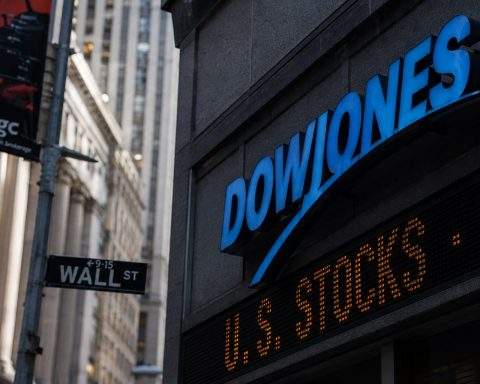

U.S. stocks are set to begin December on the back foot as futures for the Dow, S&P 500 and Nasdaq all trade lower, reversing some of last week’s powerful rebound. A sharp drop in Bitcoin, a jump in oil, and fresh bets on a Federal Reserve rate cut are creating a choppy, risk‑off start to the final month of 2025.
Key takeaways
- Wall Street futures are lower by roughly 0.4%–0.8% for the major U.S. indices, pointing to a weaker open after their best week since June.
- Rate‑cut expectations have surged: markets now price an ~85–90% chance of a 25 bps Fed cut at next week’s meeting, with BofA shifting its forecast to a December cut plus two more in 2026.
- Oil and gold are climbing as WTI crude rises more than 1% and gold trades at a six‑week high, while Bitcoin tumbles back into the mid‑$80,000s, hammering crypto‑linked stocks.
- Global growth worries are back: China’s manufacturing and services PMIs have slipped into contraction and traders are bracing for potential Bank of Japan tightening and key U.S. factory data.
- “Santa rally” is in doubt: several Wall Street strategists warn that December’s usual seasonal strength may not materialize after a year of unusual volatility, even as earnings remain strong. CoinCentral
- Big earnings and data ahead: MongoDB, CrowdStrike, Snowflake, Salesforce and Pure Storage headline a busy tech earnings slate, while the ISM manufacturing report and Fed Chair Jerome Powell’s speech could set the tone for the week.
All moves and levels below refer to early U.S. trading on Monday, December 1, 2025, and can change as the session unfolds.
Futures fall as Wall Street enters the final month of 2025
After a holiday‑shortened week that delivered the strongest gains since June, U.S. stock index futures are pointing lower this morning.
- Dow Jones Industrial Average futures are down roughly 0.4%, or about 175–190 points.
- S&P 500 futures are off around 0.5%–0.6%.
- Nasdaq 100 futures are under the most pressure, lower by roughly 0.6%–0.8%.
Investopedia notes that the pullback comes right after the Dow and S&P 500 each gained more than 3% last week, while the Nasdaq surged nearly 5%, marking the best weekly performance for the major indices since mid‑year.
Reuters similarly reports that the benchmark S&P 500 and blue‑chip Dow posted “modest gains” in November overall, even as the tech‑heavy Nasdaq logged its biggest monthly decline since March, a reminder of how sensitive high‑growth names remain to shifting expectations around artificial‑intelligence spending. Reuters
Today’s softer tone looks like a classic mix of profit‑taking and macro nerves:
- Traders are locking in profits after the late‑November surge.
- A batch of U.S. manufacturing data, along with Powell’s speech and a delayed reading of the Fed’s preferred inflation gauge (PCE) later this week, could all move markets.
In other words, after a powerful bounce, investors are pausing to ask: did we come too far, too fast?
Fed expectations: Rate‑cut euphoria meets inflation reality
The Federal Reserve is once again at the center of Wall Street’s narrative.
What markets are pricing in right now
- Futures on the Fed funds rate imply roughly an 87%–88% probability that the Fed will cut rates by 25 basis points at its December meeting.
- The 10‑year U.S. Treasury yield is hovering around 4.04%, up slightly from Friday’s close, keeping financial conditions tight even as investors wager on easier policy ahead.
BofA’s call: cut now, more cuts later
A fresh note from BofA Global Research this morning shows how dramatically the Street’s thinking has shifted:
- BofA now expects the Fed to cut rates by 25 bps at the December meeting, reversing its previous forecast for no move.
- The bank projects two additional quarter‑point cuts in 2026 (June and July), which would leave the policy rate in a 3.00%–3.25% range.
BofA cites signs of a weakening labor market and dovish tones from key policymakers. It also explicitly ties its forecast to the likely change in Fed leadership, with White House economic adviser Kevin Hassett emerging in recent reporting as the frontrunner to replace Jerome Powell when his term ends next year.
Powell’s speech and the data calendar
Investors will be listening closely when Powell appears on a policy panel tonight. With odds of a cut already near 90%, any hint that he is less comfortable with an immediate move could spark a re‑pricing in both bonds and stocks.
On top of that:
- Surveys from S&P Global and the Institute for Supply Management (ISM) on November manufacturing activity are due shortly after the opening bell.
- A delayed PCE inflation report at the end of the week will give the Fed one of its last major data points before the meeting.
The tension is simple:
Markets are trading as if a cut next week is almost a done deal, but inflation data and Powell’s messaging still have the power to challenge that narrative.
Oil jumps, gold shines, Bitcoin tumbles: A classic risk‑off mix
Three key macro prices are telling the same story this morning: investors are nervous.
Oil: Higher input costs, higher anxiety
U.S. crude oil (WTI) futures are up more than 1%, trading around $59 per barrel, while several outlets highlight an overnight move of more than $1 a barrel on supply concerns and OPEC headlines.
The Meyka market wrap notes that:
- U.S. equity futures opened lower in tandem with the oil move.
- Energy stocks are seeing support, while transport, industrial and tech names face pressure as investors reassess input costs and margins.
Gold: Six‑week highs signal demand for safety
Gold is enjoying a bid as well:
- Spot prices are up close to 0.8% around $4,290 an ounce, the highest level in roughly six weeks, according to pre‑market commentary.
That combination—higher oil, higher gold, lower stock futures—is a textbook sign of investors rotating toward safetywhile hedging inflation and geopolitical risk.
Bitcoin and crypto: From hero to headache
The sharpest moves are in the crypto market:
- Bitcoin is trading in the mid‑$80,000s, down roughly 5%–6% in the last 24 hours, after briefly trading above $91,000 over the weekend.
- Reuters and other outlets flag that it has fallen back below the psychologically important $90,000 level, extending what has become one of its worst stretches since the 2021 crash.
That slump is hitting crypto‑linked equities hard:
- Shares of MicroStrategy, Coinbase and several Bitcoin miners are down sharply in pre‑market trading, with some names off 4%–8%.
For equity investors, the message is clear: the risk‑on trade in crypto is unwinding, and that selling pressure is bleeding into high‑beta corners of the stock market.
Global growth worries: China slowdown and BOJ risk loom
The U.S. isn’t trading in a vacuum. Global cross‑currents are adding to Monday’s cautious tone.
China’s PMIs slip into contraction
Fresh data show that China’s manufacturing and services PMIs both slipped below 50, the line that separates expansion from contraction.
For U.S. investors, that matters because:
- It raises questions about global demand for everything from semiconductors to industrial machinery.
- Exporters and commodity‑linked names could face pressure if the slowdown deepens.
Bank of Japan: From anchoring yields to disturbing the carry trade
Reuters highlights another risk: expectations that the Bank of Japan may hike rates in December to combat inflation and a weak yen.
If Japanese yields rise:
- The popular yen carry trade—borrowing cheaply in yen to buy higher‑yielding assets—could unwind.
- That, in turn, might push global investors to reduce exposure to risk assets, including U.S. equities.
Global markets mirror the caution
Elsewhere:
- European equities are softer, with real estate and rate‑sensitive sectors underperforming.
- Emerging‑market stocks and currencies have started December on a mixed note, with some support from Fed‑cut hopes but pressure from weaker global growth.
The overall backdrop is one where macro headwinds are piling up, and investors are reluctant to chase U.S. stocks back toward record highs without clearer evidence on growth and inflation.
Santa rally in doubt despite strong earnings
Historically, December is kind to equity investors—Wall Street’s so‑called “Santa Claus rally”. This year, some strategists aren’t so sure.
A detailed analysis from CoinCentral, citing major Wall Street strategists, argues that 2025 may break the pattern: CoinCentral
- The year has seen unusual volatility, from an early‑year AI‑related “DeepSeek” meltdown to surprise tariffs announced in April.
- Options market data show investors buying more downside protection rather than betting on a straightforward year‑end grind higher.
- Some strategists warn that instead of a smooth rally, markets may see “another volatility pothole” before the year is done.
Yet the fundamental backdrop isn’t all negative:
- S&P 500 companies have delivered around 13% year‑over‑year profit growth in Q3, marking the fourth straight quarter of double‑digit earnings gains.
- Several long‑term targets still place the S&P 500 as high as 8,000 over the next 12–18 months, reflecting optimism about AI, productivity and corporate margins.
The tension here is between excellent earnings and elevated valuations, especially in AI and mega‑cap tech, which have already priced in a lot of future growth—and then some.
Sector and stock movers to watch today
Tech and growth: Feeling the squeeze
With yields ticking higher and crypto tumbling, rate‑sensitive growth names are under pressure:
- Nvidia is down about 1% in pre‑market trading, as chip sentiment softens.
- NIO is off around 4%, weighed down by concerns over China’s slowdown and intense EV competition.
At the same time, several software and cloud names are in focus ahead of earnings:
- CrowdStrike (Tuesday) will be a key read on cybersecurity spending.
- Snowflake, Salesforce and Pure Storage report Wednesday, offering insight into demand for cloud infrastructure and AI‑driven data services.
- MongoDB reports later today, providing an early test of how AI workloads are shaping database demand.
Given how central AI has been to this market cycle, any disappointments or cautious outlooks from these companies could amplify volatility.
Energy and cyclicals: Benefiting from higher oil
The energy sector is one of the few bright spots:
- Rising crude prices tend to boost integrated oil and exploration & production names, even as they pressure transport and consumer discretionary stocks.
Higher oil is a double‑edged sword:
- Good for energy profits and related capex plays.
- Tougher for airlines, shipping, logistics and consumer‑facing sectors that depend on cheap fuel.
Holiday retail: Big picture looks strong, stocks still cautious
On the consumer side, the data look robust:
- Adobe data referenced by Reuters show record online Black Friday sales around $11.8 billion, up more than 9% from last year.
- Salesforce estimates that spending from Thanksgiving through Cyber Monday could reach $78 billion, with total U.S. holiday retail sales projected to top $1 trillion.
Yet big‑box retail stocks are only slightly lower in early trading:
- Walmart, Target, Nike and Dollar Tree are marginally in the red, reflecting a mix of strong demand but still‑tight margins and cautious guidance.
M&A and single‑stock stories
There are still idiosyncratic winners:
- Leggett & Platt is up roughly 8% after Somnigroup proposed a takeover at $12 per share.
- In tech hardware and AI infrastructure, names like Intel are seeing big pre‑market moves on company‑specific news, including legal and competitive updates.
These micro stories are being largely overshadowed by the macro mood—but they underscore that stock‑picking still matters, even in a macro‑driven tape.
Data and events to watch for the rest of the day
For traders and longer‑term investors alike, the rest of Monday offers several potential catalysts:
- ISM Manufacturing PMI (November)
- A stronger‑than‑expected reading could ease recession fears but also rekindle worries about sticky inflation.
- A weak print would support the case for a rate cut but might fuel concerns about an economic slowdown.
- Fed Chair Jerome Powell’s evening appearance
- Markets will dissect every word for clues on whether he endorses or pushes back on current rate‑cut probabilities.
- Early read‑through from MongoDB earnings
- Commentary on AI‑related workloads, cloud spending and enterprise budgets for 2026 could influence not just software names but the broader AI narrative.
- Ongoing crypto price action
- If Bitcoin stabilizes near current levels, equity markets may shrug off the latest slide; if it accelerates lower, pressure on high‑beta tech and speculative names could intensify.
What today’s setup means for investors
From an investor’s perspective, the picture on December 1, 2025, is less about a single bad headline and more about an uneasy handoff:
- From a relief rally in late November
- To a data‑ and Fed‑driven December, where every print and speech can move expectations for 2026
Key themes to keep in mind:
- Volatility is likely to remain elevated
Options markets show rising demand for downside protection—investors are paying up to hedge rather than leaning into the Santa‑rally playbook. - Rate‑sensitive sectors are in the crosshairs
Tech, long‑duration growth and crypto‑exposed names will likely stay more volatile than value, defensives and high‑quality dividend payers as long as the path of Fed policy remains uncertain. - Energy and select cyclicals may benefit from today’s tape
Higher oil and resilient earnings can make parts of the energy and industrial complex relatively attractive—though they are also more exposed if growth slows sharply. - Long‑term earnings picture still looks constructive
Corporate profits are growing at a healthy double‑digit clip, and many strategists still see upside for U.S. stocks over a multi‑year horizon—especially if AI investments begin to translate into real productivity gains.
As always, the right response depends on each investor’s time horizon and risk tolerance. In the near term, the data calendar and Fed communications are likely to remain the dominant drivers of sentiment.
Important: This article is for informational purposes only and does not constitute financial, investment, or trading advice. Always consider your own circumstances and, where appropriate, consult a qualified financial professional.
Related articles: NYSE:CRM