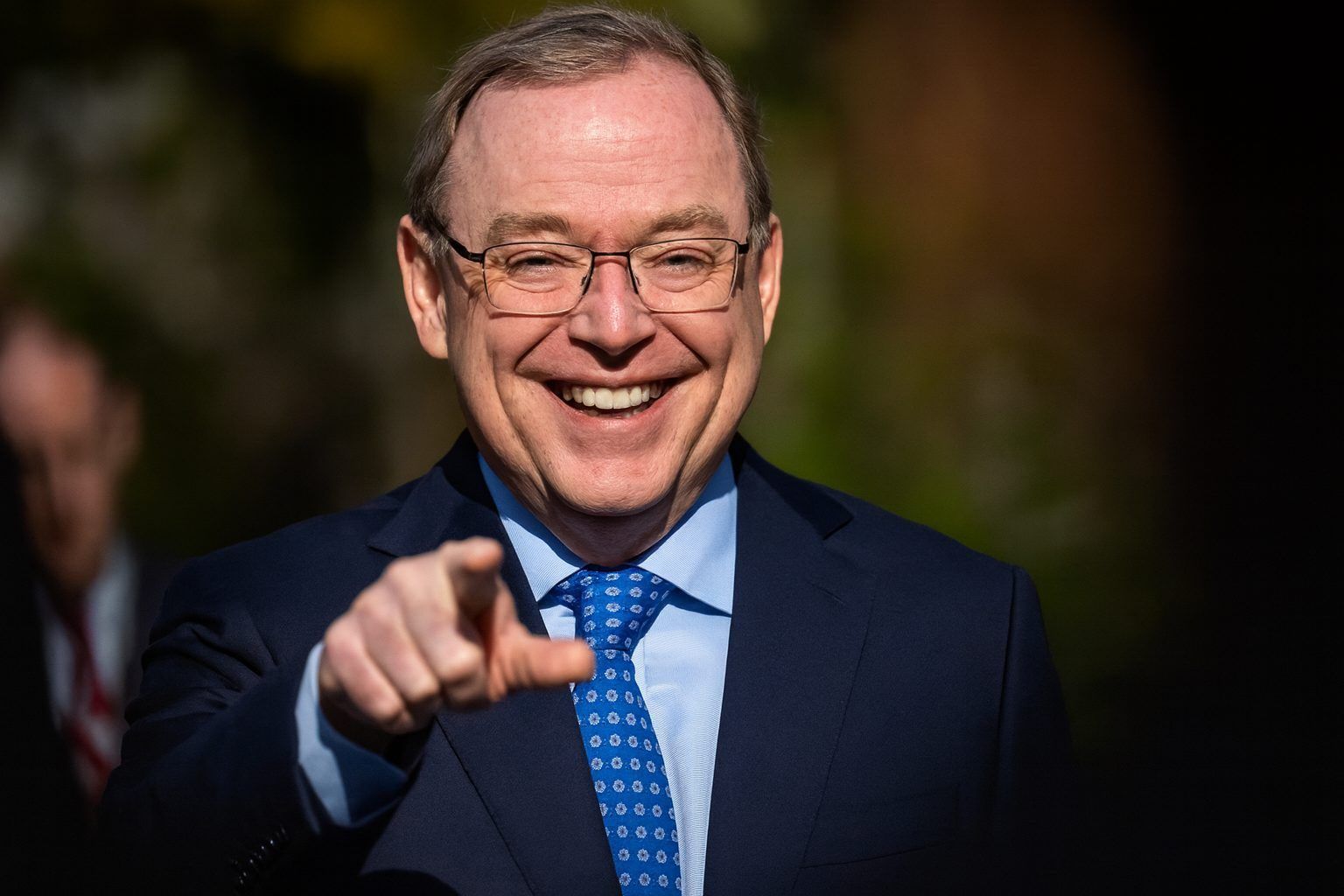

As of December 2, 2025, the race to succeed Federal Reserve Chair Jerome Powell is narrowing fast — and markets are behaving as though Kevin Hassett, Donald Trump’s top White House economic adviser, is already the next man in line for the job.
President Trump has told reporters aboard Air Force One that he has made his decision on who will lead the U.S. central bank when Powell’s term expires in May 2026, but has declined to reveal the name, promising only that an announcement is coming “soon” and likely before Christmas.NewsX+1
In betting markets, bank research notes and global currency moves, a new consensus is forming: Kevin Hassett is now the clear frontrunner to become the next Chair of the Federal Reserve.
Key takeaways
- Trump says he has picked Powell’s successor, with an announcement expected before Christmas, as the Fed heads into a crucial December 9–10 policy meeting.
- Kevin Hassett, 63, Director of the National Economic Council, is widely seen as the favorite, with prediction markets giving him well over a 50% chance and some estimates closer to 75–80%.
- Hassett is considered dovish on interest rates, aligned with Trump’s push for faster and deeper rate cuts, and has previously floated unconventional ideas like 50‑year mortgages.
- Major banks such as Bank of America have already changed their rate forecasts, now expecting a December cut and additional easing in 2026, citing the likely change in Fed leadership.
- Hassett’s past comments that inflation is “way down,” that official jobs data may contain “political bias,” and that firing Powell over a costly Fed building renovation might be legally possible have intensified worries about Fed independence.Reuters+4Fortune+4AInvest+4
Where the Fed chair race stands on December 2, 2025
Trump’s public hints have turned what was already a closely watched personnel decision into a full‑blown market story.
Speaking with reporters while flying back to Washington, Trump said he knows who he is going to pick to replace Powell and that the White House will “be announcing it,” but stopped short of naming names.NewsX+1
Treasury Secretary Scott Bessent, who is overseeing the search, has said there is a “very good chance” the president will reveal his nominee before Christmas.Business Insider+1
Multiple outlets and officials converge on a five‑person shortlist:AP News+3Business Insider+3Reuters+3
- Kevin Hassett – Director of the National Economic Council (NEC) and former chair of the Council of Economic Advisers (CEA).
- Christopher Waller – Sitting Fed Governor, seen as an experienced institutional insider.
- Kevin Warsh – Former Fed Governor with deep Wall Street ties and a vocal critic of Powell.
- Michelle Bowman – Fed Governor and Vice Chair for Supervision, known for hawkish dissents earlier in the year.
- Rick Rieder – BlackRock’s global fixed-income chief and longtime markets insider.
While Trump has named several of these figures publicly in recent months, it is Hassett’s odds that have surged in the last week.
On prediction platforms such as Polymarket and Kalshi, Hassett now commands a majority share of contracts on who will be the next Fed chair, with estimates ranging from just over 50% on some sites to nearly 80% on others, far ahead of Waller and Warsh.
A Bloomberg‑sourced report last week portraying Hassett as the favorite, followed by a flurry of follow‑up stories from outlets like MarketWatch and Fortune, appears to have locked in the narrative that he is the market’s base case.
Why markets already trade as if a Hassett Fed is coming
The policy stakes are enormous.
Rate cuts now priced as leadership-driven
On December 1, Bank of America Global Research changed its U.S. interest‑rate forecast. Instead of leaving policy unchanged, it now expects the Fed to cut rates by 25 basis points at its December meeting, followed by two more quarter‑point cuts in 2026, bringing the policy rate down toward 3.00–3.25%. Crucially, BofA’s economists say those extra cuts next year are driven “by the change in leadership, not our read on the economy.”Reuters+1
Futures markets are in the same ballpark. CME FedWatch probabilities imply roughly an 88% chance of a December cut, a figure that has crept higher as the odds of a dovish successor to Powell have risen.
Dollar, gold and emerging‑market currencies react
The U.S. dollar has eased in recent sessions as investors brace for both a leadership change and a lower rate path, prompting moves across global markets:
- In the Philippines, the peso climbed to its strongest level in over a month, with traders explicitly citing reports that NEC director Kevin Hassett is likely to be Trump’s pick for Fed chair as one reason for the dollar’s weakness.
- A Reuters‑tracked gold gauge shows bullion slipping modestly on December 2 after touching a six‑week high, as investors locked in profits but kept one eye on the increasingly likely December cut and the prospect of a more dovish Fed regime. The same report notes Hassett saying he would be “happy” to serve as Fed chair and Bessent signaling that a decision is close.Metrobank Wealth Insights
- In the U.S. bond market, short‑term yields dipped when Hassett’s odds first surged, before stabilizing as traders concluded that rate cuts were largely priced in. Investors are more focused now on what his appointment would mean for the long‑end of the curve and the dollar over time.
In a separate analysis, Reuters warned that if Hassett takes the helm, his bias toward faster rate cuts could pressure the dollar and steepen the Treasury yield curve, even if day‑one reactions remain muted.
Who is Kevin Hassett? From Fed economist to Trump’s preferred central banker
For many outside the economic policy world, the name Kevin Hassett may only now be breaking into headlines. Inside Washington and Wall Street, he has been a fixture for decades.
Academic and policy pedigree
Hassett, 63, is a career economist:
- Born in Greenfield, Massachusetts in 1962.
- Undergraduate degree in economics from Swarthmore College, followed by a PhD in economics from the University of Pennsylvania.
- Former assistant and associate professor at Columbia Business School.
- Served as an economist in the Federal Reserve Board’s Division of Research and Statistics in the 1990s, giving him inside knowledge of the central bank he may soon lead.
- Spent years at the American Enterprise Institute (AEI), a conservative think tank, where he worked on tax policy, fiscal issues and stock‑market research.
Politically, Hassett has long been aligned with Republican economic orthodoxy. He advised the presidential campaigns of George W. Bush, John McCain and Mitt Romney before joining Trump’s first administration as chair of the Council of Economic Advisers in 2017.
In Trump’s second term, he returned to the White House as Director of the National Economic Council in January 2025, becoming the president’s most senior economic policy adviser and a central figure in shaping tariff strategy, tax policy and the administration’s messaging on inflation.
“Dow 36,000” and a reputation for bold calls
Hassett is also widely known for co‑authoring “Dow 36,000”, a 1999 book predicting that U.S. stocks were dramatically undervalued and could more than triple in a few years. The dot‑com crash that followed turned the title into a punchline, even though the Dow did eventually cross 36,000 — two decades later.Wikipedia+2Reuters+2
Critics point to the book as evidence of over‑optimistic forecasting. Supporters counter that it shows Hassett is willing to put bold theses on the table, an attitude that might translate into unconventional thinking at the Fed.
Crypto ties and Coinbase connection
One feature that sets Hassett apart from previous Fed chairs: his close ties to the cryptocurrency industry.
- He has served on Coinbase Global’s Global Advisory Council, alongside former SEC Chair Jay Clayton and other prominent policy veterans.
- In June 2025, disclosures showed he holds a personal stake in Coinbase worth at least $1 million, raising questions about how he would handle crypto‑related policy at the central bank and the scope of any recusals.
Crypto‑focused outlets and analysts have described him as “crypto‑friendly”, noting his role in a White House digital‑asset working group and framing his possible appointment as a bullish signal for the industry.TradingView+2bitmarkets.com+2
A dovish agenda — and the making of a “shadow Fed chair”
If Trump formally selects Hassett in the coming weeks, markets will enter a rare situation: five months of overlapping power centers, with Powell still chair until May but the successor effectively acting as a “shadow Fed chair” in the eyes of investors.Reuters+1
From criticism of Powell to the top job
Hassett’s relationship with Powell and the institution he may soon run has been complicated:
- For months, he has echoed Trump’s argument that the Fed has been too slow to cut rates, suggesting policy is tighter than necessary as growth slows.
- He has repeatedly argued that inflation is now “way down”, even as headline measures remain above the Fed’s 2% target, and complained that official jobs data show signs of political bias — comments that have unsettled some data‑watchers.Fortune+2AInvest+2
- In July and again in the autumn, Hassett publicly confirmed that the White House was examining whether Trump could fire Powell for cause, including over a costly renovation of the Fed’s Washington headquarters, a move that many economists saw as a direct threat to central‑bank independence.
While Trump has since said he does not plan to remove Powell before his term ends, the episode cemented concerns that any successor closely tied to the White House — and to the crypto and Wall Street worlds — could be perceived as too politically aligned.
What a Hassett Fed might look like
Recent analyses by Reuters, Investopedia and others paint a broadly consistent picture of how Hassett might steer the central bank:AInvest+3Reuters+3Reuters+3
- Faster and deeper rate cuts: Hassett is widely expected to favor cutting rates more aggressively than Powell, especially if growth falters further, though he has also praised the Fed’s recent “slow and steady” cuts when speaking on television.
- Unconventional tools: He has floated 50‑year mortgages and other long‑duration credit instruments as ways to support housing and investment, an idea that would mark a significant shift in how the Fed thinks about the transmission of policy to households.
- More explicit coordination with the White House: As Trump’s chief economic adviser, Hassett has defended the administration’s tariff threats and fiscal expansion, raising questions about how forcefully he would push back if the president demands easier policy despite lingering inflation.
- A Trump‑tilted Fed board: With Trump ally Stephen Miran already on the Board of Governors and Trump‑era appointees Christopher Waller and Michelle Bowman still in place, Hassett’s appointment could create a 5–2 majority of Trump‑aligned policymakers on the seven‑member board, depending on the outcome of litigation over Democrat Lisa Cook’s seat.
This is why analysts talk about him becoming a “shadow Fed chair” well before the gavel officially passes. For roughly five months, every speech, interview and op‑ed he delivers will be scrutinized as a preview of the next Fed regime, even while Powell still presides over meetings and press conferences.Reuters+1
How much could one man really change the Fed?
Despite the intense focus on who sits in the chair, many investors stress that no Fed chief operates alone.
As one strategist told Reuters, the chair “guides a committee” of 12 voting members, and even a very dovish leader will find it hard to steamroll colleagues if inflation surprises on the upside or markets balk at aggressive easing.Reuters
Several key points temper the more dramatic scenarios:
- Institutional constraints
The Fed’s dual mandate — maximum employment and stable prices — is written into law. Any chair, including Hassett, must ultimately defend decisions to Congress and global markets. - Internal dissent is already visible
Governors Waller and Bowman have both dissented on recent decisions, and regional Fed presidents hold their own views on how quickly to cut. That diversity may blunt the impact of a more politically connected chair. - Markets punish perceived overreach
Earlier this year, even the rumor that Powell could be fired for cause over building renovations sparked a sharp sell‑off in risk assets and a jump in yields, a reminder that any overt attack on the Fed’s independence can be costly.
That said, leadership still matters. Bank of America’s decision to explicitly attribute its extra 2026 cuts to the “change in leadership” — not to incoming economic data — underscores how much Wall Street believes a Hassett Fed could tilt the balance of debates toward easier policy, even if the staff forecasts do not change dramatically.Reuters+2BusinessToday+2
What this means for investors and the global economy
For markets, the emerging Hassett consensus translates into a few concrete themes:
1. Lower-for-longer rates (with inflation risk)
If a Hassett Fed delivers the combination many expect — rapid cuts in 2025 and 2026 plus tolerance for somewhat above‑target inflation — that could be supportive for:The Times+3Reuters+3Reuters+3
- U.S. equities, especially rate‑sensitive sectors like housing, small caps and high‑growth tech.
- Credit markets, as borrowing costs fall and spreads compress.
- Gold and other real assets, which often benefit when real yields drop.
But the same scenario carries risks:
- A weaker dollar, prompting tighter financial conditions in some emerging markets and boosting imported inflation at home.
- A steeper yield curve, if investors demand more compensation for holding long‑term U.S. debt over fears the Fed will let prices run hot.
2. Higher sensitivity to political shocks
Because Hassett is such a visible Trump ally, his appointment may make monetary policy appear more politicized, even if decisions ultimately remain data‑driven. Analysts warn that:AInvest+3Reuters+3Investopedia+3
- Markets could react more sharply to White House comments on rates, tariffs or the dollar if investors assume the Fed will follow.
- Any hint of conflict between a Hassett‑led Fed and the administration — for instance, if the committee resists the deepest cuts Trump wants — could cause new bouts of volatility.
3. A new chapter in the Fed’s independence story
From Trump’s threat to “study whether to fire Powell,” to lawsuits over Fed Governor Lisa Cook’s tenure, to open efforts to tilt the board toward Trump appointees, the central bank has already been living through an unusually political era.Reuters+2Reuters+2
Hassett’s potential promotion crystallizes that trend. If he becomes chair, the big question in 2026 and beyond will not be just where rates are headed, but how credibly the Fed can argue that it is still acting independently.
What to watch next
Between now and the December 9–10 FOMC meeting, several milestones will shape how this story unfolds:Reuters+2Metrobank Wealth Insights+2
- Trump’s formal announcement
- If the White House names Hassett before the meeting, his views will immediately become central to how markets interpret Powell’s final press conferences as chair.
- A surprise choice — say, Waller or Warsh — would force markets to rapidly re‑price the path of rates and the dollar.
- Incoming data (jobs, inflation)
- The delayed PCE inflation report and November employment data will help determine whether the Fed feels justified cutting this month — and how aggressive any 2026 easing campaign can be.
- Hassett’s public comments
- Even before any nomination, interviews or op‑eds from Hassett will be read as quasi‑guidance on the future policy reaction function.
- Signals from other candidates
- Waller, Bowman and Warsh all have well‑documented views on inflation and independence. Any high‑profile speech from them will be parsed for hints about whether they still see themselves in contention.
Related articles: NYSE:BAC