
As of December 3, 2025, BP p.l.c. (NYSE: BP, LSE: BP.) is trading near its 52‑week highs, backed by strong third‑quarter earnings, aggressive share buybacks, a chunky dividend yield and a controversial pivot back toward oil and gas.
At the New York close, BP’s ADRs change hands around $36.36, with a 52‑week range of $25.22–$37.64 and roughly 24% share price appreciation over the past year. Investing.com+1 On the London market, the stock likewise trades close to its highs, with the forward dividend yield hovering around 5.4–5.5%, making BP one of the higher‑yielding names in the FTSE 100.
This week’s headlines add fresh layers: BP has scrapped its flagship H2Teesside hydrogen project in northern England, restarted its Olympic Pipeline in the U.S. after a leak, and continued to retire millions of shares under a $750 million buyback programme.
Below is a detailed look at what’s driving BP stock right now, and how analysts and algorithms see 2026 shaping up.
Where BP stock stands on 3 December 2025
Price and performance
- ADR price: about $36.36 intraday on December 3, 2025.
- 52‑week range:$25.22–$37.64.
- 1‑year performance: roughly +24% for the ADRs.
- 6‑month move (UK line): around +27%, according to recent UK coverage.
In other words, BP is no longer the deep‑value laggard it looked like in late 2024. The shares are still below their pre‑COVID levels, but the combination of firm oil prices in the low‑$60s, strong refining margins and disciplined capital allocation has pulled the stock back toward the top of its recent trading range.
Dividend yield
On the London listing, BP’s indicated dividend yield currently sits around 5.4–5.5%, versus a FTSE 100 average close to 3.1%.
For the third quarter of 2025, BP declared a dividend of 8.32 US cents per share, up from 8.0 cents in the same quarter of 2024, with payment scheduled for 19 December 2025 (ex‑dividend date 13 November). BP+2Yahoo Finance+2 Management has reiterated guidance for at least 4% annual dividend growth per share, subject to board approval.
Latest headlines: Teesside hydrogen exit and Olympic Pipeline restart
H2Teesside scrapped as AI data centres win the land‑use battle
The biggest strategic news this week is BP’s decision to abandon its H2Teesside low‑carbon hydrogen and carbon‑capture project at the Teesworks site in north‑east England.
BP has formally withdrawn its development consent order for H2Teesside, citing: carbon-pulse.com+3Financial Times+3Financial Times+3
- The closure of a key industrial off‑taker (Sabic),
- Weaker‑than‑expected local demand for low‑carbon hydrogen given high costs, and
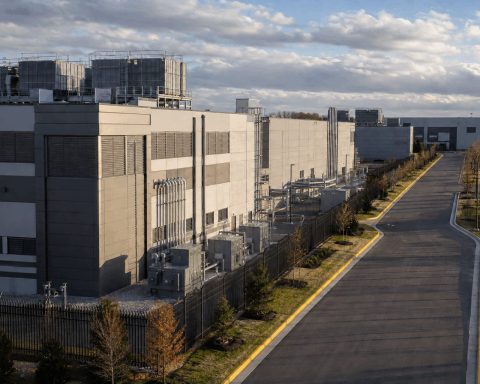
- A direct land‑use clash with a proposed AI mega data centre, now selected as part of the UK government’s AI Growth Zones programme.
The UK plans to redevelop the former steelworks site at Teesside into one of Europe’s largest AI data centres, with fast‑track planning and priority power connections. Financial Times+2The Times+2 BP says it remains committed to the region through gas‑fired power with carbon capture and associated infrastructure, but shelving H2Teesside is a symbolic retreat from a project once touted as capable of supplying up to 20% of Britain’s 2030 hydrogen target.
For investors, the Teesside exit reinforces a theme that has run through 2025: BP is de‑risking its low‑carbon pipeline and concentrating capital on cash‑generative hydrocarbons, while keeping a slimmer, more selective set of transition projects alive.
Olympic Pipeline back at full capacity
On the other side of the Atlantic, BP has resolved a more traditional operational headache. Following a mid‑November leak east of Everett, Washington, BP shut its 400‑mile Olympic Pipeline, which supplies refined products and jet fuel from Washington into Oregon and serves Seattle‑Tacoma International Airport.
After repairs and staged restarts, the company confirmed that the pipeline returned to full service over the weekend ending November 30. About 2,300 gallons of product have been recovered, with the final leakage estimate still under review, but there is currently no indication of a material impact on BP’s full‑year 2025 financials.
The incident does, however, underline the environmental and reputational risks embedded in pipeline‑heavy business models—risks that equity investors tend to ignore until something goes wrong.
Q3 2025 earnings: strong operations, heavy cash generation
BP’s share price momentum into December is grounded in better‑than‑expected third‑quarter 2025 results.
Key numbers from Q3 2025: Reuters+5BP+5AlphaSense+5
- Underlying profit: around $2.2 billion, slightly below last year but ahead of consensus.
- Adjusted EPS: roughly $0.85 per ADR, beating analyst estimates near $0.72.
- Revenue: about $49.3 billion, up year‑on‑year.
- Upstream production: up roughly 3%, reversing earlier guidance for a decline.
- Refining availability: the best in two decades, helping to offset weaker crude prices.
With Q3, BP also confirmed that a $0.75 billion share buyback programme announced with Q2 had been completed by October 31, and signalled another $0.75 billion of buybacks to be executed before Q4 results.
Buybacks, share count and total shareholder yield
The impact of buybacks has become more visible as we enter December:
- As of November 30, 2025, BP reported 15.65 billion ordinary shares in issue and 15.66 billion voting rights, reflecting the effect of shares held in treasury.
- RNS filings on December 1 and 2 show BP repurchasing more than 2.5 million shares over those two days alone on the London Stock Exchange and Cboe venues, with the shares to be moved into treasury.
On some estimates, combining BP’s cash dividend (~5.5%) with its buyback run‑rate produces a total shareholder yield of roughly 11%, though the buyback component can fluctuate with oil prices and management priorities.
Income‑focused commentators in the UK press increasingly frame BP as a potential “pension substitute” thanks to that high yield, although others warn that the historic volatility of oil majors makes them very different from bonds. TS2 Tech+1
Strategy reset: more oil and gas, a slower energy transition
BP’s story in 2025 is not just about quarterly numbers; it is also about a strategic pivot.
Back in February, BP cut planned renewables and low‑carbon spending, while raising targeted oil and gas capex to around $10 billion a year, arguing that the energy transition is unfolding more slowly than previously assumed.
Key elements of the strategy through 2027 include: TS2 Tech+3TS2 Tech+3BP+3
- Focusing on high‑margin upstream projects, including new oil and gas developments expected to add around 150,000 barrels of oil equivalent per day at peak.
- A $20 billion divestment programme by 2027, with over $4 billion in proceeds expected in 2025 alone.
- A target of about 20% compound annual growth in adjusted free cash flow from 2025 to 2027, driven mainly by hydrocarbons.
BP’s own Energy Outlook 2025 still describes long‑term scenarios in which renewables overtake coal in the early 2040s and oil toward the end of that decade. BP+1 But in the near term, capital is being steered back toward barrels and molecules rather than wind farms and hydrogen hubs.
The UK policy backdrop adds tension: Labour’s recent confirmation of a ban on new North Sea exploration licences and the decision to maintain a 78% effective tax rate on UK upstream profits out to 2030 are seen by industry group OEUK as accelerating the basin’s decline. Riviera Maritime Media+4The Guardian+4Ocean and Coastal Futures+4 For BP, this points to treating the UK North Sea as a high‑tax, mature cash‑cow rather than a growth engine.
What Wall Street and the City expect from BP stock
Consensus 12‑month price targets
Analyst consensus across major aggregators can be summarised as modest upside with a wide range of views:
- MarketBeat:
- Average 12‑month target: $43.14
- Implied upside: about 18–19% from roughly $36 per ADR
- Target range: $26.50–$66.00
- Overall stance: “Moderate Buy”, based on 19 analyst ratings. MarketBeat+1
- StockAnalysis.com:
- Average target: $39.87
- Implied upside: around 9–10%
- Target range: $29–$66
- Consensus rating: “Hold” from 9 analysts. StockAnalysis+2TS2 Tech+2
Despite slightly different methodologies, both services cluster around $40–43 per ADR as a central 12‑month fair‑value estimate.
Recent rating moves
Among recent brokerage actions: TS2 Tech+3GuruFocus+3TipRanks+3
- Piper Sandler raised its BP price target from $41 to $44 in November while keeping a Neutral rating, arguing that Q3 results show BP is competitively positioned within global energy even if near‑term crude sentiment is muted.
- Other firms (including Wells Fargo, Scotiabank and several European brokers) have tweaked targets higher into the high‑$30s or low‑$40s, with mixes of “Equal Weight”, “Outperform” and “Sector Outperform” ratings.
- A minority of analysts remain cautious or negative, pointing to execution risk on the strategy reset, ESG concerns and BP’s somewhat lower headline shareholder returns versus peers like Shell and ExxonMobil.
On the UK line, some bullish commentators highlight that certain analysts believe the BP share price could reach around 850p by the end of 2026, roughly 90% above current levels, although that figure represents the top end of expectations rather than consensus.
Quant and technical models: cautiously bullish, but inconsistent
Beyond traditional equity research, a swarm of algorithmic and technical‑analysis sites now publish BP stock forecasts.
Recent examples as of December 3, 2025:
- CoinCodex:
- Sees BP around $36.21 by January 1, 2026 (‑0.4% vs. today).
- Lists a 5‑day projection up to about $37.07.
- Advertises a modelled 31% potential one‑year ROI, although the full one‑year forecast is paywalled.
- StockInvest.us:
- Notes a 52‑week range of $25.22–$37.64, with a current price around $36.36.
- Provides a near‑term “fair opening price” close to the actual market price and a generally constructive technical stance. StockInvest+2StockInvest+2
- StockScan:
- Produces a mechanically calculated 12‑month “average price target” around $18.85, implying large downside, while at the same time classifying BP as a technical “Strong Buy” based on moving averages. stockscan.io
These tools are highly inconsistent with one another and with human analyst consensus. They are best read as sentiment thermometers and technical snapshots, not as standalone valuation anchors.
Key upside drivers for BP stock
From an investor’s perspective, several themes support the current bullish narrative:
- High total yield
- A cash dividend around 5.5% plus regular buybacks around $0.75 billion per quarter creates one of the highest combined shareholder yields among large integrated oil majors.
- Operational momentum
- Q3 2025 showed rising upstream production, strong refining and robust cash generation at Brent prices in the low $60s per barrel.
- Balance sheet and divestments
- BP aims to bring net debt down to the mid‑teens billions by 2027 while funding both growth projects and shareholder distributions from internal cash flow and asset sales.
- Macro environment
- A Reuters poll of analysts expects Brent crude to average just over $62 per barrel in 2026, signalling a comfortable (if unspectacular) pricing backdrop for cash‑rich oil majors.
If BP executes on its upstream project pipeline and maintains capital discipline, the current valuation could still leave room for mid‑single‑digit to low‑double‑digit total returns even without a major oil rally—at least, that’s what the more optimistic analysts are betting on.
Key risks and what could go wrong
At the same time, several non‑trivial risks hang over the BP investment case:
- Oil price downside
If the oversupply expected by many forecasters for 2026 proves worse than anticipated, Brent could trade below the low‑$60s base case, compressing BP’s cash flow and potentially forcing slower buybacks or flatter dividends. - Policy and taxation risk
The UK’s decision to maintain a very high effective tax rate on North Sea profits and to ban new exploration licences reinforces the view that mature basins are cash cows to be heavily taxed. This could reduce the long‑term value of BP’s UK assets and may foreshadow similar moves in other jurisdictions. - Transition credibility and ESG pressure
Critics argue BP has “abandoned” parts of its earlier green transition strategy, particularly after cutting renewables spending and now walking away from H2Teesside. Follow This+2ESG Today+2 That could deter some institutional investors and leave BP more exposed if policy or public sentiment swings sharply back toward aggressive decarbonisation requirements. - Operational and environmental incidents
The Olympic Pipeline leak is a reminder that spills and accidents can trigger costly clean‑ups, regulatory scrutiny and reputational damage—risks that are hard to model but always present. - Dividend sustainability
Some analyses highlight that while BP’s dividend appears well‑covered by free cash flow, the payout ratio relative to accounting earnings has at times been above 300%, reflecting volatile profits and write‑downs. TS2 Tech+2Simply Wall St+2 Sustaining a high and growing dividend will require continued operational strength and capital discipline.
Bottom line: BP stock on 3 December 2025
As of December 3, 2025, BP stock sits in a kind of uneasy sweet spot:
- The shares are near 52‑week highs, but still trade at a valuation and yield that many investors find attractive relative to global equity markets.
- Earnings and cash flow are solid at current oil prices, supporting generous dividends and ongoing buybacks.
- The strategy reset back toward oil and gas has attracted both praise (for realism and cash focus) and criticism (for retreating from climate goals and higher‑growth low‑carbon businesses).
- Analyst consensus points to single‑digit to high‑teens upside over 12 months, with unusually wide disagreement about how far the rerating can go.
For traders and long‑term investors alike, December 2025 is shaping up as a test of whether BP can turn its oil‑heavy, cash‑rich strategy into sustained shareholder value without being blindsided by policy, ESG pressure or a weaker‑than‑expected oil market.
Related articles: NYSE:BP