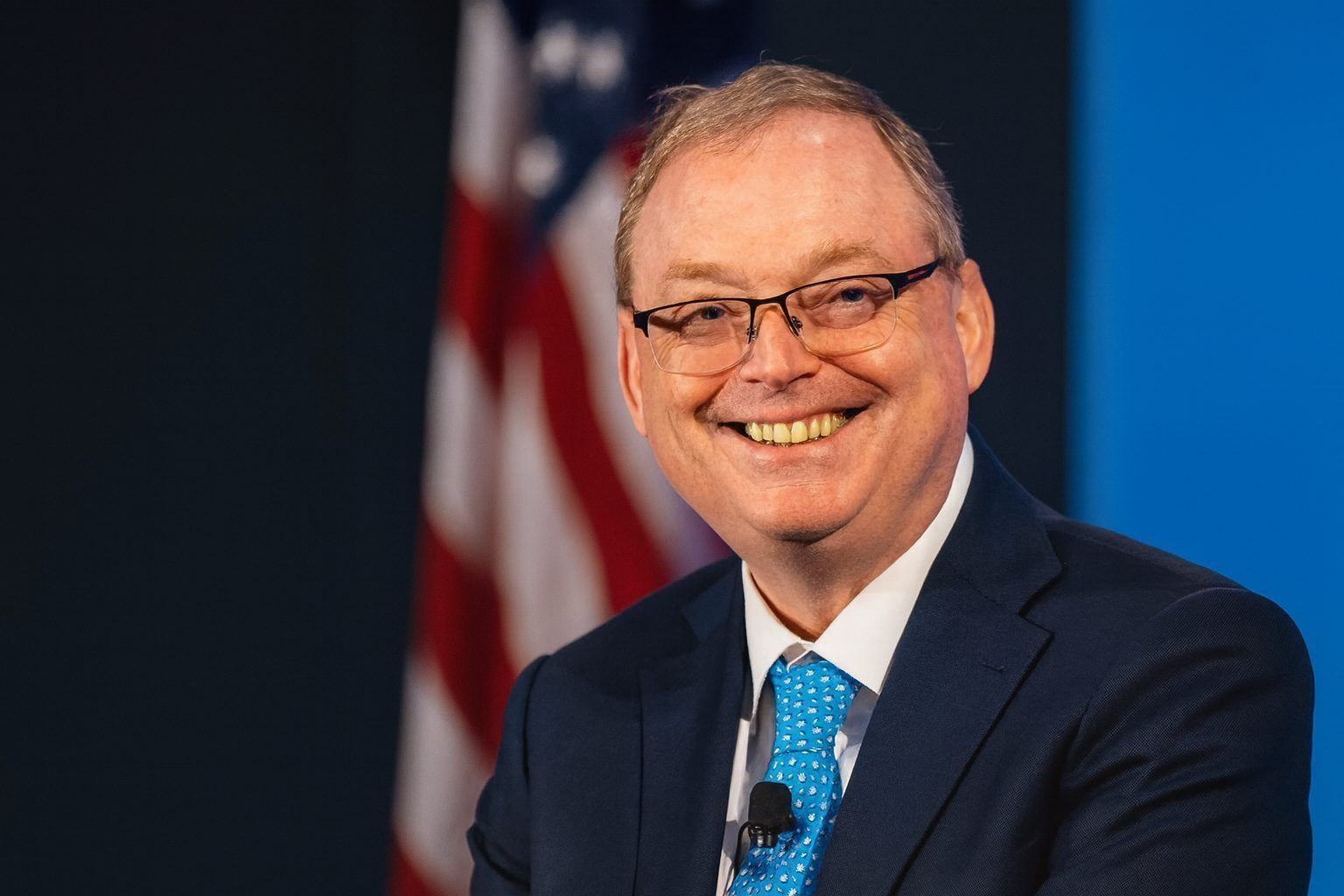

Published: December 4, 2025
WASHINGTON — Bond investors, central‑bank watchers and political operatives are all focused on the same looming decision: whether President Donald Trump will elevate his top economic adviser, Kevin Hassett, to replace Jerome Powell as chair of the Federal Reserve — and how far Treasury Secretary Scott Bessent is prepared to go to ensure the Fed delivers the lower interest rates the White House wants.
A flurry of reporting and fresh remarks on December 3–4 paints a picture of a central bank under intensifying political pressure, a bond market openly nervous about Trump’s favored candidate, and a Treasury secretary both managing the search and proposing rule changes that would give Washington more leverage over the Fed’s powerful regional presidents.
Bond investors quietly warned Treasury about Hassett
According to a scoop first reported by the Financial Times, the U.S. Treasury in November canvassed major Wall Street banks, asset managers and other big bond investors about a short list of candidates to succeed Powell when his term expires in May 2026. Many of those consulted delivered a blunt message: they are worried about Kevin Hassett.
Investors told Treasury officials they fear Hassett — now director of the National Economic Council and a long‑time Trump loyalist — would push aggressively for rate cuts in line with the president’s repeated calls for cheaper money, even if inflation remains above the Fed’s 2% target. A chair perceived as willing to loosen policy regardless of price pressures could, in their view, trigger a damaging sell‑off in longer‑dated Treasuries and undermine confidence in the dollar.
Reuters, summarising the FT’s reporting, added that members of the Treasury Borrowing Advisory Committee were among those consulted. Some recalled a recent meeting where, instead of focusing on markets, Hassett emphasized White House priorities — even discussing Mexican drug cartels — reinforcing a perception that he would bring a political, rather than technocratic, approach to the Fed.
Several investors expressed a preference for alternative candidates they see as more independent or markets‑focused, such as BlackRock executive Rick Rieder or current Fed governor Christopher Waller.
Yet betting markets and political reporting suggest Hassett remains the clear front‑runner. One widely followed prediction platform, Polymarket, currently assigns roughly a 70% probability that Hassett will be chosen.
Trump’s timeline: “Early next year,” and praise for Hassett
Trump himself has done little to calm speculation. In an interview earlier this week, he said he expects to announce his Fed chair pick “early next year,” extending a months‑long guessing game over Powell’s future. Reuters+2Bloomberg Law+2
Bloomberg reported that the president has publicly praised Hassett in recent days, highlighting his loyalty and alignment with the White House’s economic agenda.
The combination of an extended timeline and a heavily telegraphed favorite is unusual by historical standards, and it has given markets, lobbyists and lawmakers ample time to organize both for and against a Hassett nomination — and to pressure Bessent, who is formally leading the search.
Bessent in the hot seat: deliver rate cuts, keep markets calm
The New York Times reports that the Fed selection process has become a test of Scott Bessent’s ability to “deliver for Trump.” As Treasury secretary, Bessent is tasked with recommending a successor to Powell who can both reassure markets and satisfy the president’s insistence on rapid rate cuts. The article suggests Bessent could face Trump’s anger if the eventual chair does not move quickly enough to ease policy. Canada News (News Reader)+1
At the New York Times DealBook Summit on Wednesday, Bessent declined to confirm that Hassett is the choice but tried to downplay fears that any single person could hijack policy. “The chair of the Federal Reserve… is one vote,” he said, stressing that decisions are made by the broader Federal Open Market Committee (FOMC). Yahoo Finance+1
Those reassurances came as Bessent was also touting one of the Trump administration’s signature domestic initiatives: so‑called “Trump accounts,” government‑backed investment accounts for children born between 2025 and 2028. Speaking at DealBook, he described the accounts — seeded with $1,000 in public funds and boosted by headline‑grabbing donations such as a $6.25 billion pledge from Michael and Susan Dell — as the start of a “shareholder economy” that will give more Americans a direct stake in markets. Reuters+1
The twin roles — selling a populist wealth‑building scheme while shepherding the appointment of the world’s most important central banker — underscore how central Bessent has become to Trump’s economic project.
Who is Kevin Hassett? From mainstream economist to Trump enforcer
Kevin Hassett is hardly a newcomer to Washington or monetary policy debates. A career economist, he taught at Columbia Business School and worked in the Fed’s own research division before joining the American Enterprise Institute, where he became known for work on tax policy and as co‑author of the famously optimistic 1999 book Dow 36,000.
He served as chair of Trump’s Council of Economic Advisers from 2017 to 2019 and, since January 2025, has led the National Economic Council in Trump’s second term, giving him daily access to the president and a central role in trade, industrial and monetary policy discussions.
What worries many critics is how his public persona has evolved. A new analysis in The Economist frames the question starkly: “Which Kevin Hassett would lead the Federal Reserve?” The magazine contrasts the earlier, relatively conventional conservative tax expert with the more recent version, who has become a combative defender of Trump’s positions on tariffs, immigration and the Fed. The Economist+1
Fortune recently chronicled some of the moments that alarm more traditional central‑bank watchers:
- Hassett has repeatedly claimed that inflation is “way down,” even as it remains above target.
- He has suggested there is “political bias” in official jobs data that paint a weaker picture of the labor market than the White House prefers.
- At one point, he reportedly floated firing Powell over a dispute related to renovations at the Fed’s headquarters.
Friends and former colleagues quoted by Fortune describe a split verdict: some still see a smart policy mind with deep technical chops; others say he has become “incredibly dishonest” in service of Trump’s narrative. QOSHE
An explainer from Al Jazeera emphasizes that Hassett stands out among the rumored candidates for the sheer amount of time he has spent in Trump’s inner circle, first as CEA chair and now as NEC director. That proximity, analysts argue, raises sharper questions than usual about whether a Fed led by Hassett would truly be independent.
Bessent’s new residency rule — and talk of a “veto” over Fed presidents
While markets parse every clue about the next chair, Bessent is also opening a new flank in the battle over Fed governance.
At the DealBook summit, he said he will push for a new requirement that the presidents of the 12 regional Federal Reserve Banks must have lived in their districts for at least three years before taking the job. He complained that several current presidents have deep professional ties to New York — including stints at the New York Fed or Wall Street banks — rather than to the regions they represent.
“I am going to start advocating… that regional Fed presidents must have lived in their district for at least three years,” Bessent said, arguing that the original design of the Fed was meant to “break the New York hold” on interest‑rate decisions. WJXT+1
The Associated Press, in a piece widely re‑published by local and international outlets, notes that under current law the Fed’s Washington‑based Board of Governors can already block the appointment of a regional president, and that Bessent suggested the board should be prepared to “veto” future nominees who do not meet his proposed residency test. AP News+1
Al Jazeera characterises the plan as part of a broader Trump‑era effort to exert more political control over an institution that has historically operated at arm’s length from the White House. The move comes after several regional presidents have publicly opposed cutting rates at the pace the administration would like.
Supporters say a residency rule could diversify perspectives inside the FOMC and ensure regional leaders understand local economies. Critics warn that changing the selection criteria under overt political pressure risks turning what were once technocratic posts into partisan battlegrounds — especially if the White House wields an effective veto over candidates.
How big is the threat to Fed independence?
Central‑bank independence is an abstract idea, but the stakes are concrete: if investors lose confidence that the Fed will prioritize price stability and financial stability over short‑term political goals, borrowing costs can rise sharply, and inflation expectations can become unmoored.
Several recent articles argue that the system’s institutional design still offers important guardrails. Bank of America economists, cited by Fortune, told clients that even a politically aligned chair would have to win majority support on a 12‑member policy committee that includes governors appointed by both parties and regional presidents who serve fixed terms.
Al Jazeera makes a similar point, noting that four current FOMC members were nominated by former Democratic president Joe Biden, and that no chair — Hassett included — can unilaterally dictate outcomes.
Still, the economic backdrop makes the choice unusually delicate. David Wilcox, a former senior Fed economist now at Bloomberg Economics and the Peterson Institute, told Al Jazeera that the next chair will inherit an awkward mix: a labor market that appears to be cooling only slowly and inflation that remains “noticeably above” the 2% target. Dramatically easier policy, he warned, risks reigniting the worst inflation bout in four decades. Al Jazeera
That’s the scenario that worries bond investors now lobbying against Hassett. If markets come to believe the White House has installed a chair whose first job is to deliver rapid rate cuts regardless of the data, they may demand a higher risk premium on U.S. debt — exactly what Trump and Bessent say they want to avoid.
Senate politics: Tim Scott and the coming confirmation fight
Even if Trump chooses Hassett, he still needs the Senate.
Sen. Tim Scott of South Carolina, the Republican chair of the Senate Banking Committee, has signaled support for lower rates in general — he has said a 50‑basis‑point cut is “a possibility” in the right circumstances — but he has so far avoided committing to any specific Fed chair nominee. In an interview with Fox Business, Scott said he wants a chair who “puts the American people’s priorities above politics,” a line that implicitly acknowledges fears of a politicized Fed without closing the door on Trump’s eventual pick. Fox Business+2Fox News+2
If Hassett is nominated, Scott’s committee will be the first proving ground for how far Senate Republicans are willing to accommodate Trump’s push for a more pliant central bank — and how aggressively Democrats frame the confirmation as a referendum on Fed independence.
What to watch next
For now, several threads are converging:
- Trump’s decision window: He says he will name Powell’s successor “early next year,” but could move sooner if he sees political advantage in the announcement. Bloomberg Law+1
- Bessent’s rule‑making campaign: Any formal proposal to change the criteria for regional Fed presidents — or to formalize a “veto” standard — will face legal scrutiny and potential challenges in Congress. AP News+1
- Market reaction: Thus far, the response has been modest — a softer dollar and some steepening in the Treasury yield curve — but that could change quickly if a Hassett nomination becomes official and his early statements tilt clearly dovish.
- Institutional pushback: Current and former Fed officials, as well as global central bankers and ratings agencies, are likely to weigh in more forcefully if they believe the world’s benchmark central bank is being pulled too close to the White House.
Related articles: Federal Reserve