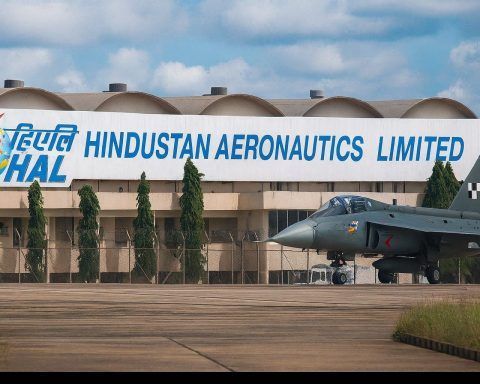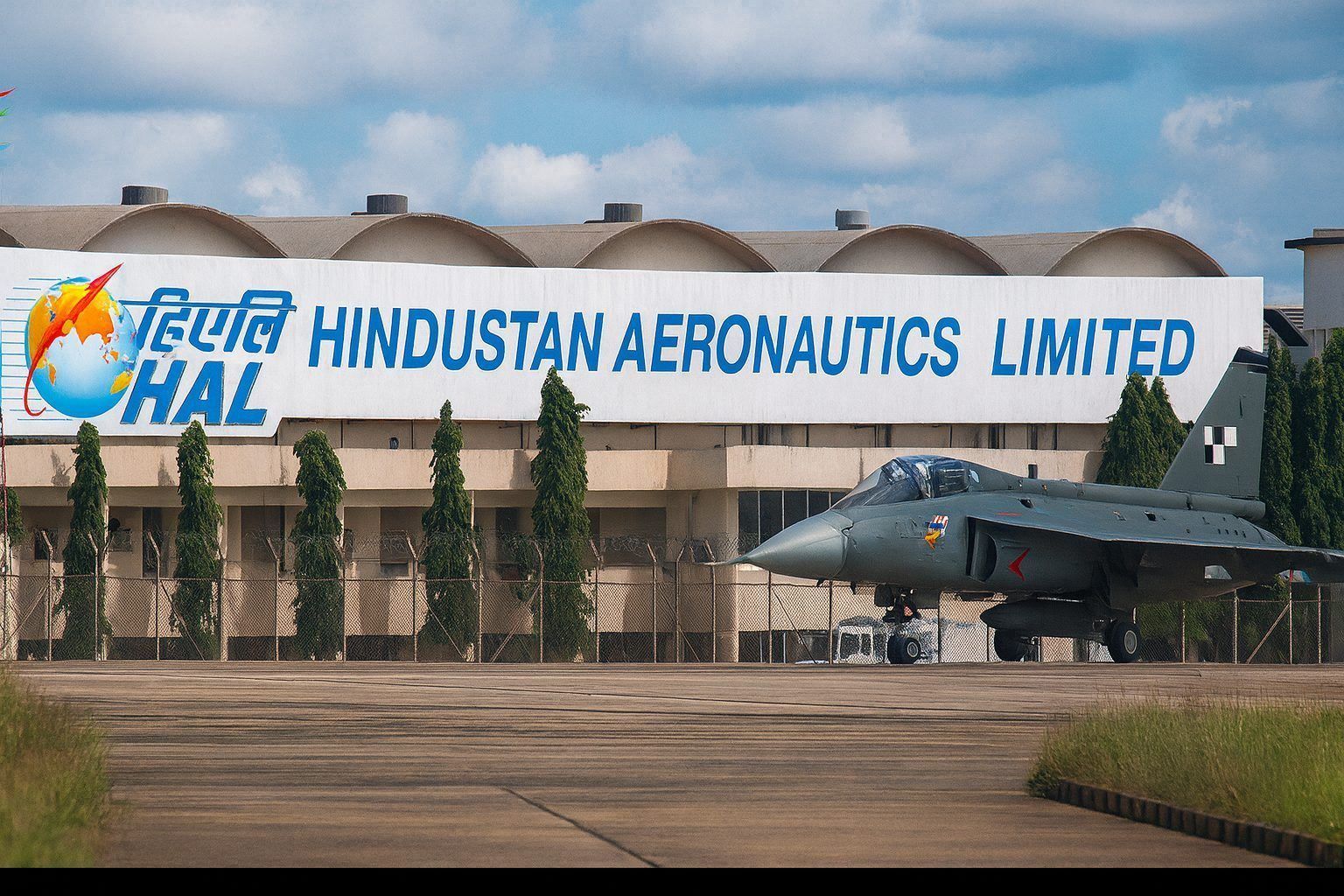

Hindustan Aeronautics Limited (HAL) remains one of the most closely watched defence PSU stocks in India – and for good reason. As of 10:30 AM IST on 5 December 2025, HAL shares were trading around ₹4,462 on the NSE, down about 0.8% intraday, giving the company a market capitalisation close to ₹2.98 lakh crore.
Despite recent volatility after the Tejas fighter jet crash at the Dubai Air Show, the stock is still sitting on massive multi‑year gains: roughly flat over one year, but up over 220% in three years and nearly 10x in five years, making it one of the most spectacular compounders in the defence space.
At the same time, HAL now sits at the crossroads of several powerful themes: defence indigenisation, aerospace exports, India–Russia defence ties, and even commercial space launches. The question for investors is whether the current price still leaves enough runway for returns, or whether expectations have flown a little too high.
HAL share price today: valuations and technical picture
On 5 December 2025, HAL’s last traded price near ₹4,460–4,490 puts it well below its 52‑week high of around ₹5,165, but comfortably above the 52‑week low of about ₹3,046.
Key valuation metrics based on trailing twelve-month (TTM) numbers: The Economic Times+1
- TTM EPS: ~₹126.6
- P/E ratio: ~35x
- Book value per share: ~₹523
- P/B ratio: ~8.6x
- Dividend yield: ~0.9%
- Market‑cap‑to‑sales: ~9x
Data compiled by The Financial Express shows HAL trading around 35x earnings, above its own 5‑year median P/E of ~20.6x, although still at a discount to the broader defence peer‑group median multiple.
On the technical side, a recent note from YES Securities (via Business Today) flags HAL as short‑term bearish. The stock is: Business Today
- More than 10% below its October high near ₹4,978
- Trading below the 200‑day moving average, indicating a strong downtrend in the weekly timeframe
- Facing resistance around ₹4,600–4,630
- Watching key support near ₹4,320–4,300, with a potential downside target “towards ₹4,000” if that support breaks
So the chart is flashing “caution”, even while the fundamental story looks very different, as we’ll get into.
Earnings snapshot: FY25 and H1 FY26
FY25: steady revenue, softer Q4
For FY25, HAL reported provisional revenue of about ₹30,400 crore, slightly higher than the previous year’s ~₹30,381 crore.
However, Q4 FY25 saw:
- A nearly 8% decline in quarterly profit, due largely to delays in Tejas Mk‑1A deliveries
- Quarterly revenue down ~7.2% YoY to around ₹137 billion (₹13,700 crore) Reuters+1
Despite that, the market essentially looked past the temporary hiccup, focusing instead on the massive new helicopter order (more on that shortly).
H1 FY26 (April–September 2025): growth with margin pressure
By the first half of FY26 (H1 FY26):
- Revenue rose about 10.9% YoY to ~₹11,448 crore
- But EBITDA margin compressed by roughly 390 bps to 23.5%
- Half‑year PAT declined around 13% to ~₹2,550 crore The Financial Express+1
In Q2 FY26 (September quarter) alone, HAL reported: Upstox – Online Stock and Share Trading+1
- Consolidated net profit: ~₹1,669 crore (up ~10.5% YoY)
- Revenue from operations: ~₹6,629 crore (up ~11% YoY)
- Total income: ~₹7,516 crore (up ~15% YoY)
- EBITDA: down ~5% YoY to about ₹1,558 crore
- EBITDA margin: fell to ~23.5% from ~27.4% a year ago
- EPS: increased to ~₹24.96 from ₹22.59
Broker commentary compiled by Upstox shows a broadly consistent narrative: Upstox – Online Stock and Share Trading
- J.P. Morgan: decent topline/bottomline growth, margins below expectations
- Nomura: a “mixed” quarter – strong execution, weaker margins
- CLSA: PAT beat estimates on strong revenue and treasury income; margins hit by provisions for liquidated damages (LD), which they expect to reverse as deliveries normalise
- Citi: not very worried about the margin miss given strong sales visibility; margin for H1 FY26 at ~24.8% versus 25.5% in H1 FY25
In other words, growth is there, but profitability has been temporarily dented by programme‑specific issues and conservative provisioning.
A record order book: fighters, helicopters, engines and now rockets
Order book visibility to FY33
According to The Financial Express, as of mid‑November 2025 HAL’s order book stood at around ₹2.3 trillion (₹2.3 lakh crore), giving more than six years of revenue visibility and effectively booking capacity out to FY33.
Key elements:
- Repair & Overhaul (ROH) – still the largest segment, contributing roughly 70% of turnover, with stable, annuity‑like characteristics
- Manufacturing & development – including Tejas fighter jets, Advanced Light Helicopter (ALH), Light Utility Helicopter (LUH), Dornier‑228, and various engines and structures for ISRO missions The Financial Express+1
97 LCA Tejas Mk‑1A fighters + GE F404 engine order
The biggest near‑term growth driver on the fixed‑wing side is the 97‑aircraft Tejas Mk‑1A order from the Ministry of Defence (MoD): The Financial Express
- Contract value around ₹62,400 crore (₹624 billion)
- Deliveries to start in FY28 and run for about six years
- At least 64% indigenous content, with more local components than earlier Tejas contracts
To support this, HAL has: The Financial Express+1
- Signed a ~$1 billion deal with GE Aerospace to supply 113 F404‑GE‑IN20 engines for Tejas Mk‑1A
- Expanded its Nashik production line, boosting annual Tejas capacity from 16 to 24 aircraft, with a plan to go up to 30 per year
156 Prachand Light Combat Helicopters – a ₹62,700 crore mega‑deal
On the rotary‑wing side, HAL’s Prachand Light Combat Helicopter (LCH) is now backed by a landmark order: Press Information Bureau+2Reuters+2
- On 28 March 2025, India’s MoD signed two contracts worth ~₹62,700 crore with HAL
- Total 156 LCH Prachand to be supplied
- 66 for the Indian Air Force
- 90 for the Indian Army
- Execution is expected over the next several years (media estimates run into the early 2030s)
The deal is designed explicitly to pull in the private sector: HAL expects about ₹25,000 crore of work to be outsourced to private suppliers, spreading the industrial benefits of the programme.
HAL is also expanding helicopter production capacity at Tumakuru, where LCH output is planned at around 30 helicopters per year, with room to scale in line with future orders.
Space: SSLV rockets as a new business vertical
In mid‑2025, HAL did something that sounds like it came out of a sci‑fi investor deck: it effectively became a commercial small‑satellite launcher.
Key milestones:
- HAL won a ₹511 crore (₹5.11 billion) bid to acquire and commercialise ISRO’s Small Satellite Launch Vehicle (SSLV) technology, beating other contenders including an Adani‑linked defence company.
- On 10 September 2025, ISRO, NewSpace India Ltd and IN‑SPACe signed a technology‑transfer agreement with HAL for SSLV at ISRO HQ in Bengaluru.
- The tech transfer is expected to complete in about two years, with the first SSLV built by HAL targeted for 2027.
This moves HAL into the global small‑sat launch market, a segment Reuters estimates could expand from $13.9 billion in 2023 to $44 billion by 2032.
For investors, this is both:
- A diversification beyond defence into commercial aerospace
- A test of whether HAL can compete on cost and reliability in a brutally price‑sensitive market
Civil aerospace: Safran LEAP engine parts
On 19 June 2025, HAL and France’s Safran Aircraft Engines deepened their long‑running partnership by signing an agreement to produce forged rotating parts for the CFM LEAP engine, used in modern narrow‑body jets like the Airbus A320neo and Boeing 737 MAX.
The deal:
- Supports the “Make in India” push in high‑precision aero‑engine components
- Gives HAL a higher‑value foothold in the global civil aerospace supply chain
- Creates incremental export‑oriented revenue with long‑term visibility (LEAP has a massive installed base and backlog)
Next‑gen fighters: AMCA JV and Maharatna firepower
On the future fighter front, HAL is positioning itself at the centre of India’s Advanced Medium Combat Aircraft (AMCA) project – a planned fifth‑generation stealth fighter.
- In March 2025, HAL invited four private firms to form a joint venture for AMCA production, where HAL will hold 50% and each private partner 12.5%.
- By September 2025, 28 private companies had expressed interest, with HAL expected to shortlist one or two partners.
Timelines floated in public sources suggest:
- First prototype flight around 2029
- Series production potentially around 2035, if all goes well Wikipedia+1
Crucially, HAL is doing this with the added heft of Maharatna status, granted in October 2024.
Maharatna classification allows HAL to:
- Invest up to ₹5,000 crore or 15% of net worth per project without government approval
- Enjoy greater freedom for JVs, acquisitions and overseas investments
For a company juggling Tejas, Prachand, AMCA, SSLV and civil aero‑engine projects, that autonomy is strategically priceless.
The Tejas crash: sentiment shock vs fundamentals
On 21 November 2025, an Indian Air Force Tejas Light Combat Aircraft crashed during a flying display at the Dubai Air Show, killing the pilot and producing widely circulated footage of a mid‑air loss of control and fireball on impact.
The incident raised immediate questions about:
- Safety and reliability of the Tejas platform
- Export prospects, especially given India’s push to pitch Tejas to foreign air forces
HAL’s response and subsequent coverage:
- In an exchange filing and media statements, HAL called the crash an “isolated occurrence arising out of exceptional circumstances”, stressing that it would have “no impact on operations, financial health or future deliveries”. mint+2The Times of India+2
- HAL’s chairman reiterated in interviews (for example to NDTV and other outlets) that Tejas remains one of the safest fighters in its class, and that the Dubai crash would not derail the programme.
In the market:
- HAL shares fell more than 3% on the first trading day after the crash, extending to roughly 6% over two sessions, before stabilising.
- The stock has since been weighed down further by the broader defence correction and the ongoing technical downtrend highlighted earlier.
From an analytical perspective, the crash represents headline risk and could complicate export marketing, but it does not change:
- The signed domestic orders (97 Tejas Mk‑1A, large LCH order, etc.
- The order book value
- HAL’s role as the sole integrator for most manned combat aircraft in India
The real long‑term impact will depend on:
- Findings of the crash investigation
- Any technical modifications mandated
- How foreign buyers react to both the incident and India’s handling of it
As of 5 December 2025, none of HAL’s major orders have been publicly reported as cancelled or scaled back due to the crash.
Broker views, target prices and market positioning
Street consensus and ICICI Securities target
Economic Times data shows that out of 20 analysts covering HAL: The Economic Times
- The majority rate the stock “Buy” or “Strong Buy”
- A smaller group are at “Hold”, with a couple of “Sell/Strong Sell” calls
- The mean 1‑year target price sits around ₹5,000 per share, implying moderate upside from current levels
ICICI Securities, for example, has a buy rating with a ₹5,000 target, anchored in the strong order book and improving execution, even after factoring near‑term margin volatility.
Motilal Oswal: HAL as a core defence compounder
A more detailed defence sector report highlighted by Business Today notes that Motilal Oswal sees HAL as one of its top PSU defence picks, with: Business Today+1
- A “Buy” rating
- A target price reportedly around ₹5,800, implying a healthier upside from current levels
- A thesis built on:
- Multi‑year order visibility (Tejas, LCH, LUH, ROH)
- Margin improvement as LD provisions reverse and operating leverage kicks in
- Rising export opportunities and non‑defence revenue from civil & space
Post‑result commentary: LD provisions and margins
Post‑Q2 FY26 commentary consolidated by Upstox shows most global brokerages sticking with their positive or neutral stance: Upstox – Online Stock and Share Trading+1
- EBIT margin pressure is seen as temporary and largely driven by non‑cash LD provisions
- Revenue execution is tracking or beating estimates, strengthening confidence in management guidance
- Long‑term order pipeline is estimated at ~$54 billion, including expected future orders beyond the visible book
In short, the Street largely treats current earnings headwinds as noise, not thesis‑breaking – but also recognises that the stock is not cheap.
Investor behaviour: who owns HAL now?
Shareholding data from Screener and Economic Times shows a classic “defence multibagger” ownership pattern: Screener+1
- Promoter (Government of India): ~71.6%
- FIIs: ~12%
- DIIs: ~8.6%
- Public (including retail): ~7.6%
Within that:
- Retail shareholding in HAL fell marginally from 6.66% in Q1 FY26 to 6.59% in Q2, according to an ETMarkets slide, even though the stock had delivered about 14% returns over the prior year at that point.
This suggests some profit‑booking by smaller investors, while institutional and government ownership remains locked in – a typical pattern for high‑run stocks entering a consolidation phase.
Geopolitics: why Putin’s India visit matters for HAL
The India–Russia annual summit in early December 2025 has brought HAL back into the geopolitical spotlight. Mint notes that defence PSUs such as HAL, Bharat Electronics and Bharat Dynamics are in focus as potential beneficiaries of new deals or technology‑transfer announcements.
Analysts quoted there highlight: mint+1
- Possible follow‑on orders or upgrades related to S‑400/S‑500 air defence systems, where HAL often plays a role in integration and lifecycle support
- Prospective discussions on Su‑57 stealth fighters or new joint projects
- Broader signalling of India’s strategic autonomy, which typically reinforces political backing for indigenous platforms like Tejas and Prachand
Any concrete announcements could act as short‑term catalysts for HAL’s share price, but even without them, the summit underscores how deeply the company is wired into India’s security infrastructure.
Key risks: valuation, execution, competition and headline shocks
For all the good news, HAL is not a risk‑free story. Some of the main overhangs:
- Rich valuation
- P/E ~35x and P/B ~8.6x are well above typical PSU levels and above HAL’s own historical multiples, even though still below some peers in the defence basket.
- The stock is up nearly 10x in five years, so expectations already bake in a lot of future success.
- Execution & working‑capital risk
- Large, multi‑year programmes (Tejas Mk‑1A, Prachand, SSLV, AMCA prep) are complex and can suffer delays, cost overruns and LD hits, as already seen in Q2 margins.
- Defence PSUs often face lumpy cash flows and slow receivables from government clients.
- Competition from private sector and global OEMs
- The Defence Acquisition Procedure 2020 explicitly encourages private participation and competitive procurement; HAL itself acknowledges this as a structural risk.
- For export and civil aero‑engine work, HAL competes against seasoned global suppliers, where quality and cost benchmarks are unforgiving.
- Headline & reputational risk
- The Dubai Tejas crash is a reminder that one incident can trigger global scrutiny, potentially affecting negotiations with foreign customers even if technical blame lies elsewhere.
- Future test flights, launches or exports (e.g., SSLV missions) will have similarly asymmetric downside in terms of reputation.
- Macro & policy risk
- HAL is heavily dependent on Indian defence and space capex cycles; any slowdown, reprioritisation, or fiscal stress could impact order flow.
None of these negate the long‑term story, but they do argue against treating the stock as a one‑way bet.
Bottom line: How does HAL stock look as of 5 December 2025?
Putting it all together:
- Business quality:
- High ROE (~26–27%), little to no debt, and a multi‑decade runway in defence and aerospace.
- Growth visibility:
- A ₹2.3 trillion order book with visibility to FY33, backed by Tejas Mk‑1A, Prachand LCH, LUH, ROH and now SSLV & LEAP engine parts.
- Strategic positioning:
- Central to India’s plans for fighter jets, helicopters, launch vehicles and engine manufacturing, supported by Maharatna autonomy and big‑ticket JVs like AMCA.
- Valuation & risk:
- Trading at premium multiples, with short‑term technical weakness, margin compression and headline risk from the Tejas crash weighing on sentiment.
- Street stance:
- Consensus remains constructive, with most brokerages rating HAL a Buy and target prices clustered around ₹5,000–₹5,800 – signalling expectation of upside, but not without volatility.
For investors, HAL in December 2025 looks less like a “deep value PSU” and more like a high‑quality, growth‑heavy aerospace franchise priced at a premium, where returns from here will depend on execution, margin recovery and avoiding nasty surprises.