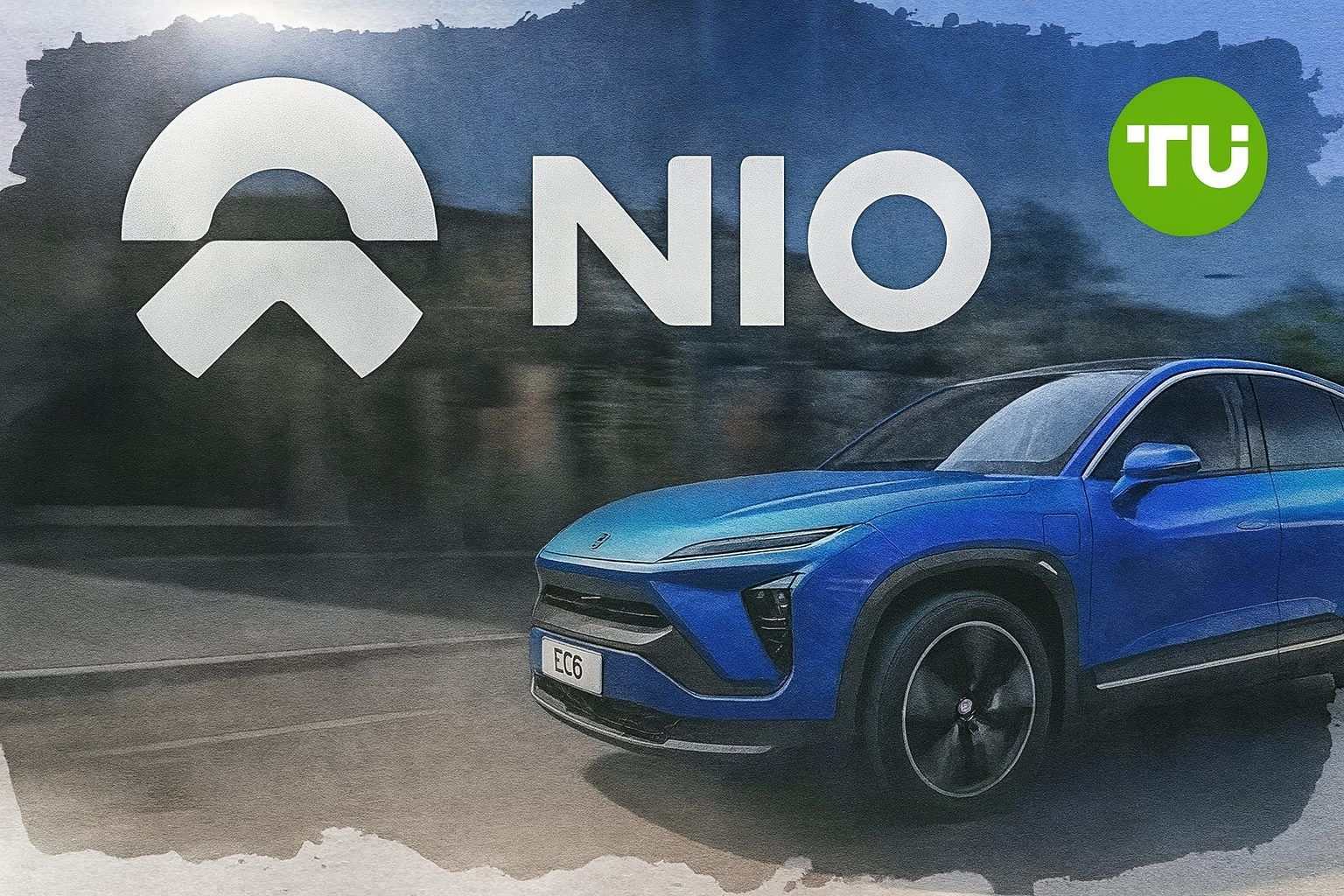
As of December 6, 2025, NIO stock sits near the US$5 mark, well below its recent highs, even as the Chinese electric-vehicle maker posts record deliveries and improving margins. The disconnect between NIO’s operational momentum and its volatile share price is at the heart of the current debate around the stock.
NIO Inc. NYSE:NIO closed at about US$5.04 on December 5, 2025, giving the company a market capitalization in the US$12–13 billion range. The stock has traded between US$3.02 and US$8.02 over the past 52 weeks, with the high reached on October 2, 2025.Yahoo Finance Even after a modest rebound in early December, the shares remain more than a third below that 52‑week peak.
At the same time, NIO is reporting some of its strongest operating metrics ever: record quarterly deliveries, a sharp improvement in gross margin and a November delivery surge of more than 76% year over year.
This article looks at where NIO stock stands today, what’s driving its price action in December 2025, and how Wall Street and quantitative models are positioning for 2026.
NIO Stock Snapshot: Price, Range and Recent Moves
NIO’s American depositary shares currently trade around US$5.04, after closing at that level on December 5. Intraday, the stock has recently moved between about US$5.03 and US$5.18, reflecting continued high volatility and heavy trading volume.
Key metrics as of early December 2025 include:
- Last close: ~US$5.04
- 52‑week range: US$3.02 – US$8.02
- One‑year change: roughly +9% (well below major indices)
- Average daily volume: around 40–70 million shares, underscoring NIO’s status as an actively traded, sentiment‑sensitive name.
The past few weeks have been especially turbulent. In mid‑November, NIO endured a nine‑day losing streak, with shares sliding to about US$5.75 on November 19 amid reports that the company had begun externally licensing its in‑house Shenji NX9031 autonomous‑driving chip and concerns about the upcoming Q3 earnings release.
Subsequent days brought more pressure, with the stock dipping below US$5 on several sessions before a partial rebound to just above that level by December 5. MarketWatch notes that even after the bounce, the ADR remains more than 35% below its early‑October high of US$8.02.
In short: NIO stock is cheap relative to where it traded earlier in 2025, but not because the business has stalled.
Operations Are Surging: Q3 2025 Results and November Delivery Record
Record Q3 deliveries and improving margins
On November 25, NIO reported unaudited Q3 2025 results that showed robust top‑line growth and sharply narrowing losses.
Highlights from the quarter (ended September 30, 2025) include:
- Deliveries: 87,071 vehicles, up 40.8% year over year and 20.8% quarter over quarter, a new quarterly record.
- Revenue: RMB 21.79 billion (≈ US$3.06 billion), up 16.7% year over year and 14.7% sequentially.
- Vehicle sales: RMB 19.20 billion, +15% year over year.
- Vehicle margin:14.7%, up from 13.1% a year earlier and 10.3% in Q2.
- Gross margin:13.9%, vs. 10.7% in Q3 2024 and 10.0% in Q2 2025.
- Net loss: RMB 3.48 billion (≈ US$489 million), 31% narrower than a year ago.
Importantly, NIO’s management highlighted positive operating cash flow and improving profitability metrics, supported both by cost reductions and richer margins on newer models.
The Q3 numbers also show how central the company’s three‑brand strategy has become:
- NIO (premium smart EVs)
- Onvo (family‑oriented smart EVs)
- Firefly (small high‑end urban EVs)
In Q3, deliveries were split between 36,928 vehicles from the NIO brand, 37,656 from Onvo and 12,487 from Firefly.Stock Titan The mix underscores NIO’s pivot from a pure luxury‑EV story to a broader volume play across multiple market segments.
November 2025: Second‑best month ever, 76% delivery surge
The momentum continued into Q4. On December 1, NIO reported 36,275 vehicle deliveries in November 2025, the company’s second‑highest monthly total on record, behind October’s 40,397 units.
Key November data points:
- November deliveries: 36,275 vehicles, +76.3% year over year, though about 10% below October.
- Brand split:
- NIO brand: 18,393 vehicles, +18.7% year over year and +7.3% month over month.
- Onvo: 11,794 vehicles, +132% year over year but down ~32% from October.
- Firefly: 6,088 vehicles, a new record and slightly up month over month.
- Year‑to‑date (Jan–Nov): 277,893 vehicles delivered, up 45.6% year over year.
- Cumulative deliveries since inception: roughly 949,000 vehicles, putting NIO on the verge of the one‑million mark.
Management has guided for Q4 2025 deliveries between 120,000 and 125,000 units, implying about 43,000+ vehicles needed in December to hit the low end of that range, given October plus November already total 76,672.
That guidance is ambitious but slightly below the 150,000‑unit goal floated on the Q2 call, reflecting a more cautious stance after China’s vehicle trade‑in subsidies were cut and new‑order momentum softened across the industry.
Why NIO Shares Lag Despite Record Volumes
If deliveries and margins are going the right way, why is NIO stock under pressure?
Revenue miss and ongoing losses
First, while Q3 revenue grew strongly, it missed analyst expectations by a modest margin. Primary Ignition cites reported revenue of about US$3.06 billion versus Street estimates slightly above US$3.1 billion, while the company’s adjusted loss per share of around US$0.15 was better than the roughly US$0.24 loss analysts expected.
The top‑line shortfall reinforces concerns about NIO’s pricing power in a brutal Chinese EV price war, even as gross margin expands. NIO is clearly selling more cars and making more per vehicle than a year ago, but the market remains sensitive to any sign that revenue is not ramping as fast as hoped.
Second, NIO is still deeply loss‑making. A quarterly net loss close to US$500 million, even if narrowing, reminds investors that the path to sustainable profitability is not guaranteed.
Dilution and balance‑sheet concerns
To fund this growth, NIO has leaned on the equity markets. In September, the company completed a US$1.16 billion registered equity offering, and in October it issued another 55 million shares to its ADS depositary for future employee awards.
While the extra capital strengthens NIO’s balance sheet – cash and equivalents were roughly RMB 36.7 billion (about US$5.1 billion) at the end of Q3 – it also dilutes existing shareholders and reinforces the perception that further capital raises may be needed before the business fully funds itself.
Macro and policy headwinds
NIO’s home market is also in flux. Chinese EV makers posted record November sales as buyers rushed to lock in purchases before key tax breaks and subsidies start to be phased out from January 1, 2026.South China Morning Post Analysts expect a slowdown in deliveries early next year as demand is pulled forward into Q4 2025.
At the same time, investors remain wary of:
- China’s broader economic slowdown;
- Intensifying EV competition across all price points;
- Potential tariff and regulatory risks in export markets.
All of this means that strong operational data is being filtered through a decidedly cautious macro lens.
New Products and Expansion: Onvo, Firefly and Chip Licensing
Despite the headwinds, NIO is aggressively expanding its product and technology footprint.
Onvo L60 “Black Knight” and brand ladder
On December 3, NIO’s sub‑brand Onvo launched the L60 Black Knight Edition, a special‑edition midsize SUV limited to 666 units, with deliveries beginning December 5.Benzinga The limited‑run model is designed to boost visibility and demand in an intensely competitive mid‑size SUV segment.
Combined with the premium NIO brand and the compact Firefly line, this gives the company a full brand ladder that spans luxury, family and small‑car segments. That multi‑brand approach was central to the Q3 delivery surge, as Onvo and Firefly added volume beyond NIO’s high‑end base.
NIO is also pushing beyond China:
- Firefly targets right‑hand‑drive markets with more favourable tariff regimes, including Singapore in the near term and the UK and Thailand in 2026.
- NIO recently announced a Thailand entry via a partnership with Thonburi Group, which operates a major Mercedes‑Benz assembly operation in Southeast Asia, and plans to introduce Onvo and Firefly into that market through the same channel.
Licensing the Shenji autonomous‑driving chip
Another under‑the‑radar development is NIO’s move to license its in‑house Shenji NX9031 intelligent‑driving chip to third parties, turning a historically cost‑heavy R&D investment into a potential high‑margin revenue stream.
Local trade publications report that the chip delivers competitive computing performance for autonomous‑driving applications. While details on pricing and partners remain limited, investors see this as a first step toward monetizing NIO’s technology stack beyond car sales.
How Wall Street Sees NIO Now: Price Targets and Ratings
Analyst opinion on NIO is sharply divided – a key reason the stock can swing so violently on news.
Consensus targets: modest upside from depressed levels
According to MarketBeat, 13 Wall Street analysts currently cover NIO, with a consensus rating of “Hold.” The breakdown:
- 2 Sell
- 8 Hold
- 3 Buy
The average 12‑month price target is US$6.73, implying roughly 33% upside from the latest close around US$5.05. Individual targets range from US$4.00 at the low end to US$8.50 at the high end.
StockAnalysis, which tracks a slightly different analyst set, also reports an average target of US$6.73 and classifies the consensus as “Buy,” again with a projected upside of about one‑third over the next year.StockAnalysis
Recent rating moves illustrate the split:
- Freedom Capital Markets upgraded NIO from Hold to Strong Buy, lifting its target from US$6.50 to US$7.00 after Q3, citing improved margins and delivery momentum.
- Macquarie cut NIO from Buy to Hold and trimmed its target from US$6.70 to US$5.30, reflecting political risk and competitive pressures.
- Targets from other major banks range from US$7.00 (Mizuho) to US$8.50 (UBS) and US$7.10 (Bank of America), with Barclays holding the most bearish view near US$4.00.
In short, traditional analysts generally see moderate upside from today’s levels, but not a return to the stock’s euphoric peaks. The consensus view can be summed up as: growth is real, profits are still out in the distance, and risk remains high.
What the Models Say: Technicals and Quantitative Forecasts
Alongside human analysts, several quantitative services publish short‑ and medium‑term forecasts for NIO based on price and volume patterns.
Technical picture: oversold but not clearly bullish
Intellectia’s technical model notes that NIO’s share price increased slightly on the last trading day but remains down about 6–7% over the past 10 sessions. Overall, the stock currently shows four bullish and four bearish technical signals, resulting in a neutral composite view.
Key technical observations:
- Short‑term trend: price now sits above the 5‑day simple moving average, but the 5‑day average is below the 20‑day, signalling recent weakness.
- Mid‑term trend: the 20‑day SMA is below the 60‑day SMA, indicating a bearish medium‑term trend.
- Long‑term trend: price is roughly in line with the 200‑day SMA, suggesting a potential longer‑term support zone.
- Short sale ratio around early December sits near 14%, down from previous days, hinting that some short sellers may be taking profits.
CoinCodex, which uses a technical‑indicator‑driven algorithm, characterizes sentiment as bearish, with 8 indicators flashing bullish and 18 flashing bearish. The 14‑day relative strength index (RSI) stands around 25, an “oversold” reading that historically often precedes short‑term bounces but does not guarantee them.CoinCodex
Short‑term and long‑term price forecasts
CoinCodex’s near‑term model projects:
- Next 5 days: modest gains, with NIO potentially reaching about US$5.12 by December 10, 2025 – roughly 1.6% above current levels.
- December 2025 average: about US$4.85, within a projected range of US$4.67–US$5.12, implying only minor overall upside versus today.
However, its longer‑term projections are notably more pessimistic:
- 1‑year forecast: around US$3.49, implying a 30% decline.
- 2030 forecast: between roughly US$2.45 and US$3.08, substantially below the current price.
These algorithmic forecasts are purely technical, based on historical price behaviour, volatility and momentum rather than NIO’s fundamentals. They highlight how fragile sentiment remains: models calibrated on recent drawdowns are inclined to assume more of the same.
Fundamental Outlook: Path to Profitability and 2026 Catalysts
Looking beyond December, the key question for long‑term holders is whether NIO can convert today’s volume and margin gains into sustained profitability.
Street earnings and revenue expectations
Analyst consensus compiled by StockAnalysis points to:
- Revenue 2025: about CNY 89.3 billion, up ~36% from 2024.
- Revenue 2026: about CNY 130.8 billion, another ~46% jump.
- EPS 2025: around –6.87 CNY, improving from –11.03 in 2024.
- EPS 2026: around –2.42 CNY, a further narrowing of losses.
Seeking Alpha summaries and other fundamental analyses broadly suggest that NIO is targeting full‑year non‑GAAP profitability in 2026, driven by higher volume, better vehicle margins and tighter control of R&D and SG&A spending.
From NIO’s own side, the company previously indicated that it expected 2025 vehicle deliveries to roughly double 2023 levels (around 165,000 units).24/7 Wall St. Given that year‑to‑date deliveries already exceed 277,000 units through November and Q4 guidance calls for 120,000–125,000 vehicles, NIO seems on track to more than meet that long‑term volume ambition.
Industry context: EV boom with a policy cliff
China’s EV sector remains a growth engine but is entering a more mature, policy‑sensitive phase. November’s record sales across multiple EV makers were fuelled by buyers racing to beat the planned phase‑out of incentives from January 2026.
Analysts expect:
- A potential demand air pocket in early 2026;
- Intensifying competition as both established players and newcomers fight for share;
- Ongoing price pressure that could test NIO’s margin gains.
Against that backdrop, NIO’s multi‑brand strategy, international expansion (Europe and Southeast Asia) and technology monetization (autonomous‑driving chips, software, services) are all intended to diversify revenue and cushion against purely domestic price wars.
Key Risks for NIO Stock
Any assessment of NIO stock must balance its turnaround narrative against considerable risks.
- Continued losses and funding risk
- NIO remains unprofitable on both a GAAP and non‑GAAP basis, with a Q3 net loss near US$489 million and negative EPS.
- The September equity raise underscores that management is willing to issue shares when needed, increasing the risk of future dilution.
- Hyper‑competitive domestic EV market
- Price wars remain fierce in China, with multiple brands discounting aggressively. NIO has to defend margins while sustaining growth, a difficult balancing act.
- Policy and trade uncertainty
- Changes in subsidies, tax treatment and export tariffs can materially affect demand and profitability, especially for export‑focused brands like Onvo and Firefly.
- High volatility and sentiment sensitivity
- With a beta just above 1 and 30‑day volatility of nearly 13%, NIO is prone to sharp swings on both company‑specific and macro news.
- Technical models currently lean bearish over the medium term, forecasting potential downside over the next year despite short‑term bounce potential.
For investors, NIO remains firmly in the high‑risk, high‑reward bucket.
What to Watch in December 2025
December is shaping up to be a pivotal month for NIO stock and the broader China EV complex.
Here are the key catalysts:
- December deliveries:
Investors will scrutinize whether NIO can hit the 120,000–125,000 Q4 delivery target, which implies at least ~43,000 vehicles in December. Strong numbers would validate management’s growth narrative; a miss could revive worries about demand and pricing. - Margin commentary and 2026 guidance:
Any updated commentary around vehicle margins, operating expense discipline and the timeline to break‑even in 2026 will be critical to the valuation story. - International expansion progress:
Updates on Thailand, right‑hand‑drive Firefly exports and any new European developments will help investors gauge how quickly NIO can reduce its dependence on the Chinese market. - Market reaction to EV subsidy roll‑off:
Sector‑wide data in January and February 2026 will show whether November’s sales spike was merely demand pulled forward or the start of a more durable higher baseline.
Bottom Line: A Tug‑of‑War Between Fundamentals and Sentiment
As of December 6, 2025, NIO stock sits at a crossroads:
- On one side, the company is delivering record volumes, improving margins and building a fuller ecosystem of brands, technologies and international partnerships.
- On the other, it remains loss‑making, exposed to policy changes and fighting for attention in a crowded EV landscape – all while recent price action and several quantitative models still point to elevated downside risk.
Wall Street’s average 12‑month target around US$6.70 suggests moderate upside from here, but the wide spread between the most bullish and bearish targets underlines just how uncertain the path is.
For now, NIO remains a classic high‑beta EV story: potentially rewarding if the company executes on its 2026 profitability ambition, but vulnerable to macro shocks, competitive surprises and sentiment swings. Any investor considering NIO should treat it as a speculative position, size exposure accordingly, and recognize that December’s delivery numbers may set the tone for how the market views the stock heading into 2026.