
Eli Lilly (LLY) stock is moving as investors weigh standout retatrutide Phase 3 results, a Reuters report on FDA review timing for orforglipron, and updated Wall Street price targets.
Published: December 12, 2025
Eli Lilly and Company stock NYSE:LLY is back in the spotlight on December 12, 2025, as the market digests a rapid sequence of obesity-pipeline headlines—alongside new questions about regulatory process, manufacturing scale-up, and what “priced for perfection” really means for one of healthcare’s most valuable companies.
As of the latest quote available Friday, LLY traded around $1,009 per share, modestly higher on the day.
Below is a detailed, publication-ready roundup of today’s key news, the most relevant near-term catalysts, and the latest analyst forecasts and valuation arguments shaping the LLY stock narrative.
Key takeaways for LLY stock today
- Retatrutide’s first Phase 3 readout delivered 28.7% average weight loss at 68 weeks in a knee osteoarthritis/obesity study—one of the strongest efficacy showings reported in obesity drug development—but tolerability and discontinuations are a real debate.
- A Reuters report (Dec. 12) says FDA leadership pushed internally to accelerate review steps for Lilly’s oral GLP‑1 pill orforglipron, triggering concerns inside the agency about speed versus rigor.
- Lilly is also executing on the “boring but crucial” part of the GLP‑1 boom: capacity. A new $6+ billion Alabama API facility is part of a broader U.S. manufacturing push and is expected to produce, among other medicines, orforglipron. Reuters
- Analyst price targets remain broadly supportive, but the range is wide—reflecting both the scale of the opportunity and the risks of competition, pricing pressure, and regulatory scrutiny.
What’s driving Eli Lilly stock on Dec. 12, 2025
1) Retatrutide: “best-in-class” efficacy… with a tolerability asterisk
Lilly’s next-generation injectable obesity candidate retatrutide (often described as a “triple agonist”) produced an average 28.7% weight loss in a late-stage study at 68 weeks, according to Reuters coverage of the data. Reuters
That headline number matters because it reinforces a thesis many LLY bulls have leaned on for two years: Lilly isn’t merely winning the current GLP‑1 cycle with tirzepatide (Mounjaro/Zepbound)—it may also have the next wave of therapies that can defend or expand share as competitors catch up.
But investors are also focusing on the less celebratory details:
- Trial discontinuations: Reuters reported 18.2% of patients on the highest dose discontinued the trial versus 4% on placebo, with Lilly pointing to “perceived excessive weight loss” among some participants—particularly those starting with lower BMI. Reuters
- Side-effect profile: Reuters highlighted typical GI side effects (nausea, diarrhea, constipation, vomiting) and flagged dysesthesia (abnormal skin sensation) occurring in 20.9% of patients on the highest dose.
- “Too effective” as a commercial question: Barron’s framed the market’s push-pull clearly—retatrutide may be extraordinarily potent, but the tolerability and dropout rates could influence how widely it’s used (and how it’s dosed) in real-world practice. Barron’s
Why the market reaction looked measured: Even with a big efficacy headline, investors are now conditioned to demand not just maximum weight loss, but a package: safety/tolerability, scalable manufacturing, payer coverage, and competitive durability. Retatrutide’s data raises the bar—but it also raises questions that won’t be answered until fuller datasets and additional Phase 3 readouts arrive.
Lilly said it expects seven late-stage trials evaluating retatrutide in obesity and type 2 diabetes to be completed in 2026, setting up a catalyst calendar that could run well beyond one headline day.
2) Reuters (Dec. 12): FDA leadership pushed for a faster orforglipron review timeline
The most consequential “today” headline for process risk came from Reuters: internal documents reviewed by the outlet indicate FDA leadership pushed reviewers to accelerate evaluation steps for Lilly’s experimental weight-loss pill orforglipron, after Lilly sought a faster timeline. Reuters
Among the notable details reported:
- FDA leadership discussed cutting the filing review period (checking whether an application is sufficiently complete) from 60 days to one week, later suggesting two to three weeks depending on complexity after internal pushback.
- Under an accelerated timeline, Reuters reported the FDA could decide as early as March 28, 2026, versus a later May 20 target date that reviewers had set.
- Reuters also noted that Lilly’s pill helped patients lose 12.4% body weight in a late-stage study, while a separate trial for Novo Nordisk’s oral candidate showed 16.6% weight loss.
Why this matters for LLY stock: Orforglipron is widely viewed as a potential scale unlock for the obesity market because a successful oral GLP‑1 could expand adoption among patients unwilling or unable to use injectables—and could be easier to produce at very high volumes. But regulatory credibility is also part of the “equity premium” a mega-cap pharma trades on.
Reuters reported internal concern that compressing timelines could increase the risk that a safety or efficacy issue fails to receive adequate attention.
For investors, the key is not just whether orforglipron is approved—but whether the approval pathway avoids reputational damage that could spill over into payer trust, prescriber behavior, or future labeling discussions.
3) Manufacturing scale: Lilly’s $6B+ Alabama API plant is a long game bet on GLP‑1 demand
Demand is only monetizable if supply exists. On that front, Reuters reported Lilly will invest more than $6 billion in a new active pharmaceutical ingredient (API) facility in Huntsville, Alabama, aimed at expanding U.S. production and bolstering supply chains.
Key points from Reuters’ reporting include:
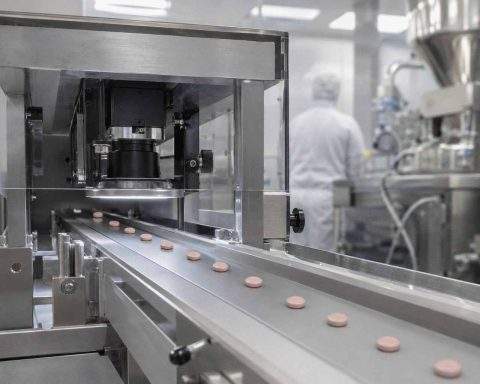
- The facility will produce small-molecule synthetic and peptide medicines, including orforglipron.
- Construction is slated to begin in 2026, with completion targeted for 2032, creating about 3,000 construction jobs and around 450 roles for engineers, scientists, operations and lab staff.
- The project sits inside a broader manufacturing push: Reuters noted Lilly previously outlined plans to spend at least $27 billion on four new U.S. manufacturing sites.
Stock implication: Big capital spending can pressure free cash flow in the short run, but for Lilly it’s part of a strategic “moat” argument: being able to reliably supply next-gen therapies at scale, especially if the market shifts toward chronic use across multiple indications.
The “pricing and access” front: Lilly keeps widening the funnel
The other underappreciated driver of LLY stock is not just innovation—it’s the ongoing effort to translate demand into covered, paid scripts.
Reuters previously reported Lilly cut the price of Zepbound single-dose vials via LillyDirect, with the 2.5 mg starting dose at $299 per month and the 5 mg dose at $399, while higher doses were listed at $449 per month under a self-pay program (down from prior pricing levels).
This is strategically significant because the U.S. obesity market is constrained not only by supply, but also by coverage and out-of-pocket affordability. Price moves can expand adoption—while forcing investors to wrestle with the long-term tradeoff between volume and margins.
Reuters also tied these moves to Lilly’s broader positioning as one of the two companies dominating GLP‑1 obesity treatment, and to its climb into ultra-rare territory for pharma valuation (including a report that it reached a $1 trillion market value milestone in November).
Global growth catalyst: Mounjaro’s China reimbursement adds volume—and pricing complexity
International expansion is another piece of the LLY stock story. Reuters reported China will add Mounjaro to the national reimbursement drug list for type 2 diabetes from January 1, a step that can broaden access in a market of enormous scale.
However, Reuters also noted a familiar tradeoff in China’s reimbursement dynamics: higher volume can be “mitigated by lower prices.” Reuters
For long-duration investors, this is the pattern to watch globally: GLP‑1 drugs can become blockbuster public-health tools, but success often pulls pricing into the orbit of national health systems.
Other notable LLY news in the Dec. 12 cycle
Dividend update: Lilly declares first-quarter 2026 dividend
Lilly announced (Dec. 8) a $1.73 per share dividend for the first quarter of 2026, payable March 10, 2026, to shareholders of record as of February 13, 2026.
While dividends don’t drive the LLY story the way GLP‑1 does, capital-return signals matter when a stock trades at a premium and investors want evidence of durable cash generation.
M&A: Lilly completes Adverum tender offer and acquisition
Lilly also disclosed the completion of its tender offer for Adverum Biotechnologies, with 16,493,335 shares tendered (about 64% of shares outstanding) and the parties expecting to consummate the acquisition on December 9, 2025, per the company’s PR Newswire release.
This is not an immediate revenue needle-mover compared with obesity, but it reinforces Lilly’s broader strategy: maintain a deep pipeline across modalities (including gene therapy) while GLP‑1 cash flows expand.
Fresh analyst forecasts for Eli Lilly stock: price targets and what they imply
Across major market trackers, the consensus view remains positive—but not unanimous—and the dispersion is meaningful.
- MarketBeat shows a “Moderate Buy” consensus rating, with an average price target around $1,109.24 (roughly ~10% upside from the referenced price on that page), and a target range from $879 to $1,300. MarketBeat
- StockAnalysis lists a “Strong Buy” consensus from 17 analysts, with an average price target near $1,073 and a wide range from $700 to $1,500. It also highlights notable recent updates, including a Wells Fargo target move to $1,200 (Dec. 10) and a Morgan Stanley target of $1,290 (Nov. 24). StockAnalysis
- Investing.com shows 27 analysts with an average target around $1,075.74, with low/high targets $770 / $1,500, and a displayed 52-week range roughly $624 to $1,112.
How to read this for Dec. 12: The targets cluster around “moderate upside,” but the high-end scenarios (up to $1,500) are essentially saying: if Lilly converts orals + next-gen incretins into a multi-indication franchise with manageable pricing pressure, today’s valuation could still be justified.
The low-end scenarios reflect the opposite: competition compresses pricing, tolerability limits next-gen adoption, or regulatory/political friction increases.
Valuation debate: expensive on P/E, cheaper on PEG?
One of the more widely circulated “valuation counterpoints” today comes from a Motley Fool analysis reprinted by Finviz.
That piece notes:
- LLY trades at roughly 27x forward earnings, above the cited 18.3 average for the healthcare sector.
- But when factoring expected growth via the PEG ratio, the article points to an estimate around 0.9, which it argues suggests the stock may look “cheap” relative to its growth rate. Finviz
Whether you agree or not, this frames the core market question for Dec. 12, 2025:
Is Lilly a premium pharma that’s already priced for a perfect GLP‑1 future—or a platform company still early in a multi-decade expansion across obesity, cardiometabolic disease, and adjacent indications?
Beyond obesity: Alzheimer’s remains a longer-dated optionality
While obesity and diabetes dominate daily price action, Reuters also published a broader Alzheimer’s industry analysis today noting that only two drugs are approved to slow Alzheimer’s progression: Lilly’s Kisunla and Leqembi (Eisai/Biogen), each shown to delay progression by around 30% by removing amyloid plaques, alongside ongoing efforts to pursue additional targets and combination-style strategies.
This matters to LLY investors because it supports the “multiple engines” thesis—though the market clearly assigns the highest near-term value to incretin-based growth.
What to watch next: the LLY catalyst checklist
Near-term (days to weeks)
- Headlines and political scrutiny around the FDA’s Commissioner’s National Priority Voucher program and whether timelines change for orforglipron.
- More granular retatrutide data and investor interpretation of discontinuations, dysesthesia, and dosing flexibility.
Medium-term (2026)
- Multiple retatrutide Phase 3 readouts expected to complete in 2026, per Reuters reporting.
- Continued pricing and coverage evolution in the U.S., including self-pay programs and government-related pricing dynamics that have already begun to shape headlines.
Long-term (2026–2032 and beyond)
- Execution on the Alabama API facility and other planned manufacturing investments—critical to sustaining leadership if oral therapies broaden the patient base dramatically.
- International reimbursement dynamics (China is one example), where volume gains often come with pricing concessions.
Bottom line for Eli Lilly stock on Dec. 12, 2025
LLY stock’s narrative today is unusually “complete” for a mega-cap: blockbuster current products, a next-gen pipeline that can raise the ceiling, and the manufacturing and access strategies needed to turn scientific wins into durable revenue.
At the same time, today’s Reuters reporting on FDA review pressure underscores a reality premium-valued stocks can’t ignore: when a company becomes central to a public-health mega-market, process, politics, and trust can move the story almost as much as clinical endpoints do.
For investors, the practical takeaway is clear: Lilly still looks like one of the strongest franchises in global pharma—but the path forward will be shaped by (1) real-world tolerability and dosing strategy for next-gen drugs like retatrutide, (2) how quickly oral options like orforglipron can scale without controversy, and (3) how aggressively pricing pressure grows as the obesity market matures.
Related articles: NYSE:LLY