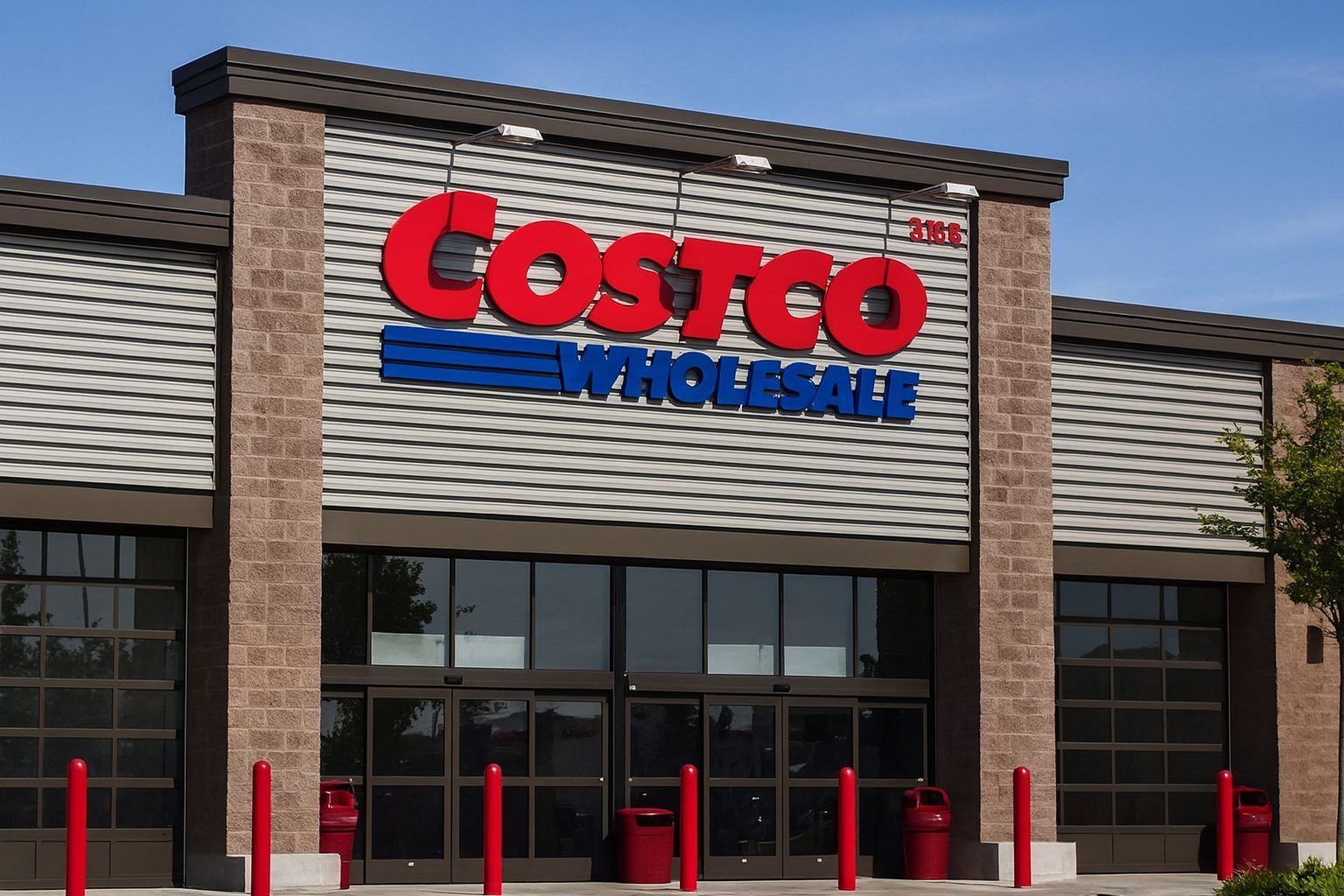
Costco Wholesale Corporation (NASDAQ: COST) is back at the center of investor attention on December 12, 2025, after the retailer kicked off fiscal 2026 with a sales and earnings beat, accelerated membership-fee growth, and another quarter of strong comparable sales—even as the stock’s reaction remains measured and headlines swirl around a tariff-related lawsuit.
What makes Costco stock particularly compelling (and complicated) right now is the push-pull between fundamentals that look elite—especially membership economics and digital growth—and a valuation that many strategists still view as premium-priced, leaving less room for upside surprises to translate into big near-term share gains.
Below is a detailed, publication-ready breakdown of today’s Costco stock news, forecasts, and analyst takes—with the key numbers investors are using to decide whether COST is a “quality compounder at any price” or a “great business that’s already priced for perfection.”
What happened to Costco stock on Dec. 12, 2025?
Costco reported fiscal Q1 2026 results for the 12 weeks ended November 23, 2025, delivering EPS of $4.50 and total revenue of $67.307 billion (including membership fees), topping consensus estimates referenced by multiple market reports.
Yet despite the beat, COST’s immediate move was restrained: Reuters reported shares were marginally lower after-hours following the release, a reminder that investors are weighing not only “how good” the quarter was, but also how much good news is already baked into the price. Reuters+1
Costco earnings: the headline numbers investors are trading
From Costco’s official fiscal Q1 2026 release, the key reported figures were:
- Net sales:$65.978B, up 8.2% year over year
- Membership fees:$1.329B, up from $1.166B
- Total revenue:$67.307B
- Operating income:$2.463B
- Net income:$2.001B
- Diluted EPS:$4.50 (vs. $4.04 a year earlier)
A notable nuance: Costco highlighted a $72M tax benefit tied to stock-based compensation (about $0.16 per diluted share). In its supplemental material, the company also presented growth rates excluding these items.
Comparable sales stayed strong—and Canada stood out on an “adjusted” basis
Costco’s quarter featured companywide comparable sales of +6.4%, and digitally-enabled comparable sales of +20.5%.
On an adjusted basis (excluding gas price and FX impacts), Costco reported:
- U.S. adjusted comps:+5.9%
- Canada adjusted comps:+9.0%
- Other international adjusted comps:+6.8%
- Total company adjusted comps:+6.4%
The company’s internal “drivers” view (also captured in its supplemental information) attributed the comp to a blend of traffic and ticket gains, with comparable traffic and ticket each rising around the low single digits. MarketScreener+1
The “Costco flywheel” in 2025: traffic + ticket + digital
One reason Costco remains a Wall Street favorite is how consistently it generates growth from multiple levers at once:
1) Store demand and basket sizes
Business Insider reported U.S. comparable sales were supported by traffic up 2.6% and transaction size up 3.2%, reinforcing the narrative that shoppers are still buying both essentials and “nice-to-have” categories at Costco. Business Insider
2) Digital acceleration (not just “online orders”)
Costco’s Q1 supplemental disclosures highlighted that e-commerce site traffic rose 24% and e-commerce average order value rose 13%, while digitally-enabled comps climbed 20.5%.
3) Delivery partnerships expand convenience
Reuters also pointed to Costco’s same-day delivery momentum, citing partnerships including Instacart in the U.S. and Uber Eats/DoorDash internationally—an important theme as warehouse retail tries to pair “treasure-hunt” shopping with modern convenience. Reuters
Membership is the real profit engine—and Q1 showed why
If you want the single most important factor behind Costco stock’s premium reputation, it’s membership economics.
Membership fee income grew 14% year over year
Costco reported membership fees of $1.329B, up from $1.166B—roughly +14%, a high-margin revenue stream that can support earnings even when retail pricing stays aggressive.
Renewal rates remain high, though investors noticed the direction
In Q1 supplemental information, Costco reported:
- Worldwide renewal rate:89.7%
- U.S./Canada renewal rate:92.2%
Barron’s flagged that renewal rates have moderated versus prior periods—still elevated, but closely watched because membership stickiness is central to Costco’s long-term valuation story.
Member counts: scale keeps expanding
Costco’s supplemental materials also listed:
- Paid memberships:81.4 million (+5.2% YoY)
- Total cardholders:145.9 million (+5.1% YoY)
- Executive memberships:39.7 million
- Executive members’ share of sales:74.3%
That Executive penetration matters because higher-tier members tend to be more loyal and higher-spending—exactly the type of mix that can keep comps resilient through varied economic cycles.
Margins and costs: strong, stable, and “good enough” for a premium stock
Costco’s model is famous for low markups, so the market tends to treat margin changes as signals about operational discipline and input-cost pressures.
In Costco’s Q1 supplemental data:
- Gross margin:11.32%, up 4 bps vs. Q1 FY25
- SG&A:9.60%, down 1 bp vs. Q1 FY25
The message investors often take from this: Costco is still growing, still investing, and still controlling costs—without needing to squeeze customers via big price hikes.
Cash, capital returns, and balance sheet strength
Costco ended the quarter with $16.217B in cash and cash equivalents, up from $14.161B at fiscal year-end (August 31, 2025).
The company also showed meaningful shareholder returns and investment:
- Operating cash flow:$4.688B
- Capex (additions to property & equipment):$1.526B
- Share repurchases:$210M
- Cash dividends paid:$577M
For Costco stock watchers, the combination of steady buybacks, regular dividends, and ongoing warehouse expansion helps support the “high-quality defensive growth” narrative—though valuation still dictates the pace of market enthusiasm.
Warehouse expansion: the growth runway is still long
Costco reported it currently operates 923 warehouses worldwide, including 633 in the U.S. and Puerto Rico.
Its Q1 supplemental information also outlined an expansion cadence implying Costco expects to end FY2026 with about 942 warehouses (up from 914 at FY2025 year-end), reflecting continued unit growth across regions.
And management’s tone on productivity remains bullish: Business Insider highlighted CEO commentary suggesting newer warehouses are ramping faster, with recent openings generating higher annualized sales per warehouse than openings from two years ago.
The tariff lawsuit: why it matters for Costco stock in 2025
A major non-earnings headline in the Costco story this month is its tariff-related legal strategy.
Axios reported Costco filed a lawsuit aimed at recovering tariffs paid and seeking to halt continued collections while a key Supreme Court case plays out.
Broader coverage has framed the suit as a way for importers to preserve refund rights—even if a larger case later finds the tariff regime unlawful, refunds may not be automatic without timely, company-specific claims.
This matters for investors because tariffs can affect:
- Cost of goods (especially for globally sourced discretionary items)
- Promotional intensity (how deep discounts can go during holidays)
- Merchandising flexibility (switching suppliers, leaning on private label, shifting sourcing)
Market reporting also suggested tariffs influenced the discount environment during the holidays, even as Costco emphasized alternative sourcing strategies and its Kirkland/private-label value perception.
Wall Street forecasts on Dec. 12: price targets reset after earnings
One of the biggest “today” developments for Costco stock is the wave of analyst target changes following the Q1 print.
A mixed bag: some targets down, some up
MarketScreener’s running list of updates on Dec. 12, 2025 showed multiple firms adjusting targets and maintaining ratings, including:
- Goldman Sachs: target $1,171 (from $1,218), rating maintained
- Bernstein: target $1,146 (from $1,134), Outperform maintained
- JPMorgan: target $1,027 (from $1,025), Overweight maintained
- Baird: target $1,000 (from $1,125), Outperform maintained
- Jefferies: target $1,050 (from $1,180), Buy maintained
- HSBC: target $1,045 (from $1,060), Hold maintained
- Truist: target $926 (from $1,033), Hold maintained
- Raymond James: target $1,000 (from $1,070), Outperform maintained
That dispersion is important: it suggests analysts largely still respect Costco’s business quality, but they differ on whether the current valuation offers enough upside.
Bernstein’s call: higher target, but valuation remains the debate
Investing.com reported Bernstein raised its target to $1,146, while also discussing the premium multiples Costco commands and tweaking longer-dated EPS estimates—an example of how analysts can stay constructive while still acknowledging “great company, expensive stock” tension. Investing.com
What the consensus implies (in plain English)
MarketBeat’s aggregation showed a “Moderate Buy” consensus and a consensus target price around $1,023, with COST trading in the high-$800s area in recent sessions. MarketBeat
Other aggregations (and the day’s target changes) generally cluster around low-$900s on the cautious end to $1,100–$1,170+ on the bullish end—often depending on how each analyst underwrites membership economics, warehouse productivity, and the durability of comp sales.
Why Costco stock can beat expectations and still not “pop”
The most repeated explanation across market coverage is straightforward: Costco is priced like a premium asset.
- Premium valuation indicators (including P/E multiples in the high-40s range) were cited in analyst commentary and market summaries.
- Several outlets also noted Costco has underperformed the broader market year-to-date, even while fundamentals stayed strong—raising the bar for what counts as a “beat.” MarketWatch+1
In other words, Costco’s business may be firing on all cylinders, but the stock often needs either:
- an even bigger upside surprise, or
- a clearer path to accelerating growth, or
- a valuation reset (price down, earnings up, or both)
…before momentum investors re-rate it higher.
Costco stock outlook: what investors should watch next
Here are the near-term catalysts and risk factors most relevant to COST from here:
- Monthly sales updates: Costco’s monthly sales releases can shift sentiment quickly, especially if traffic or ticket trends change. (November sales were already strong: $23.64B for the four weeks ended Nov. 30, up 8.1%.)
- Renewal rate trajectory: High 80s/low 90s renewal is excellent—investors will still watch whether renewal rates stabilize or drift.
- Warehouse growth execution: The FY26 warehouse roadmap (toward ~942 warehouses) supports long-run growth, but productivity and ramp speed matter.
- Digital durability: Costco’s 20%+ digitally-enabled comp is eye-catching. Investors will want proof it’s sustainable rather than post-holiday volatility.
- Tariff litigation developments: Any changes to tariff policy, refund mechanics, or legal timelines could affect costs and promotional planning—especially heading into 2026.
- Expense and wage pressure: Costco’s margin stability is part of the thesis; any step-up in costs could matter more when a stock is priced at a premium.
Bottom line for Dec. 12, 2025
Costco’s fiscal Q1 2026 results reinforced why COST remains one of retail’s most admired businesses: strong comps, surging digital, expanding membership economics, and disciplined operations.
But today’s stock debate is less about “Is Costco executing?” and more about “How much execution is already priced in?”—a question reflected in mixed price target adjustments even as most firms largely maintain positive or neutral ratings rather than turning outright bearish. MarketScreener+2MarketBeat+2