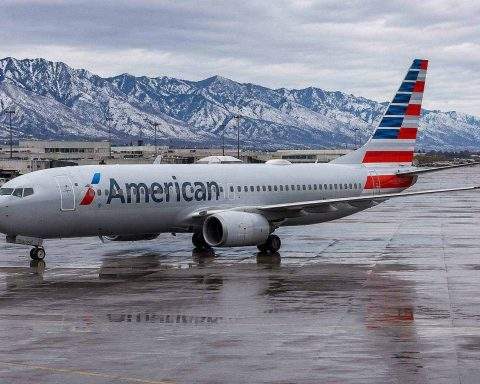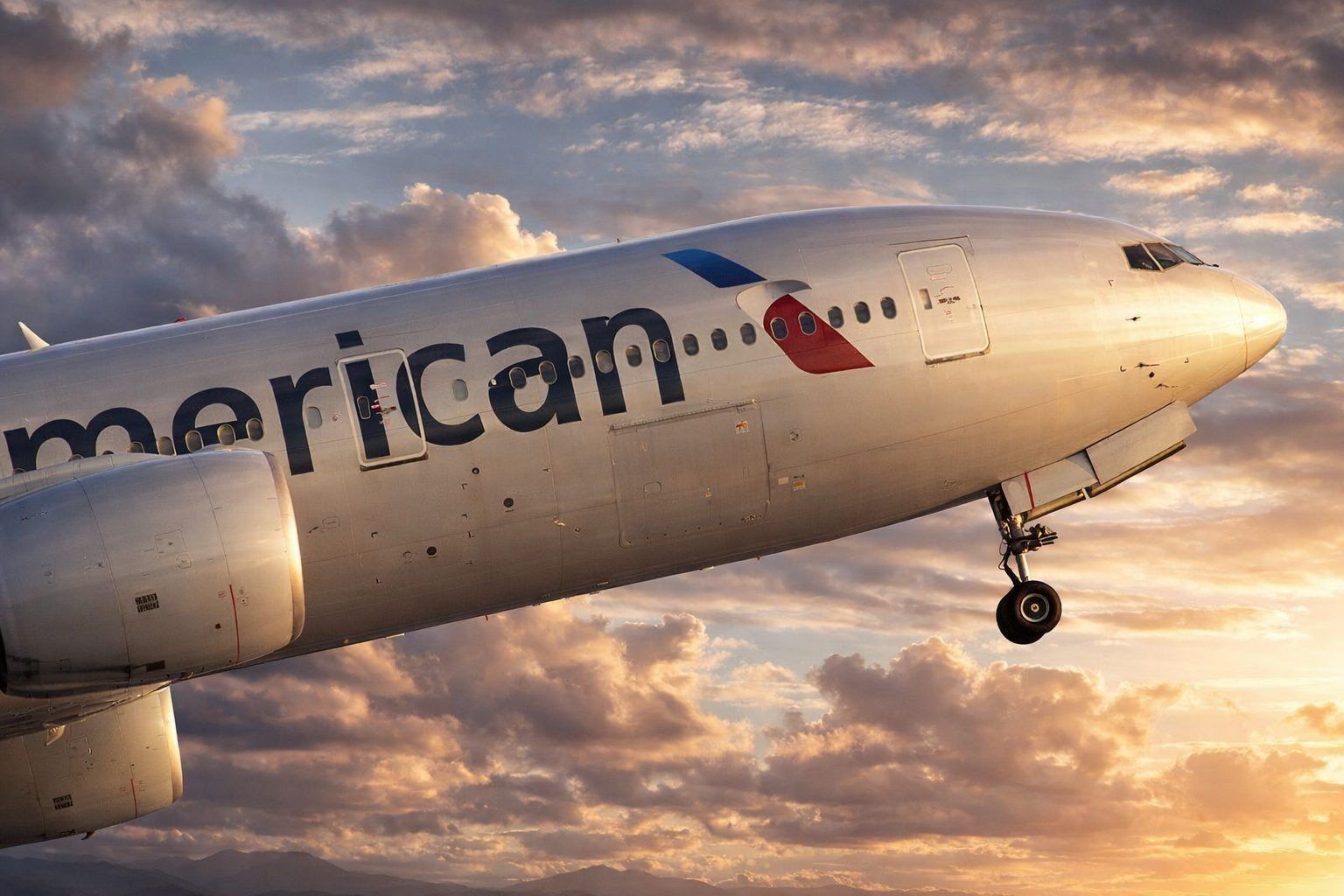

American Airlines Group Inc. (NASDAQ: AAL) is heading into the peak holiday travel stretch with its stock in a “story-stock” phase: not just reacting to quarterly numbers, but to a fast-moving mix of analyst calls, a premium-cabin reset, loyalty-program economics, and headline risk.
As of the latest available quote early Friday (Dec. 19, 2025), AAL traded around $15.61.
That price doesn’t tell the whole tale. Over the last six months, American’s shares have rallied sharply—yet the stock is still down year-to-date in 2025. That tension (momentum vs. skepticism) is exactly where today’s news and forecasts land.
AAL stock snapshot on Dec. 19: momentum is real, but doubts remain
By the close on Dec. 18 (the last completed U.S. session before today’s trading), AAL was up 0.64% on the day to $15.61.
Zoom out and the trend looks more dramatic:
- +46.99% over the past six months
- +26.29% over the past month
- -10.44% year-to-date (2025) Finviz
Investors are also watching positioning. Finviz shows short float around 9.63% (a meaningful level for a large-cap airline), which can amplify moves when sentiment shifts quickly.
What’s driving American Airlines stock today
1) Wells Fargo initiates coverage: “Equal Weight” with a $17 target
The most market-relevant research update hitting feeds is Wells Fargo initiating coverage of American Airlines at Equal Weight with a $17 price target—a call that effectively says: “There’s upside, but there are reasons to stay cautious.” Investing.com+1
According to Investing.com’s summary of the Wells Fargo note, the bank highlighted:
- Tailwinds: a new co-branded credit card agreement and improving “main cabin” economics
- Headwinds:elevated debt and the need for premium improvements to catch up with rivals Investing.com
The interesting part is the “why now.” Wells Fargo points directly at 2026 as the inflection year—especially tied to American’s loyalty economics and credit-card monetization.
2) The “premium catch-up” plan is no longer optional
Two days ago, Reuters described American’s pivot as a full premium overhaul—internally framed as a “customer reimagination” initiative—aimed at closing the profitability gap with Delta and United. The upgrades include premium seating and onboard changes (including partnerships like Bollinger champagne and Lavazza coffee), plus cabin and aircraft initiatives designed to win higher-yield passengers. Reuters+1
This matters for AAL stock because the U.S. airline profit pool has increasingly shifted toward premium cabins and loyalty revenue. Reuters also noted the scale of the gap: American’s profits over the first nine months of 2025 were far below Delta’s and United’s, reinforcing why investors (and analysts) are laser-focused on whether American can execute a real “margin repair” story. Reuters
American’s own Q3 2025 release supports the theme that premium unit revenue growth continues to outperform main cabin, and that the carrier is investing in lounges, premium products, and the loyalty engine to drive growth into 2026 and beyond.
3) A legal headline with real-world stakes: U.S. admits liability in the D.C. collision case
A sober and potentially market-relevant development: Reuters reports the U.S. Justice Department acknowledged federal government liability in a wrongful death case linked to the January 29 midair collision near Reagan Washington National Airport involving an American Airlines regional jet and a U.S. Army Black Hawk helicopter. Reuters says the filing described breaches of duty of care and noted an FAA air traffic controller failed to comply with an FAA order; American also filed a motion seeking dismissal from the lawsuit.
For investors, the key question isn’t just “headline risk” but liability allocation—and whether future findings (including an NTSB report Reuters says is expected in early 2026) could shift financial exposure, insurance dynamics, and reputational drag. Reuters
4) Holiday travel demand looks strong—yet operational pressure rises too
The broader setup into year-end is supportive: the Financial Times reported OAG data projecting 309 million passengers flying globally between Dec. 15 and Jan. 4, a record level and up year-over-year.
For American, that’s the good news: a high-volume period that can support Q4 results if operations hold up and pricing remains rational.
The catch is that record volumes also increase the probability of disruptions (weather, staffing constraints, air traffic system bottlenecks). In the airline business, strong demand is a gift… unless the operation melts down and turns it into compensation costs, rebooking expense, and brand damage.
The fundamental backdrop: guidance, debt, and the loyalty engine
American’s last major fundamental update came with its third-quarter 2025 results (released Oct. 23). Highlights from the company’s report:
- Record Q3 revenue of $13.7 billion
- GAAP net loss of $114 million (Q3 is typically a strong quarter for airlines, which is why this got attention)
- Q4 2025 adjusted EPS guidance: $0.45 to $0.75
- Full-year 2025 adjusted EPS guidance: $0.65 to $0.95
- Full-year free cash flow expected: over $1 billion American Airlines Newsroom
Balance sheet context is central to the AAL debate:
- Total debt at end of Q3: $36.8B
- Net debt: $29.9B
- Liquidity: $10.3B
- Debt goal: total debt below $35B by end of 2027 American Airlines Newsroom
That’s why so many analyst notes read like this: “We like the upside if execution improves… but the debt load makes the stock unforgiving if anything goes wrong.”
The 2026 bull case Wall Street keeps circling: loyalty + premium + funding
The Citi partnership and “mile economics” become the headline in 2026
American says it is working toward implementation of an exclusive and expanded partnership with Citi starting in January 2026.
Wells Fargo’s initiation note (as summarized by Investing.com) leans hard into that catalyst: it projects co-brand “cash remuneration” growing about 10% annually to $10B by 2030, and estimates the new card economics could lift pre-tax income by $1.5B (about $1.70/share) versus a referenced prior period. Investing.com
This is the modern airline cheat code: the loyalty program can behave like a high-margin financial product layered on top of a low-margin, operationally complex airline. The market tends to reward airlines that can scale premium and loyalty income consistently—because it reduces cyclicality.
Premium cabin catch-up is the execution test
Reuters’ reporting makes the strategic logic blunt: American is trying to pull itself into the premium-led profit model that has powered Delta and helped United. But Reuters also flags why investors remain cautious: execution is expensive, supply-chain delays are real, and American has lagged in operational reliability metrics.
Analyst forecasts for AAL stock: targets cluster in the mid-teens, but the range is wide
If you’re looking for “the market’s best guess,” you quickly find that price targets vary by source and timing—but the overall picture is consistent:
- Wells Fargo (initiated): $17 Investing.com+1
- Finviz “Target Price”: ~$16.01 Finviz
- StockAnalysis consensus (14 analysts): “Hold,” avg target ~$15.34 StockAnalysis
- Investing.com consensus: avg ~$15.87, with a low of $10 and high of $20 Investing.com
That $10–$20 spread is the market admitting uncertainty: airlines are inherently cyclical, and American’s debt and execution burden increase the odds of both positive and negative surprises.
One more detail worth noting from Finviz: analysts’ forward-looking expectations imply materially stronger earnings next year (Finviz shows EPS next year around 1.85). Finviz
If those expectations firm up—and if debt trends lower—the stock can “re-rate” (trade at a higher valuation). If not, targets drift back down fast.
Other developments investors are watching
Credit markets: EETC upgrades can matter quietly
Even when equity investors ignore credit headlines, airlines don’t get to. Investing.com reported that S&P Global Ratings raised ratings on several American Airlines enhanced equipment trust certificates (EETCs) to BBB+ from BBB, citing improved loan-to-value ratios and resilient collateral values.
For a company with heavy leverage, anything that can reduce financing friction (even at the margin) matters over time.
International strategy: investment tied to Azul’s restructuring
Reuters reported that a U.S. bankruptcy judge approved Brazilian airline Azul’s restructuring plan, with American and United agreeing to invest up to $300 million in Azul equity as part of the plan. Reuters
The Financial Times added detail that the restructuring converts debt to equity and reduces the debt burden, with American also entering a code-sharing agreement with Azul.
Connectivity arms race: talks with Amazon for LEO Wi‑Fi
Bloomberg Law reported American has discussed using Amazon’s “Leo” satellite-based internet service for in-flight Wi‑Fi as airlines compete to improve onboard connectivity—especially for premium travelers. Bloomberg Law+1
Risks that can move AAL stock sharply from here
American Airlines stock is not a slow-burn utility. The same factors that can drive upside can also create sudden drawdowns:
- Debt sensitivity: higher-for-longer rates or widening credit spreads can raise refinancing costs and limit flexibility.
- Operational reliability: holiday disruptions, weather events, or system constraints can quickly become cost events (refunds, crew mispositioning, extra lift).
- Execution risk on premium upgrades: retrofits, new aircraft deliveries, and product rollouts can be delayed by supply chains.
- Legal and reputational risk: today’s D.C. collision case update is a reminder that aviation incidents can take years to resolve and can shift liabilities as investigations mature.
- Economic cyclicality: airlines tend to feel consumer and corporate demand softening early, especially if pricing power weakens.
What to watch next for American Airlines (AAL) in early 2026
The market’s attention is likely to cluster around a few concrete markers:
- Citi partnership launch (January 2026) and any early signals of accelerating loyalty economics American Airlines Newsroom
- Premium product rollout pace (A321XLR, 787-9 premium configuration, lounges, onboard upgrades) American Airlines Newsroom+1
- Debt trajectory and progress toward the company’s stated leverage goals American Airlines Newsroom
- Any new disclosures related to the D.C. collision litigation and the expected NTSB reporting timeline Reuters+1
- Industry pricing discipline—the difference between a good airline year and a brutal one is often whether capacity stays rational.
Related articles: NASDAQ:AAL