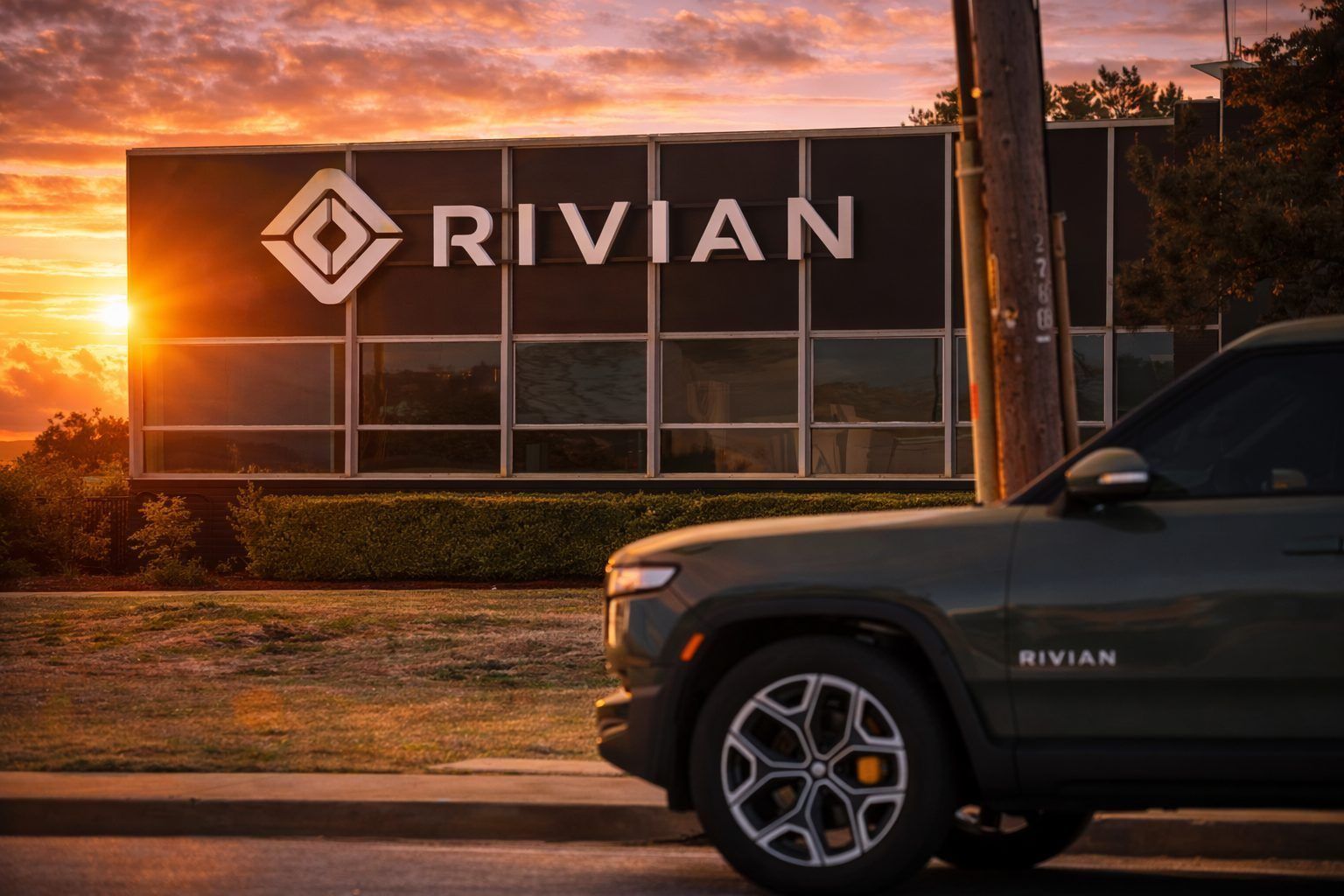

Rivian Automotive, Inc. NASDAQ:RIVN is back in the spotlight on December 19, 2025, with the EV maker’s stock trading around $20.28 after a sharp move higher that traders are tying to a fast-building narrative: Rivian isn’t just an EV brand anymore—it wants to be a software-defined vehicle company with recurring revenue from autonomy and services.
That story has been gathering steam for a week, starting with Rivian’s Autonomy & AI Day announcements and continuing into today’s fresh Wall Street upgrade. But behind the rally, the investment debate is still the same classic Rivian puzzle: Can the company execute a lower-cost mass-market pivot (R2) while controlling burn, navigating shifting U.S. policy, and proving it can monetize software at scale? Barron’s+2Reuters+2
Rivian stock today: what’s driving the RIVN move on Dec. 19, 2025?
The most immediate spark is a rating upgrade from Baird, which lifted Rivian to Buy and raised its price target to $25 from $14, explicitly framing 2026 as “the year of R2.” In the same breath, the note points to Rivian’s autonomy investments—especially custom silicon—as a long-term differentiator. Barron’s+1
That upgrade landed into a market already primed for Rivian headlines after the company’s autonomy event earlier this month, and it helped push the stock toward levels not seen in a long time.
The bigger catalyst: Rivian’s Autonomy & AI Day and the shift toward “software-defined” EVs
Rivian’s Autonomy & AI Day (held December 11) is now the anchor point for much of the current “bull case.” The company introduced:
- A custom self-driving computer chip (the Rivian Autonomy Processor) that it said will replace Nvidia processors in its autonomy stack, with production tied to TSMC.
- A paid driver-assistance offering branded Autonomy+, priced at $2,500 one-time or $49.99/month, positioned well below Tesla’s comparable pricing structure.
- A plan to expand “hands-free” road coverage to more than 3.5 million miles in the U.S. and Canada (starting with an update for certain vehicles). Reuters+1
- A roadmap that includes “eyes-off” functionality (still requiring careful interpretation—this is a company target, not a guarantee) beginning in 2026, and a longer-term goal of Level 4 capability in defined conditions. Reuters+1
In the market’s short attention span, Rivian’s stock actually fell on the initial Autonomy & AI Day news—but it rebounded quickly as analysts argued that vertical integration (chip + platform + data) could expand margins and open up software revenue streams.
Why lidar matters in Rivian’s pitch (and why investors care)
One detail investors are obsessing over: Rivian’s autonomy roadmap leans into a multi-sensor approach, including lidar for future variants (especially for the upcoming R2). Rivian executives have argued lidar costs have fallen sharply, making it realistic for consumer vehicles; the strategy also contrasts with Tesla’s camera-only approach and plays into a broader “safety + robustness” framing. Business Insider+1
In market terms, this isn’t just a hardware choice—it’s a bet that Rivian can build a differentiated driver-assistance product that customers will pay for, repeatedly, creating higher-margin revenue on top of vehicle sales.
The R2 effect: why 2026 is being treated like a make-or-break product cycle
The R2 is Rivian’s planned step down-market: a midsize SUV positioned around a $45,000 starting price that aims to unlock far larger demand than the premium-priced R1 lineup. It’s a strategic pivot that many analysts see as Rivian’s clearest shot at scale.
Baird’s upgrade is built on the idea that a successful R2 launch could re-accelerate demand and reset sentiment—especially after a period where EV demand has been buffeted by policy and pricing shifts.
Capacity, factories, and the long game (Illinois now, Georgia next)
Rivian has also been laying groundwork on the manufacturing side:
- In its SEC-filed Q2 2025 materials, Rivian discussed progress on Normal, Illinois expansion and preparations tied to R2 commissioning and ramp activity.
- Longer-term, Rivian has moved forward on a large Georgia plant project, with reporting describing it as a crucial part of scaling beyond the current lineup and supporting future, more affordable vehicles.
Factory execution matters because Rivian’s financial story is still deeply tied to unit economics: improving cost per vehicle, reducing waste, and raising gross margin as it scales.
Financial reality check: Rivian’s growth vs. profitability challenge
Even with the stock rally, Rivian remains a company investors typically judge on three “hard” metrics:
- Deliveries and demand stability
- Gross margin trajectory
- Cash burn / liquidity runway
Deliveries and guidance: 2025 expectations narrowed
In October, Rivian narrowed its 2025 delivery outlook to 41,500–43,500 vehicles after reporting Q3 deliveries of 13,201, as the broader EV market digested policy changes and rising cost pressure.
Revenue momentum and the software/services angle
In November reporting around Rivian’s results for the September quarter, Rivian posted $1.56 billion in revenue for Q3 2025, and its software and services segment was highlighted as a fast-growing line item—supported in part by its Volkswagen-linked initiatives.
Investors are paying attention here because a sustained mix shift toward software and services could help Rivian build a less cyclical business than “pure” vehicle sales—especially if autonomy features become paid upgrades. Reuters+1
Cash position and spending: the runway question never goes away
Rivian’s SEC-filed Q2 2025 press release showed cash, cash equivalents, and short-term investments of $7.508 billion as of June 30, 2025, alongside updated 2025 guidance items including deliveries and capital expenditures.
That’s substantial liquidity—but Rivian’s spending level (capex + R&D + ramp costs) is why Wall Street remains split. The company is trying to fund a product expansion (R2), an autonomy push, and factory scaling—at the same time.
Analyst forecasts on Dec. 19, 2025: targets are rising, but consensus stays cautious
Today’s coverage is full of upgraded targets, but the bigger story is dispersion: analysts are not aligned.
The bullish end: $23–$25 targets built on autonomy + R2 upside
- Baird: upgraded to Buy, target $25 (upgrade published into Dec. 19 coverage).
- Needham: raised target to $23, citing confidence in Rivian’s software-defined vehicle positioning after AI/autonomy disclosures.
The more cautious camp: neutral ratings and mid-teens targets
Other research notes highlighted in market summaries show more tempered targets (example: Goldman raising a target while keeping a hold/neutral stance).
The consensus: “Hold,” and an average target below today’s price
Depending on the tracking source, analyst consensus still clusters around Hold with an average target in the mid-teens, which implies that—after the run—many analysts see limited upside over the next 12 months.
- StockAnalysis consensus: average target $15.45, consensus Hold (with highs to $25 and lows to $10).
- MarketScreener consensus: average target $16.21, with last close shown near $20.28.
- A separate roundup also characterized the Street as mixed, citing a consensus target around $15.34.
This is the key tension in Rivian stock right now: momentum and narrative are improving faster than consensus price targets.
Risks in the headlines: policy shocks, layoffs, and recalls still matter
For Google News readers tracking Rivian stock, it’s not all chips and hype. Several risk items remain very real:
EV incentives and tariffs: the policy environment is no longer a tailwind
Rivian and the broader EV sector have had to recalibrate after the removal/expiration of key U.S. EV tax credits and the imposition of cost pressures tied to trade and tariffs—issues that have shown up repeatedly in reporting around Rivian’s demand outlook and manufacturing costs.
Cost control: job cuts underscore pressure to conserve cash
Rivian has also taken steps to reduce costs, including layoffs reported in October as the company positioned itself for a tougher demand environment while still preparing the R2 launch.
Recall risk: a reminder that scaling vehicles is messy
In early December, Rivian recalled 34,824 electric delivery vehicles tied to a seat belt issue, with reporting noting a mix of software measures (misuse detection) and inspections/replacements. While no injuries were reported, recalls are a recurring reminder that automotive execution risk can quickly become a news catalyst.
What to watch next for Rivian stock: the 2026 setup starts now
Going into year-end, Rivian’s near-term stock narrative is likely to swing on a few concrete checkpoints:
- More clarity on the R2 launch timeline and manufacturing readiness, including how smoothly the company can transition lines and manage costs as it scales.
- Evidence that paid software and driver-assistance can become meaningful revenue, especially as Autonomy+ pricing becomes more central to the business model.
- Updates on Rivian’s Volkswagen relationship and potential tech licensing, as Rivian has indicated broader industry interest in the technology emerging from that ecosystem.
- Demand trends in a post-incentive EV market, where pricing, financing rates, and competition could determine whether R2 becomes a breakout product or just another EV in a crowded field.
Rivian stock on Dec. 19, 2025 is trading like investors believe the company has a credible path to becoming more than a niche EV manufacturer. The open question is whether the upcoming product cycle and software strategy can turn that belief into durable margins—and eventually, durable profits.
Related articles: NASDAQ:RIVN