
Gilead Sciences, Inc. NASDAQ:GILD opened the holiday-shortened week with a mix of pipeline expansion and policy-driven uncertainty—two themes that can quickly move large-cap biopharma stocks even when overall market volume is lighter than usual.
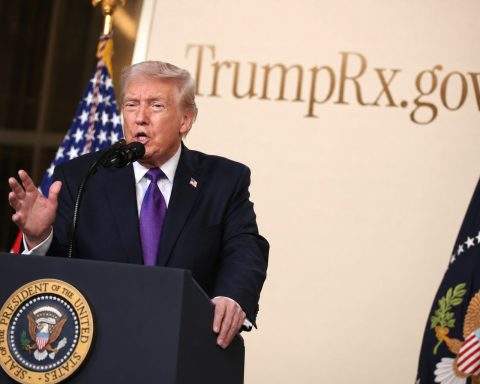
On Monday, December 22, 2025, Gilead announced it has exercised its option to license Assembly Biosciences’ investigational herpes simplex virus (HSV) programs—a move that strengthens Gilead’s long-term antiviral pipeline beyond HIV. The development lands just days after Gilead joined other major drugmakers in a Trump administration “most-favored-nation” drug-pricing agreement tied to tariff relief and direct-to-consumer drug access via TrumpRx.gov. Gilead+2Gilead+2
As of the latest available trading update on Dec. 22, Gilead shares were around $123–$124, modestly lower on the session.
What’s driving Gilead stock on Dec. 22, 2025?
Investors are weighing three near-term narratives:
- Pipeline optionality is expanding with Gilead’s HSV licensing move (a therapeutic area with large unmet need and limited innovation for decades).
- U.S. drug-pricing policy risk is shifting from headline threats toward negotiated deals—potentially reducing the “worst-case” tariff/pricing overhang, while still leaving open questions about enforcement and longer-term price pressure.
- HIV remains the engine: Gilead continues to defend and extend its HIV franchise with long-acting lenacapavir-based products and next-generation regimens.
The headline: Gilead exercises option on Assembly Bio HSV programs (weekly oral candidates)
What Gilead announced
Gilead said it will exclusively license Assembly Biosciences’ HSV helicase‑primase inhibitor programs for recurrent genital herpes, including two investigational candidates:
- ABI‑1179
- ABI‑5366
Gilead highlighted early data suggesting these programs could support a once‑weekly oral dosing approach—an attractive potential differentiator in a space where suppressive therapy has long relied on older antivirals.
Why Wall Street is paying attention
Gilead is pitching this as more than a “small deal.” In its own wording, these are the first programs Gilead will advance under its ongoing R&D collaboration with Assembly Bio—signaling the company intends to keep building an antiviral pipeline that reaches beyond its mature franchises. Gilead
Just as important for sentiment: Gilead noted that no new HSV therapies have been approved in the U.S. or Europe for more than 25 years, framing the opportunity as both clinically meaningful and commercially underdeveloped.
Deal terms (what we know)
According to Gilead:
- Assembly Bio will receive a $35 million payment for Gilead’s exercise of the combined HSV option (covering both ABI‑5366 and ABI‑1179).
- That $35 million reflects a $45 million option fee net of $10 million in accelerated funding credited from a December 2024 amendment.
- Assembly Bio remains eligible for up to $330 million in regulatory and commercial milestones, plus tiered royalties on net sales.
- Assembly Bio can also opt in to share 40% of U.S. costs and profits (instead of milestones/royalties in the U.S.) after it receives development plans/budgets next year.
Investor takeaway: For Gilead, the upfront cash is small relative to its scale, but the deal expands its “shots on goal” in antivirals and reinforces a strategy of pairing large commercial platforms with pipeline reinvestment.
The policy backdrop: TrumpRx pricing agreements and tariff relief are resetting the pharma narrative
What happened (and why it still matters on Dec. 22)
On December 19, 2025, President Donald Trump and nine large drugmakers—including Gilead—announced agreements designed to lower certain U.S. drug prices, particularly in Medicaid and for cash-paying consumers via direct-to-consumer channels tied to TrumpRx.gov.
Markets largely treated the announcement as a net positive for big pharma because it reduced the threat of near-term tariffs and suggested negotiated outcomes may be preferable to blunt, industry-wide actions.
Gilead’s own agreement details
Gilead’s Dec. 19 statement says the three-year agreement includes:
- Discounts on certain existing medicines in U.S. Medicaid comparable to prices paid in other developed nations (including select medicines for HIV, hepatitis C, hepatitis B, and COVID-19)
- Parity pricing for future medicines versus other developed markets
- A Direct-to-Patient program for Epclusa at a discounted cash price, accessible through TrumpRx.gov
- A three-year exemption from Section 232 pharmaceutical tariffs, conditioned on further U.S. manufacturing investment
- Gilead expects the financial impact to be “manageable in 2026 and beyond”, with some terms confidential. Gilead+1
How analysts are framing the impact
Reuters reported that investors downplayed the deal’s economics and focused on reduced policy tail-risk; one Bernstein analyst described the deals as a chance to “deliver headlines” while minimizing economic disruption—and suggested Gilead could be a notable beneficiary given its Medicaid exposure. Reuters
BioPharma Dive echoed this view on Dec. 22, reporting that analysts expect negligible effects on industry sales/profits overall, while companies gain relief from government threats and other incentives.
Investor takeaway: Policy risk hasn’t disappeared—but the near-term shape of that risk looks more like negotiated discounts + channel shifts than a sudden, sweeping pricing reset across all payers.
HIV remains the core: lenacapavir momentum and next-generation regimens
Even with today’s HSV headline, most long-term valuation models for Gilead still hinge on HIV durability and lifecycle management.
1) Next-gen HIV treatment regimen (Dec. 15 catalyst)
Reuters reported on Dec. 15 that Gilead’s experimental once-daily, single-tablet regimen combining bictegravir + lenacapavir was non-inferior to Biktarvy in a late-stage study, with no new safety concerns highlighted. Gilead expects more data presentations next year and plans to pursue regulatory approval.
2) UK regulatory news (Dec. 19)
The UK’s medicines regulator (MHRA) announced approval of lenacapavir as a 6‑monthly long‑acting preventative option for sexually transmitted HIV‑1 infection—another sign that the long-acting PrEP thesis is expanding geographically.
3) Commercial execution check-in (Q3 2025)
On Oct. 30, Reuters reported Gilead said HIV drug sales rose 4% in the quarter (including early contribution from Yeztugo), and CEO Daniel O’Day cited progress on payer coverage—while also noting that CVS had not yet added the product to commercial plans.
Investor takeaway: HSV is a strategic pipeline add, but the market’s “center of gravity” for GILD remains HIV franchise defense + lenacapavir platform expansion.
Gilead stock forecast: what analysts are projecting as of Dec. 22, 2025
Forecasts vary by data provider and methodology, but the consensus message is consistent: analysts are broadly constructive, with upside targets clustering in the high-$120s to low-$130s—while the bullish end of the range pushes into the $150 area.
Consensus price targets (compiled estimates)
- MarketBeat (28 analysts): average target $131.54, with targets ranging $105 to $153, and a consensus rating described as “Moderate Buy.” MarketBeat
- StockAnalysis (20 analysts): average target $127.6 (high $151, low $96), consensus rating “Buy.” StockAnalysis
Recent analyst actions investors cite
StockAnalysis lists recent targets and actions from major banks in December, including:
- Morgan Stanley: target adjustment shown up to $151
- Wells Fargo: target adjustment shown up to $150
- Truist: initiation shown around $140
Separately, multiple market reports in mid-December referenced Wolfe Research raising its price target to $150 while keeping an outperform stance (details vary by outlet due to paywalled distribution).
Investor takeaway: The Street is not pricing Gilead as a high-growth biotech, but it is increasingly treating it as a large-cap biopharma with improving visibility—supported by HIV durability, long-acting innovation, and pipeline optionality.
How the stock has behaved recently (context for Dec. 22)
Gilead has been trading close enough to its highs that “incremental” news can matter. For example, MarketWatch noted that on Dec. 17, Gilead shares rose 2.17% and ended a three-day losing streak, sitting about 5.7% below its 52-week high at that time. MarketWatch
On Dec. 22, the stock was roughly flat-to-down around $123–$124 in the latest quoted session update, suggesting investors are digesting today’s HSV announcement alongside broader policy headlines and year-end positioning.
What to watch next for Gilead (GILD) investors
These are the catalysts most likely to show up in near-term GILD coverage and trading:
- More detail on HSV programs (timelines for Phase 2 starts, dosing strategy, endpoints) following today’s licensing move.
- Implementation details of TrumpRx.gov and how direct-to-patient channels affect net pricing, volumes, and PBM dynamics (especially for products like Epclusa).
- Lenacapavir/PrEP expansion across regulators and payers, including how coverage evolves and whether access/price debates intensify.
- HIV lifecycle management updates (including additional data readouts and regulatory filing progress for bictegravir/lenacapavir regimens).
Bottom line
As of Dec. 22, 2025, Gilead’s stock narrative is being shaped by a rare convergence of:
- A fresh antiviral pipeline headline (HSV licensing that could yield a first-in-decades innovation in recurrent genital herpes),
- A major U.S. drug-pricing policy reset (discounts + TrumpRx channel + tariff relief rather than blunt tariffs),
- And ongoing HIV platform momentum (lenacapavir-based prevention and next-generation regimens).
Analysts’ published targets generally imply modest-to-moderate upside from current levels, with the upper range reflecting confidence that Gilead can keep extending HIV leadership while successfully layering in new growth drivers.
Related articles: NASDAQ:GILD