
NEW YORK — Dec. 25, 2025 (10:18 a.m. ET) — The Dow Jones Industrial Average (DJIA) is effectively on pause today, holding at its latest record close of 48,731.16, because U.S. stock markets are closed for Christmas Day. The Dow last traded during Wednesday’s holiday-shortened Christmas Eve session, when it climbed 288.75 points (+0.6%) to finish at that all-time closing high.
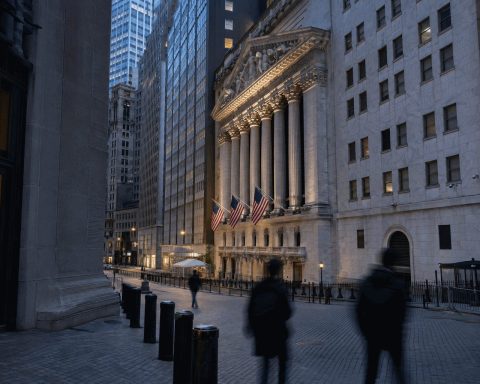
With the NYSE and Nasdaq shut and much of global trading running on holiday staffing, today’s Dow “move” is less about price action and more about positioning, narratives, and what could drive the next leg when cash markets reopen. New York Stock Exchange
Why the Dow set a record heading into Christmas
Wednesday’s record finish capped a calm, thinly traded session that still delivered a clear message: investors are ending 2025 with renewed risk appetite, supported by cooling inflation signals, steady labor data, and expectations that the Federal Reserve could keep easing in 2026.
A few key drivers dominated the tape:
- Rate-cut expectations are back in focus. Reuters reported that optimism around additional Fed cuts in 2026 helped pull money back into equities, especially after recent inflation and jobs readings kept hopes for easier policy alive.
- AI and mega-cap leadership returned — but broadened participation mattered. As tech and AI shares recovered from a November pullback, investors also rotated into more cyclical areas like financials and materials—a backdrop that tends to support “old economy” blue chips that feature heavily in the Dow. Reuters
- Economic resilience remains the base case. The Associated Press noted that unemployment claims fell, reinforcing the view that the labor market is still holding up even as investors debate the pace of cooling.
Bottom line: the Dow’s record close is less about a single headline and more about a year-end alignment of easing-policy hopes + still-OK growth + a market that’s no longer terrified of volatility.
Market status today: what “Dow Jones at 10:18” actually means on Dec. 25
If you’re checking the Dow right now and wondering why it looks “stuck,” it’s because:
- NYSE cash equities: closed today for Christmas, after an early close on Dec. 24.
- Nasdaq cash equities: also closed today, with Dec. 24 marked as an early close.
- Equity index futures: CME’s holiday schedule shows Christmas Day as closed during the day, with trading set to resume later (per CME’s published hours).
So at 10:18 a.m. ET, the most accurate framing is: DJIA is holding at Wednesday’s settlement (48,731.16), and the next meaningful read will come when U.S. markets reopen on Friday, Dec. 26 (with typically light post-holiday volume).
Christmas Day headlines shaping sentiment (even with Wall Street closed)
Even when U.S. equities are dark, the macro and global backdrop still matters—especially for the Dow, which can react sharply to shifting growth expectations, yields, and global demand.
1) Asia is mixed in thin holiday trading
AP reported mixed Asian markets amid widespread Christmas closures, with investors tracking China’s liquidity posture and selective moves across the region. This matters for U.S. blue chips because global growth expectations feed into industrial demand, financial conditions, and multinational earnings.
2) The economy narrative is turning into the 2026 narrative
A Washington Post data-driven look at where the U.S. economy is heading highlights several themes investors are carrying into year-end:
- Inflation around 2.7% as of November (still a political and consumer pressure point)
- A cooling job market relative to 2024
- AI investment as a major growth contributor
- The Fed having cut rates multiple times in 2025 while signaling patience ahead The Washington Post
For Dow traders, this translates into one big question: Can earnings and productivity gains keep expanding if growth cools further—without reigniting inflation? The Washington Post
3) Volatility is unusually subdued into year-end
A notably low volatility backdrop has been part of the late-December tone, consistent with the “grind higher” feel of holiday trading. (Thin volumes can change that quickly when markets reopen.) Barron’s
Santa Claus rally: what history says — and what it doesn’t
Seasonality is getting extra attention because the Dow and broader indexes are entering the classic “Santa Claus rally” window. Nasdaq.com notes the standard definition: the last five trading days of December plus the first two trading days of January—a span that, this year, runs Dec. 24 through Jan. 5 due to holiday closures and weekends. Nasdaq
MarketWatch also highlighted a specific seasonal nugget: Dec. 26 has historically been one of the most consistently positive trading days for the S&P 500, though strategists caution against treating seasonality as a standalone signal. While that statistic is S&P-focused, the Dow often participates when broad risk appetite is firm—especially in low-volume holiday sessions.
The practical takeaway for today (Dec. 25): the “Santa rally” story isn’t tradable right now in cash markets—but it will dominate the narrative when trading resumes on Dec. 26. Nasdaq
Dow Jones forecast and 2026 outlook: what strategists are saying right now
Because the Dow is a price-weighted basket of large U.S. blue chips—many tied to the real economy—its 2026 path will likely hinge on rates, earnings breadth, and whether leadership rotates away from mega-cap tech toward cyclicals and defensives.
Here are the most current strategist themes in circulation as of this week:
“Earnings will do the lifting” in 2026
CBS News reports that multiple major forecasters still expect a constructive 2026, but with an emphasis on earnings growth over valuation expansion. It cited:
- UBS’s David Lefkowitz expecting the S&P 500 to reach 7,700 by end-2026
- J.P. Morgan expecting a 13%–15% rise next year (in its cited research)
- Expectations for mid-double-digit earnings growth in some forecasts CBS News
Even though those are S&P targets, the implication for the Dow is straightforward: if earnings breadth improves and cyclicals participate, the Dow can stay supported—especially with industrials and financials playing a larger role.
A “boring, normal year” scenario (with sector rotation)
Investopedia summarized comments from Freedom Capital Markets strategist Jay Woods: after several years of outsized gains, he expects a more muted 2026 and sees industrials, transports, and financials as potential leaders—sectors that map closely to many Dow constituents. He also flagged potential volatility catalysts in 2026, including politics and Fed leadership transition dynamics.
AI is still the story — but the market is more selective
CBS also emphasized that AI-driven capex remains a central pillar, citing commentary that AI infrastructure spending by major tech could approach hundreds of billions in 2026, while also acknowledging investor concern about “AI bubble” risks and the possibility of sharper pullbacks. That matters for the Dow because even if the Dow is less tech-heavy than the Nasdaq, risk sentiment around AI has become a market-wide tide. CBS News
Key levels and what traders are watching next
With the Dow closing at 48,731.16, the psychological 50,000 milestone is now roughly 1,268.84 points away (about 2.60%). That’s close enough to matter for headlines, but not so close that it’s guaranteed—particularly with liquidity thin and 2026 risks still in play.
When U.S. markets reopen on Friday, Dec. 26, traders will likely focus on:
- Holiday liquidity and volatility
Thin volume can exaggerate moves in either direction. - Rates and Fed expectations
The rally narrative has leaned heavily on the idea that the Fed can keep cutting in 2026 without growth breaking. Any shift in that assumption can ripple through Dow-heavy sectors like financials and industrials. - Market breadth
If leadership broadens beyond a handful of mega-caps, it can be especially supportive for the Dow’s composition. - The Santa rally window itself
Whether the post-Christmas sessions deliver follow-through could shape sentiment into early January.
The takeaway for Dec. 25 at 10:18
As of 10:18 a.m. ET on Dec. 25, the Dow Jones Industrial Average is holding at a record close (48,731.16) because U.S. cash markets are closed for Christmas. The real action resumes Dec. 26, when traders will test whether year-end optimism—powered by rate-cut bets, AI enthusiasm, and broader participation—can survive thin liquidity and looming 2026 uncertainties.
This article is for informational purposes only and does not constitute investment advice.
Related articles: Federal Reserve