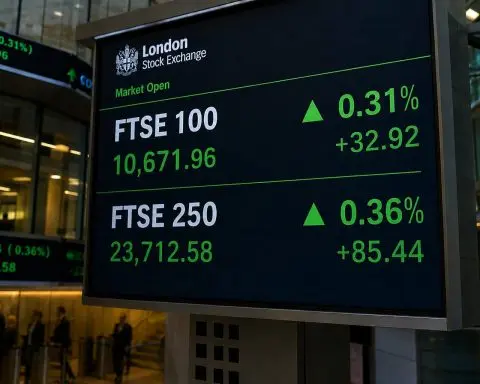
NEW YORK — Friday, December 26, 2025 (9:13 a.m. ET): U.S. stocks are heading into a thin, post‑Christmas trading day, with Wall Street set for a relatively muted open as investors digest a strong 2025 tape and look ahead to 2026 rate and earnings narratives.
In that kind of tape, headline-driven biotech names can swing harder than usual—and ABIVAX Société Anonyme NASDAQ:ABVX has been exactly that kind of stock in December: a mix of clinical-trial enthusiasm, index-related positioning, and renewed takeover speculation.
As of the latest available quote this morning, ABVX was trading around $145.31 in the premarket, up roughly $7.32 (~5.3%) versus the prior close.
One more calendar wrinkle matters today: while Abivax is dual-listed, Euronext markets (including Paris) are closed on December 26 (St Stephen’s Day / Boxing Day), meaning the U.S.-listed ABVX line is the primary venue for price discovery today.
Why Abivax stock is moving: three narratives colliding
1) Eli Lilly takeover rumors put a “deal premium” into the price
Abivax shares have been sensitive to M&A chatter since at least December 10, when Reuters reported the stock jumped on market rumors that Eli Lilly could make an offer. Reuters quoted Stifel analyst Damien Choplain saying the move was driven by “speculation around a possible takeover,” while Lilly said it doesn’t comment on business development activity and Abivax said it would not comment on market rumors. Reuters
A second wave of speculation appeared in late December, with several market reports citing French publication “La Lettre” and suggesting Lilly representatives met with French officials to understand the regulatory backdrop for a potential deal—again, not confirmed by the companies themselves. Investing
Investor takeaway: takeover chatter can support a stock—until it doesn’t. In biotech, a rumor-driven rally can reverse fast on a single “no comment,” “not true,” or simply “nothing further” headline.
2) Nasdaq Biotechnology Index inclusion adds passive-flow fuel
Abivax announced it would be added to the Nasdaq Biotechnology Index (NBI), effective prior to market open on Monday, December 22, 2025—a technical catalyst that can matter because index-tracking funds often rebalance around inclusion dates.
In the same announcement, CFO Didier Blondel framed the inclusion as a milestone reflecting the company’s progress, particularly around obefazimod and the company’s increased visibility in the biotech ecosystem.
Investor takeaway: NBI inclusion can create real buying pressure (especially into/around rebalance windows), but it can also become a “sell-the-news” setup once the forced buying is done.
3) The core fundamental driver: Phase 3 obefazimod data keep stacking up
Behind the market drama, Abivax is being repriced around one thing: obefazimod (ABX464), its lead candidate in ulcerative colitis (UC), with additional ambition in broader inflammatory bowel disease.
Recent company communications have aimed to keep the clinical narrative front and center—especially by expanding from classic endpoints into patient quality-of-life and biomarker details, and by teeing up visibility at major medical meetings.
The science angle: what Abivax says obefazimod is delivering
Phase 3 induction: efficacy in a tough UC population
In an October press release recap published via StockTitan, Abivax reported that in pooled Phase 3 ABTECT 1 & 2 induction data, a 50 mg once‑daily dose produced a 16.4% placebo-adjusted clinical remission rate at Week 8 (p<0.0001), and that both trials met the FDA primary endpoint and key secondary endpoints at the 50 mg dose.
The company also emphasized a refractory population (including prior inadequate response to advanced therapies), and highlighted an early safety picture that, at Week 8, did not show certain severe signals in the pooled dataset.
Separately, investor-focused coverage from Investor’s Business Daily described the Phase 3 readout as “potentially disruptive,” noting the sharp re-rating the stock experienced after the data landed and highlighting the commercial stakes in the oral IBD market. Investors
Investor takeaway: for late-stage biotech, “was it statistically positive?” is table stakes. The bigger valuation lever is whether results look clinically meaningful, durable, and competitive versus current and emerging standard-of-care options.
Patient-reported outcomes: the company leans into “how patients feel”
On November 3, Abivax released patient-reported outcomes (PROs) from the ABTECT induction trials. The company reported that at Week 8:
- 37% of patients on 50 mg reported no bowel urgency, versus 18.1% on placebo
- 47.6% on 50 mg reported no nocturnal bowel movements, versus 24.7% on placebo
- 17.1% in the 50 mg group reported fatigue remission (Fatigue NRS), versus 7.7% on placebo
The release also included commentary from Marla Dubinsky, MD (Mount Sinai) on why quality-of-life measures matter for UC patients, and CEO Marc de Garidel reiterated expectations for 44‑week maintenance trial results in Q2 2026.
Investor takeaway: PROs can influence physician uptake, payer conversations, and ultimately commercial trajectory—especially in chronic diseases where adherence and daily functioning are major real-world differentiators.
ECCO 2026: a heavy conference presence keeps the spotlight on
On December 17, Abivax said 22 scientific abstracts involving obefazimod were accepted for ECCO 2026 (Feb. 18–21, 2026, Stockholm)—including an oral presentation on preclinical anti-fibrotic findings (a Crohn’s-related complication area with high unmet need).
The release names a deep bench of academic presenters and highlights additional cytokine/biomarker analyses and subgroup work tied to the Phase 3 program—essentially signaling: “We’re not done telling the story.” GlobeNewswire
Investor takeaway: conference calendars matter. A biotech can drift for months—then reprice in minutes when new subgroup, biomarker, or safety details shift how investors model probability of approval and peak sales.
Financial runway: the “can they fund it?” question looks less urgent (for now)
Biotech rallies are fragile if they’re paired with imminent dilution risk. Abivax has tried to reduce that overhang.
In its third-quarter 2025 financial update (released Dec. 15), Abivax reported:
- Cash and cash equivalents of €589.7 million as of Sept. 30, 2025
- A stated cash runway into Q4 2027
- Details of a July 2025 U.S. offering: 11,679,400 ADS, with ~$747.5 million gross proceeds and ~$700.3 million net proceeds (company figures)
The same release described ongoing trial spending, the accounting impact of share-price moves on certain expenses, and steps related to the company’s debt structure.
Investor takeaway: cash runway doesn’t eliminate risk, but it changes the nature of risk. With more runway, the market tends to focus less on “will they raise?” and more on execution and upcoming clinical catalysts.
Forecasts and analyst views: bullish overall, but targets lag a fast-moving stock
Consensus-style snapshots show a generally positive sell-side posture, even after ABVX’s explosive 2025 re-rating.
MarketBeat’s compiled view (based on tracked analyst ratings) shows:
- Consensus rating: “Moderate Buy”
- 13 analyst ratings in the last 12 months (as tracked by the site)
- Average price target: $128.73 (with a high of $176 and low of $74)
MarketBeat also listed examples of recent firm-level targets/ratings such as Truist, Barclays, Guggenheim, and BTIG, and noted that one analyst source in their dataset carried a sell-style rating.
How to interpret that: ABVX trading above the average price target doesn’t automatically mean “overvalued”—it often means targets are stale after a vertical move, or that the Street is split between “multi-blockbuster potential” and “price already bakes in a lot of success.”
Today’s market setup: why December 26 can be weird (and why that matters for ABVX)
This morning’s broader backdrop is classic post-holiday tape: lighter volume, index-level calm, and sharp single-stock reactions to news. Reuters described Wall Street as set for a relatively flat open in thin post‑Christmas trading.
For Abivax specifically, there are two extra microstructure quirks:
- Paris is closed today (Boxing Day / St Stephen’s Day on Euronext), so there’s no parallel European session to absorb or confirm price signals.
- The U.S. line is approaching the regular-session open. Nasdaq’s published hours put the cash session at 9:30 a.m.–4:00 p.m. ET, with pre-market 4:00–9:30 a.m. ET and after-hours extending beyond the close.
Investor takeaway: premarket prints can be informative—but also deceptive. Thin liquidity plus a headline-sensitive stock is a recipe for gaps.
What investors should know before the next U.S. session begins
Because it’s 9:13 a.m. ET in New York as this is being written—17 minutes before the 9:30 open—here’s the practical checklist for ABVX watchers today.
- Treat takeover headlines as binary risk. Reuters already documented how ABVX can jump double-digits on deal chatter, and also how quickly that can become “no comment.” Until there’s a filing or an on-record statement, it’s speculation. Reuters
- Watch spreads and early volume. In a thin tape, the open can whipsaw—especially for biotech names that retail and momentum traders crowd into.
- Know what catalysts are real (scheduled) vs. narrative (unscheduled).
- Scheduled: ECCO 2026 (Feb. 18–21) with an Abivax oral presentation date noted in the company’s release.
- Scheduled: Company expectation for maintenance results in Q2 2026 (per the PRO release).
- Unscheduled: M&A. That can happen anytime—or never.
- Remember the “index effect” may be in the rearview mirror. NBI inclusion was effective before market open Dec. 22; flows tied to that can fade quickly once rebalancing is complete. GlobeNewswire
- Keep financing risk in perspective. Abivax’s latest update points to runway into Q4 2027, which is meaningful breathing room—though biotech cash burn can still change with trial scope and commercialization planning.
Bottom line
Abivax (ABVX) is trading at the intersection of real clinical momentum (obefazimod’s Phase 3 program and expanding datasets), structural catalysts (Nasdaq Biotechnology Index inclusion), and headline volatility (Eli Lilly takeover rumors reported by major outlets).
On a normal, liquid trading day, those threads might untangle slowly. On December 26, with Paris closed and U.S. markets stepping into a post-holiday session, ABVX can behave more like a headline-driven instrument than a spreadsheet-driven one.