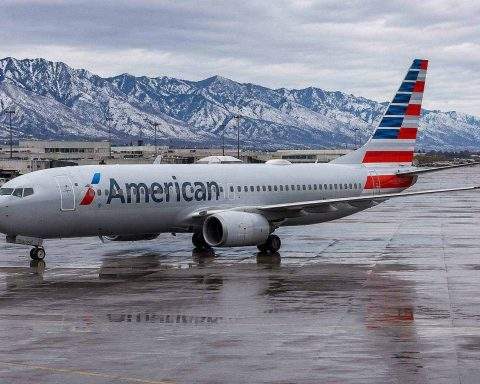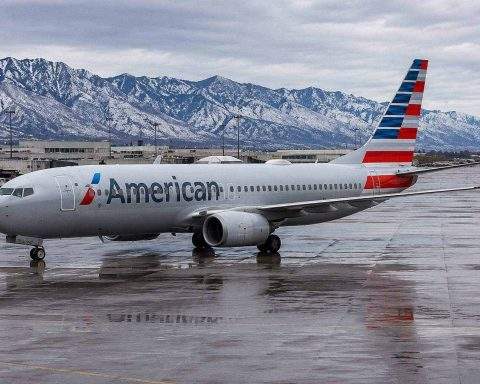

NEW YORK — As of 2:15 p.m. ET on Friday, December 26, 2025, U.S. markets are in the thick of a holiday-thinned session, and American Airlines Group NASDAQ:AAL is trading lower as investors weigh near-term operational disruption against a longer-term turnaround narrative.
AAL stock price today: where shares are trading now
American Airlines shares were at $15.385, down $0.295 (-1.88%) in midday trading. The stock’s intraday range has been $15.31 to $15.69, with about 20.8 million shares traded so far—active for a year-end session where liquidity can be patchy.
For context, major U.S. airline peers were also modestly lower at the same moment, with Delta Air Lines (DAL) at $70.48 (-0.68%) and United Airlines (UAL) at $113.82 (-0.86%), suggesting the tape is “risk-managing” the group rather than singling out AAL alone.
The immediate headline risk: winter storm flight cancellations hit the sector
The most obvious real-time catalyst is operational: winter storm warnings in the Northeast have driven thousands of delays and more than 1,000 cancellations during peak holiday travel.
Reuters reported that by 12:30 p.m. ET, 1,139 flights were canceled and 3,808 delayed in the U.S., citing FlightAware. American Airlines had canceled 96 flights, and the company issued a travel alert allowing affected customers to rebook without change fees.
Why markets care (even if the weather clears quickly):
- Near-term financial drag: Irregular operations can pressure revenue (missed segments) and raise costs (crew re-positioning, overtime, reaccommodation, and customer service load).
- Reputation is a lever right now: American is actively trying to convince customers—and investors—that reliability and experience are improving. Weather happens, but how an airline recovers matters.
The macro backdrop: year-end stocks near highs, but “thin” trading can amplify moves
The broader market setup matters because airlines are cyclical: when investors get even slightly defensive, airlines tend to feel it.
Reuters’ “Week Ahead” market piece describes U.S. equities finishing 2025 near record territory, with the S&P 500 within about 1% of 7,000 after a record close earlier in the week. It also flags a holiday-shortened stretch where light volumes can exaggerate price moves, and where year-end positioning can add noise. Reuters
That “liquidity thinness” is an underappreciated part of the AAL story today: in quiet tape conditions, a weather headline (or a downgrade/upgrade) can move a stock more than it “should.”
The bigger narrative investors are trading: American’s premium pivot—and whether it finally closes the gap
If today’s storm headlines are the short-term plot twist, the main season arc is American’s attempt to reposition itself upmarket—and convince Wall Street it can improve profitability in 2026 and beyond.
Reuters: a “customer reimagination” premium push (with real hardware behind it)
In a widely read December 17 deep dive, Reuters reported American is rolling out a premium-heavy makeover—lie-flat seating, privacy suites, premium amenities (including Bollinger champagne and Lavazza coffee), and faster connectivity—as part of a strategy to regain ground against Delta and United.
Key points from that reporting that investors keep coming back to:
- American’s leadership framed the strategy as an investment-driven shift away from years of cost cutting.
- Nat Piper, American’s newly appointed Chief Commercial Officer, told Reuters the company believes customer-experience investment can grow the top line.
- Steve Johnson, Chief Strategy Officer, predicted meaningful revenue improvement starting in 2026 as these upgrades scale.
- Reuters also highlighted the performance gap: American earned just $12 million over the first nine months of 2025, versus Delta’s $3.8 billion and United’s $2.3 billion over the same span.
That last comparison is brutal, and it’s part of why AAL trades like a “prove it” story: the market isn’t just asking “Will travel demand hold up?” It’s asking “Can American convert demand into durable margins?”
The skeptic’s warning (also Reuters): “not going to turn itself around on a dime”
Reuters quoted airline industry analyst Henry Harteveldt, founder of Atmosphere Research Group, as saying American’s turnaround won’t be instant. Reuters also pointed to operational reliability challenges, supply-chain delays in retrofits and aircraft deliveries, and expectations that American’s margins will still trail peers into 2026.
This is the tension inside AAL’s valuation: the upside case is “premium + loyalty + better ops,” and the bear case is “it’s expensive, slow, and the industry doesn’t wait politely.”
Wall Street’s freshest calls: UBS upgrade and Citi initiation reset the 2026 conversation
Even in a weather-driven session, AAL is still very sensitive to analyst moves because the stock’s debate is fundamentally about forward earnings power.
UBS: upgrade to Buy with a higher target
Investing.com reported UBS upgraded American from Neutral to Buy and raised its price target to $20 from $14, arguing the market is underappreciating American’s ability to expand profits as corporate revenues recover and loyalty income expands. The report also cited UBS modeling corporate revenue recapture as a 2026 tailwind and provided UBS EPS estimates of $1.92 for 2026 and $2.82 for 2027.
Separately, a Nasdaq-hosted write-up (attributed to Fintel) also described the UBS upgrade and summarized a one-year average price target around $15.09 based on aggregated forecasts (with a wide range).
Citi: a Buy call tied to an “elongated mid-cycle” thesis
Citi also entered the 2026 debate in a visible way this month. TipRanks reported that Citi analyst John Godyn initiated coverage of American with a Buy rating and a $19 price target, arguing conditions could support an “elongated mid-cycle” beginning in 2026 and favoring large “supermajor” network carriers. TipRanks
Taken together, UBS and Citi are effectively telling the market: stop valuing AAL like it’s permanently stuck in the penalty box; start valuing it like a leveraged cyclical that could benefit if execution improves.
Earnings reality check: what American itself guided—and why the balance sheet still matters
The company’s latest detailed financial framing is its third-quarter 2025 results.
In its Q3 release, American reported:
- Record third-quarter revenue of $13.7 billion
- GAAP net loss of $114 million (–$0.17 per share)
- Q4 adjusted EPS guidance: $0.45 to $0.75
- Full-year 2025 adjusted EPS guidance: $0.65 to $0.95
- Full-year free cash flow expected to be over $1 billion American Airlines Newsroom
CEO Robert Isom emphasized cost management and balance sheet strengthening, framing network, customer experience, and loyalty investments as the path to revenue growth and shareholder value in 2026 and beyond.
Debt and liquidity remain the “gravity” in the AAL story
American ended Q3 with:
- $36.8 billion of total debt
- $29.9 billion of net debt
- $10.3 billion of total available liquidity
- A stated goal of total debt below $35 billion by end of 2027 American Airlines Newsroom
Why this matters right now: Reuters noted the Fed cut rates multiple times in 2025 (bringing the benchmark into the mid‑3% range), and investors are intensely focused on the outlook for 2026 rate moves. For a highly leveraged company, the interest-rate path isn’t trivia—it’s part of the equity thesis.
The loyalty-program plot twist: basic economy stops earning miles—and investors are watching the fallout
One of the most discussed consumer-facing changes this month is American’s decision to stop awarding AAdvantage miles and Loyalty Points on basic economy tickets bought on or after December 17, 2025.
CBS News reported the change and quoted American saying it “routinely evaluate[s]” fare products; the story also quoted Scott Keyes, founder of Going.com, who framed the move as a way to make basic economy less attractive versus paying a bit more for main cabin. CBS News
The Points Guy—widely read by frequent flyers—also detailed that basic economy previously earned 2 miles/Loyalty Points per dollar (versus 5 per dollar on normal fares) and now earns none, while comparing how Delta and United treat similar fare buckets.
Business Travel News added a corporate-travel lens, noting basic economy is often blocked in managed programs but still used by some SMEs, and it flagged commentary from Cory Garner, founder of Garner Advisory, on distribution/channel implications.
Why this matters for AAL stock (beyond passenger complaints)
From an investor’s standpoint, this is a revenue-quality question:
- If the policy nudges travelers upward into higher fares, it could support yield and loyalty economics.
- If it pushes price-sensitive travelers away, it could pressure load factors in competitive domestic markets.
That tension showed up in the market earlier this week: a Nasdaq-hosted market recap noted AAL fell on December 23 as investors digested the AAdvantage rule tightening and debated whether it increases risk in owning the stock.
Another forward-looking catalyst: Amazon “Leo” in-flight Wi‑Fi talks
American is also linked to a more tech-forward storyline: Bloomberg reported the airline has held discussions with Amazon about using Amazon’s Leo satellite-based internet service for in-flight Wi‑Fi, as carriers look for faster connectivity to attract premium customers. CEO Robert Isom discussed the topic in an interview, Bloomberg reported.
This is not a “next-quarter earnings” catalyst by itself, but it fits the premium narrative: the airline that feels modern wins wallet share.
What investors should watch into the close—and before the next session
The market is open now, but the next regular session is Monday
With today being Friday, the next full U.S. equity session is Monday, December 29, 2025 (assuming no exchange-specific halt or extraordinary closure). Between now and then, here’s what tends to move AAL:
- Storm recovery metrics
Watch whether cancellations expand or normalize, and whether American’s operational response stays contained. Reuters’ FlightAware snapshot is the kind of data point traders reprice quickly. - Any new color on the premium rollout
Reuters’ reporting made clear American is tying its 2026 story to premium aircraft introductions and cabin upgrades—but also that supply chain and retrofit delays are real. Any schedule shift, delivery update, or operational stumble can hit sentiment. - Analyst follow-through after UBS/Citi
Upgrades often trigger a second wave: peers revise targets, buy-side models update, and “consensus” shifts. UBS’ upgrade rationale (corporate revenue recapture + loyalty) is likely to be debated in coming notes. Investing.com+1 - Macro catalysts in a thin year-end tape
Reuters highlighted that the upcoming week includes Fed minutes that could shape rate expectations—and rate expectations matter more to leveraged cyclicals than people like to admit.
Bottom line: AAL is trading the collision of “now” vs. “next”
Right now, AAL is reacting to operational headlines (winter storms) in a thin post‑Christmas market, with shares down about 2% midday.
But the stock’s real argument is about 2026:
- Bull case: premium overhaul + loyalty monetization + corporate revenue recovery (as UBS and Citi framing suggests).
- Bear case: execution is costly and slow, reliability and labor tensions remain, and profitability may still lag peers even if margins improve.
- Anchor reality: management’s own numbers show progress on revenue and cash flow expectations—but debt remains a heavy constraint that makes macro/rates unusually important.
In other words: American Airlines stock is a high-beta “execution and cycle” trade—and days like today are when the market reminds you that weather, ops, and sentiment can temporarily overpower the spreadsheet.
Related articles: NASDAQ:AAL