As of 5:03 a.m. ET in New York on Saturday, December 27, 2025, U.S. stock exchanges are closed for the weekend.
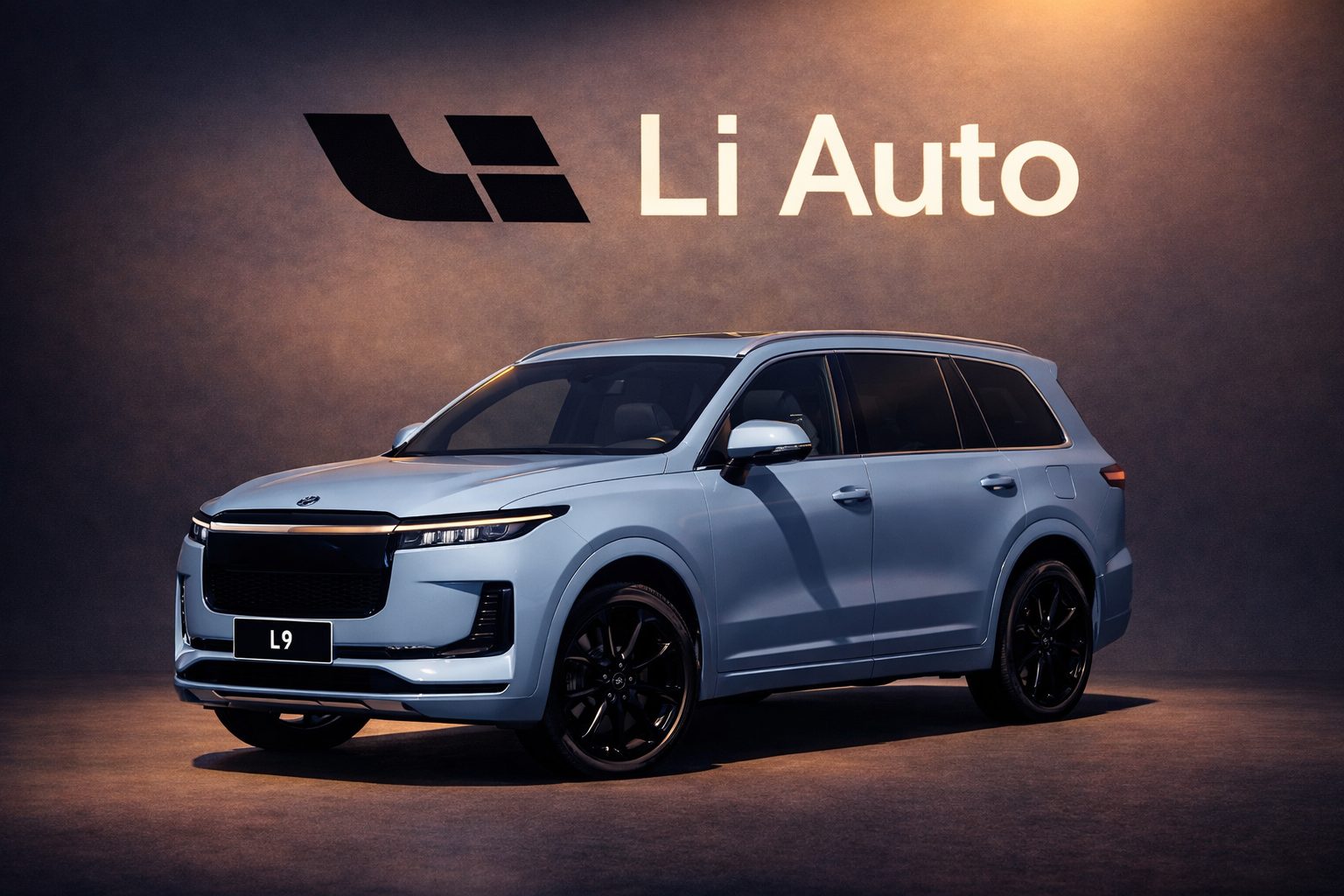
Li Auto Inc. NASDAQ:LI last traded around $17.44, up about 4% versus its prior close after a volatile, holiday-thinned stretch for global markets and China-linked equities.
That move matters because Li Auto is sitting at the intersection of three big forces investors can’t ignore right now:
- Year-end risk appetite in U.S. equities (quiet “Santa Claus rally” conditions, thin volumes, and indexes hovering near records). Reuters+1
- Fast-evolving policy signals out of China—including a newly announced mandatory EV energy-consumption cap that kicks in in 2026.
- Li Auto’s own transition story, where the company is pushing deeper into battery EVs while managing weaker year-over-year deliveries, recall fallout, and margin pressure.
Below is what’s driving the narrative, what Wall Street analysts are forecasting, and what investors should have on their radar before the next U.S. session (Monday, Dec. 29).
Why Li Auto stock moved: China EV policy headlines meet thin U.S. holiday trading
Friday’s U.S. tape had the classic post-holiday vibe: light volume, small index moves, and a market that’s more “drifting near highs” than “repricing the future.” Reuters described the session as nearly unchanged and catalyst-light, even as stocks remained close to records. Reuters The Associated Press similarly noted the major indexes dipped by less than 0.1% in subdued trading. AP News
In that kind of environment, single headlines can punch above their weight—especially in higher-beta corners like China ADRs.
One such headline: China will implement what Xinhua calls the world’s first mandatory EV energy-consumption cap starting in 2026. The standard includes a benchmark example that a two-ton vehicle must consume less than 15.1 kWh per 100 km, and officials say this could lift average EV range about 7% without increasing battery capacity.
In markets, “mandatory efficiency rules” can be read two ways at once:
- Bull case: rules squeeze weaker players and reward manufacturers with efficient platforms and strong engineering.
- Bear case: compliance costs rise, product plans get disrupted, and the competitive bar gets even more brutal.
Benzinga linked Friday’s strength in U.S.-listed Chinese EV names to investor optimism around these policy and expansion headlines.
For Li Auto specifically, the nuance is important: its lineup spans extended-range EVs (EREVs) and battery EVs (BEVs)—and the rule is aimed at pure electric passenger vehicles. In other words, the policy spotlight is increasingly on the BEV side of the house, right as Li Auto is trying to scale newer BEV models.
The core Li Auto story investors are trading: a BEV push under margin and delivery pressure
Q3 2025 results: revenue down sharply, margins squeezed, losses return
Li Auto’s most recent reported quarter (Q3 2025) showed just how rough the transition has been:
- Total revenues:RMB 27.4 billion (US$3.8B), down 36.2% year over year.
- Deliveries:93,211 vehicles, down 39.0% year over year.
- Net loss:RMB 624.4 million (US$87.7M) (and a non-GAAP net loss of RMB 359.7 million).
- Gross margin:16.3% (or 20.4% excluding estimated recall costs related to Li MEGA).
- Vehicle margin:15.5% (or 19.8% excluding estimated Li MEGA recall costs).
The company also reported negative free cash flow of RMB 8.9 billion in Q3, while still holding a sizable cash position of RMB 98.9 billion as of Sept. 30, 2025—so the balance sheet looks more like “can fund the transition” than “immediate liquidity panic,” but the cash burn is not theoretical anymore. GlobeNewswire
Management framed the quarter as a moment of heavy competition, supply-chain friction, and recall-related cost headwinds—while highlighting strong demand signals for the BEV lineup and high usage of the company’s driver-assistance software.
Q4 outlook: deliveries guided lower year over year
For Q4 2025, Li Auto guided:
- Deliveries:100,000 to 110,000 (a 30.7% to 37.0% year-over-year decline)
- Revenue:RMB 26.5 to 29.2 billion (a 34.2% to 40.1% year-over-year decline)
That guidance band is a big reason analysts and investors keep describing the near-term as a visibility problem rather than a simple “cheap stock” story.
November deliveries and the i6 ramp: the next operational swing factor
Monthly delivery prints are oxygen for China EV stocks, and Li Auto’s latest update showed:
- 33,181 vehicles delivered in November 2025
- Cumulative deliveries:1,495,969 as of Nov. 30, 2025
The company said it expects monthly production capacity for the Li i6 to reach 20,000 units by early next year and flagged an OTA 8.1 software rollout in early December.
This matters because the market is trying to answer a very specific question:
Can Li Auto ramp BEV production fast enough to offset softness in legacy EREV lines—without destroying margins in the process?
Analysts who are cautious tend to argue that even if demand exists, the ramp can be bumpy due to batteries, suppliers, product mix, and the simple chaos of launching multiple high-volume programs at once.
Recall risk is still part of the valuation debate
The “recall overhang” isn’t just a headline—it has been explicitly tied to margins and costs.
Reuters reported that Li Auto would recall 11,411 units of its MEGA 2024 EVs after a Chinese regulator notice, citing coolant with insufficient corrosion resistance that could, “in extreme cases,” lead to thermal runaway of the power battery. Reuters
In Li Auto’s Q3 results, the company quantified how estimated recall costs affected both vehicle margin and gross margin (with “ex recall” margins notably higher). GlobeNewswire
For investors, the practical takeaway is simple: recall provisions don’t just hit one quarter— they can ripple through brand perception, warranty assumptions, and future gross margin expectations.
The China auto backdrop: slowing sales, subsidy cliff optics, and intensifying competition
It’s hard to analyze Li Auto in isolation because China’s auto market is the arena.
Reuters reported China’s annual car sales fell 8.5% year over year in November, the biggest drop in 10 months, as a pull-forward effect faded and consumers reacted to shifting incentives.
Two details from that report are especially relevant for Li Auto and its peers:
- New energy vehicles (EVs and plug-in hybrids) hit a record 58.9% share of total car sales in November.
- Reuters also noted expectations that purchase-tax breaks for EVs and PHEVs halve from 2026, a looming policy step that can distort year-end demand and complicate forecasting.
That “policy gradient” (incentives fading, standards tightening, competition rising) is exactly the environment in which investors become obsessed with two things:
- Unit economics (vehicle margin, incentives needed to sell)
- Differentiation (tech, efficiency, brand strength, and product cadence)
Analyst forecasts: consensus is cautious, but price targets imply upside from depressed levels
Wall Street’s stance on Li Auto has become more “wait-and-see” than “pound the table.”
Market-wide consensus
MarketBeat’s compilation of analyst ratings shows:
- Consensus rating:Hold
- Average 12‑month price target:$21.66
- Range:$18.00 (low) to $28.00 (high)
That target math implies upside from current levels—but “Hold” signals that many analysts see too many near-term unknowns to confidently underwrite a major re-rating today.
Recent downgrades and cuts
HSBC downgraded Li Auto from Buy to Hold and cut its price target to $18.60 (from $30.30), citing limited 2026 visibility and near-term headwinds.
MarketBeat also summarized additional recent target changes and ratings, including Barclays cutting its target (and setting an “equal weight” stance) and other firms adjusting outlooks as the transition plays out. MarketBeat
The “constructive but not blind” camp
A good example of a still-bullish framing comes from Goldman Sachs analyst Tina Hou, who cut her price target to $27 but reiterated a Buy, arguing Q3 may represent a “trough” and modeling a rebound driven by refreshed L‑series models and a fuller year of i6/i8 deliveries (while acknowledging ramp and margin challenges). TipRanks
On the more cautious side, Piper Sandler analyst Alexander Potter lowered his target to $18 and described the transition as difficult, pointing to supply chain mix-ups, margin pressure, and negative cash flow dynamics.
So the analyst landscape isn’t a simple bulls-vs-bears cage match. It’s more like:
“We see the long-term product logic, but the next 1–3 quarters are foggy.”
If markets are closed now, what should investors know before the next session?
Because it’s Saturday morning in New York, nothing “new” can trade in the U.S. until Monday—yet the narrative can still change over the weekend. Here’s what tends to matter most for LI going into the next open:
1) China policy headlines can move U.S.-listed EV ADRs fast
The new mandatory EV energy-consumption standard and its enforcement timeline (Jan. 1, 2026) is exactly the kind of headline that can generate sector-wide repricing—especially if investors start gaming who benefits and who pays.
2) Watch the “demand vs. delivery” conversation around i6 capacity
Li Auto’s own language has emphasized scaling i6 capacity to 20,000/month “early next year.” GlobeNewswire
If investors see credible evidence of smoother supply (batteries, key components) and stable delivery execution, the stock often responds—even before earnings.
3) Macro + auto-demand signals in China remain the background drumbeat
Reuters’ reporting on November sales declines and shifting incentives is a reminder that the demand environment is not guaranteed—even if NEV penetration stays high.
4) Next earnings timing is still not fully nailed down
Third-party calendars don’t perfectly agree, and the company hasn’t “confirmed” a next date in some listings. MarketBeat estimates the next earnings date could be March 13, 2026 (based on historical patterns), while Investing.com lists Feb. 20, 2026. MarketBeat+1
Investors should treat these as estimates unless and until Li Auto formally announces.
5) Risk checklist: recall aftershocks + margin sensitivity
The MEGA recall story is a reminder that safety and quality issues can become both financial and reputational risks. Reuters+1
In a price-war environment, a few hundred basis points of gross margin swing can matter more than a lot of flashy product buzz.
Bottom line: Li Auto stock is trading like a transition bet, not a “steady compounder”
At current levels, Li Auto’s ADRs are being priced less like “the premium China EV winner” and more like “a company in the messy middle of a drivetrain and product-mix shift.”
The bull thesis is still straightforward: scale BEVs successfully, stabilize deliveries, and claw back margins as recall costs fade and volume improves.
The bear thesis is equally clean: competition and policy changes compress pricing power, the BEV ramp stays uneven, and the market refuses to pay up until margins and cash flow normalize.
Going into Monday’s session, the most realistic expectation is volatility driven by: (1) China policy chatter, (2) any fresh read-through on EV demand and incentives, and (3) how investors digest the ongoing tug-of-war between near-term fundamentals and longer-term product ambition.