
NEW YORK, December 30, 2025, 08:57 ET
- Georgia regulators approved Georgia Power’s plan to add roughly 10,000 megawatts of new generation aimed largely at data centers.
- The buildout is priced at $16.3 billion to construct, with debate centered on who ultimately bears long-term costs.
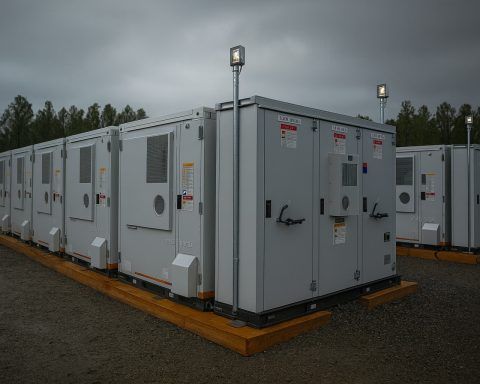
- Natural gas would supply most of the added capacity, alongside solar and battery storage.
Georgia Power plans a $16.3 billion construction program to add about 10,000 megawatts of generation in Georgia, much of it to serve fast-growing data centers, after state regulators approved the expansion. The company says the additions would lift its power capacity about 50%. “Large energy users are paying more so families and small businesses can pay less, and that’s a great result for Georgians,” CEO Kim Greene said. The North State Journal
The plan lands as utilities across the United States scramble to keep up with electricity demand tied to artificial intelligence. Data centers — warehouses of servers that run around the clock — require large, steady power supplies and can force utilities to build new plants years before all demand is fully locked in.
In Georgia, the flashpoint is how much of the cost lands on households that are not building the data centers. Georgia Power and regulators say the agreement includes guardrails: the average residential customer would see about $8.50 a month in savings from 2029 through 2031, and the utility would backstop the new spending through at least 2031, according to FOX 5 Atlanta. “Downward pressure” means bills are projected to be lower than they otherwise would be, not necessarily that they fall. FOX 5 Atlanta
Consumer and environmental advocates argue those protections are temporary compared with the decades it can take to pay off gas-fired plants. They say customers could still be exposed if data center demand does not arrive as forecast, or if costs rise after the agreement’s protections expire.
Georgia Power’s resource mix leans heavily on natural gas, with roughly 60% of the new capacity expected from gas-fired plants and the rest from solar and battery storage, the Atlanta Journal-Constitution reported. The company also points to longer-term emissions goals, saying it has cut greenhouse-gas emissions from its plants by more than 60% since 2007 and that parent Southern Co. has a net-zero emissions goal for 2050.
The Southern Environmental Law Center, which opposed the deal, said the approval clears the way for five new methane gas plants and warned customers could pay $50 billion to $60 billion over the life of the resources. The group said building long-lived gas units could leave ratepayers exposed to fuel-price swings and shifting policy over time.
Utilities often describe gas, coal and nuclear units as “dispatchable” generation — plants that can adjust output to match demand — while solar output fluctuates without storage. That distinction has become central to the data center debate, where operators want round-the-clock power and fast connections.
Supporters of Georgia Power’s buildout argue the state needs to stay ahead of demand to avoid shortages and to keep attracting investment. Critics argue the same logic can lead to overbuilding if tech firms slow construction or move projects, leaving customers to pay for underused assets.
Other power providers are also racing to secure supply for data-center growth. NextEra Energy and Google Cloud said this month they will develop new U.S. data center campuses backed by new power plants, and NextEra said it expects to announce new natural-gas-fired power deals for data centers in the next 12 to 24 months.
For regulators, the hard question is timing: build too late and the grid strains; build too early and customers pay for capacity that may sit idle. That tension has sharpened as data-center load forecasts have grown faster than traditional planning cycles.
Georgia Power can now move into project development, contracting and permitting under the approved framework. The larger fight — over future rate cases, cost recovery and whether demand matches forecasts — will play out over the next several years.
Related articles: NYSE:SO