
NEW YORK, January 3, 2026, 08:09 ET — Market closed
- Shanghai’s markets are shut for the New Year holiday and are due to reopen on Monday.
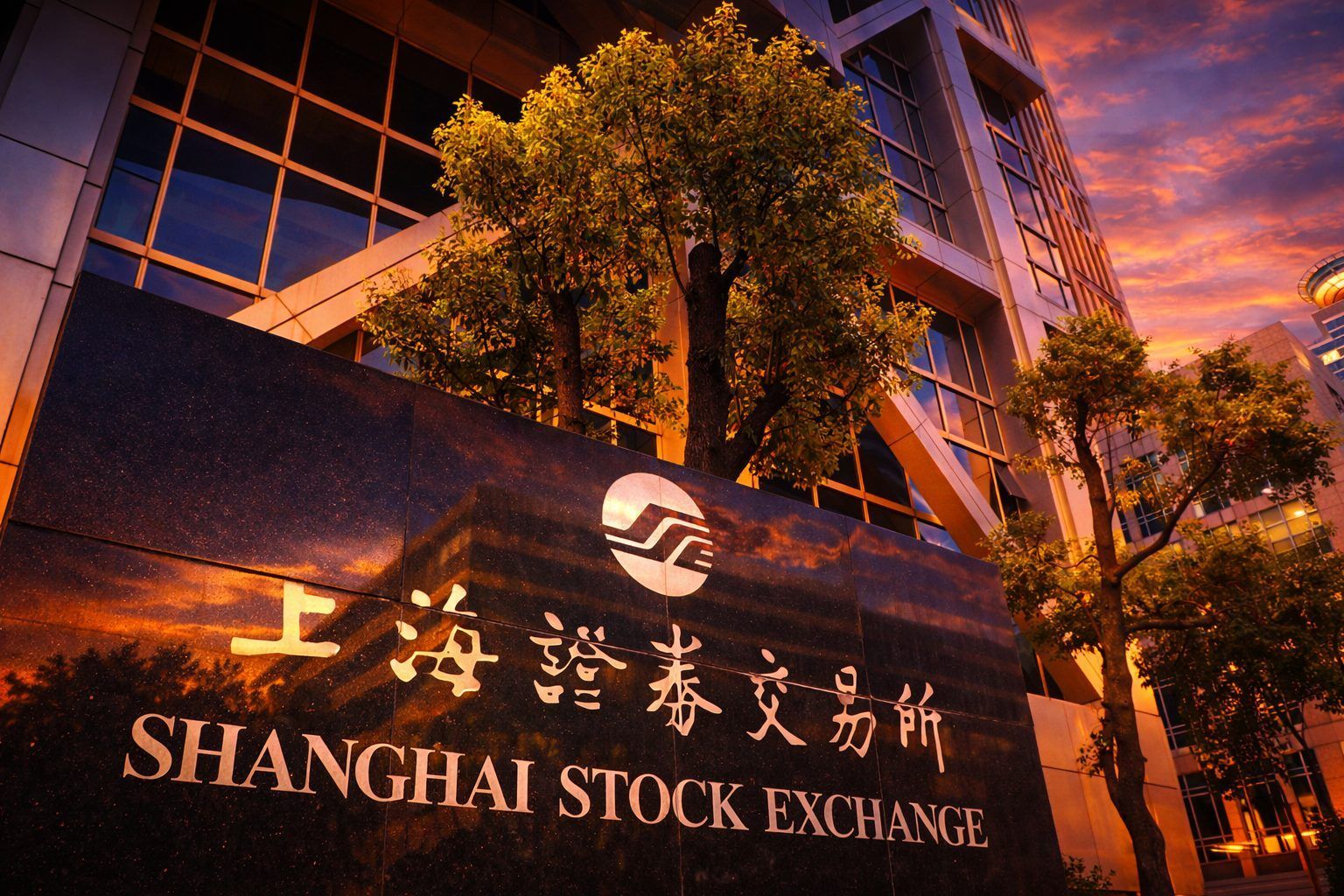
- The Shanghai Composite last finished at 3,968.84, just below the 4,000 mark.
- Offshore China tech stocks rose in Hong Kong, led by AI-themed names and an AI chip IPO debut.
Mainland China’s stock markets are closed for the New Year holiday and are due to reopen on Monday, with offshore gains in Hong Kong’s tech sector setting the cue for Shanghai’s next session. Hong Kong’s Hang Seng Index rose 2.2% by the midday break on Friday, while its tech index jumped 3.4% as AI-related shares outperformed.
The Shanghai Composite last closed on December 31 at 3,968.84, up 0.09% on the day, and has gained 18.41% over the past year, according to FT data. The index ended 2025 within a 52-week range of roughly 3,041 to 4,034, leaving it near the top end of that band as trading resumes.
Turnover in Shanghai and Shenzhen totalled about 2.05 trillion yuan ($291.7 billion) on December 31, down from the prior session, Xinhua reported. Aircraft manufacturing and textile machinery shares led gains, while ceramics and chemical-fibre stocks fell, and the ChiNext growth board dropped 1.23%.
The offshore focus has sharpened on China’s AI hardware push after Shanghai Biren Technology, an AI chip designer, surged in its Hong Kong debut on Friday and closed up 76% from its IPO price, a Reuters report showed. “AI is fundamentally transformative, driving keen investor appetite,” said Li He, a partner at law firm Davis Polk who has worked on several AI IPOs including Biren’s. Reuters
Global risk appetite has also steadied into the new year, with U.S. stocks ending mixed on January 2 and Treasury yields edging higher, Reuters reported. Investors have been tracking the Federal Reserve’s next steps as key economic data resumes after recent disruptions, with the 10-year U.S. yield around 4.191%.
For Shanghai traders, the near-term question is whether offshore momentum in chips and internet names translates into fresh buying on the mainland, or whether investors use the restart to lock in year-end gains. Liquidity and positioning after the break will matter as much as headlines.
Before the next session, investors will watch China’s Caixin services PMI due on January 4, with a forecast of 52.0 versus a prior 52.1, according to Investing.com. PMI, short for purchasing managers’ index, is a survey-based gauge where readings above 50 indicate expansion.
Markets also have China’s December consumer inflation data on deck, with the CPI (consumer price index) due on January 8 and forecast at 0.6% year-on-year versus a prior 0.7%, Investing.com data showed. CPI tracks how fast prices paid by households are rising or falling and feeds into expectations for policy support.
A weaker set of demand indicators would keep attention on whether Beijing leans harder on stimulus, while firmer readings would test how much of the current rally rests on policy hopes versus an improving earnings backdrop. Traders will also monitor the yuan, which can steer foreign flows into mainland equities.
Technically, the Shanghai Composite’s position just under 4,000 leaves a simple setup: a push above that level would reinforce the market’s upward trend, while a stall would risk a pullback toward recent support zones. That 4,000 handle is a psychological line because it has acted as a visible reference point for momentum traders.
The split between Shanghai’s steady finish into year-end and weaker performance in growth-heavy boards will also stay in focus, as investors decide whether to chase AI-linked themes or rotate back to dividends and defensives. That balance has been central to recent swings in mainland breadth.
Related articles: Stock Market