
New York, Jan 15, 2026, 07:49 ET — Premarket
Crude oil prices tumbled more than 3% on Thursday after U.S. President Donald Trump said killings in Iran’s crackdown on protests were stopping, easing fears of a supply shock. Brent was down $2.19 at $64.33 a barrel and U.S. West Texas Intermediate fell $2.06 to $59.96, while Saxo Bank’s Ole Hansen said “the immediate risk premium has softened but is unlikely to go away.” Reuters
The pullback lands after a jagged week in which traders have tried to price three different flashpoints at once — Venezuela, Iran and Black Sea shipping — without getting a clean read on whether the market is actually tightening. The amount of crude being transported in tankers has climbed to around 1.3 billion barrels, the highest since mid-2020, a sign supply is starting to outrun demand again.
U.S. inventory data did not help the bulls. Commercial crude inventories rose 3.4 million barrels to 422.4 million last week, while gasoline stocks jumped 9.0 million barrels, against expectations for a crude draw of about 1.7 million barrels.
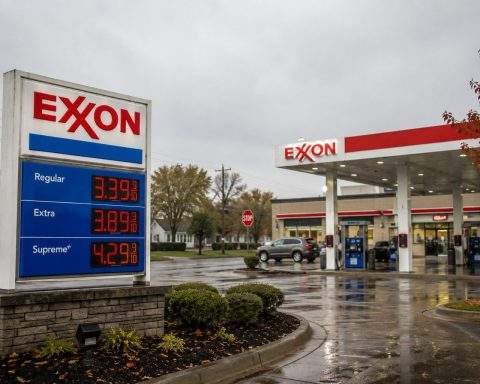
In U.S. premarket trading, oil-linked funds tracked the slide: the United States Oil Fund was down 1.2% at $72.61, Invesco DB Oil Fund slipped 1.2%, and United States 12 Month Oil Fund fell 1.8%. Big producers Exxon Mobil and Chevron were up 2.9% and 2.1%, respectively, before the bell.
Supply headlines out of Venezuela remain a live wire. State oil company PDVSA has begun reversing production cuts made under a strict U.S. oil embargo as exports resume under U.S. supervision, with overall output falling to about 880,000 barrels per day last week from 1.16 million in late November, Reuters reported.
Shipping risk is still in the background. Drones hit two oil tankers in the Black Sea on Tuesday, including one chartered by Chevron, as they sailed toward a terminal that loads most of Kazakhstan’s crude exports; Chevron said “all crew are safe” and the vessel was proceeding to a safe port. Reuters
Iran remains the main swing factor, even after Trump’s comments cooled the market. The United States is withdrawing some personnel from bases in the Middle East as a precaution, a U.S. official said, after a senior Iranian official warned neighbours that U.S. bases would be hit if Washington strikes, and the U.N. Security Council is due to meet on Iran later on Thursday.
But this can still flip the other way. Iran sits on a key shipping choke point — nearly 20% of global oil and gas flows through the Strait of Hormuz — and any sign of escalation can pull the risk premium straight back into crude prices.
For now, it is messy: geopolitics can squeeze barrels, while inventories and fuel builds hint at slack demand. That tension is why crude keeps snapping around inside a range instead of trending cleanly.
OPEC, for its part, said demand would grow by 1.34 million barrels per day in 2027 and flagged a near-balance between supply and demand in 2026, while the International Energy Agency’s most recent numbers imply a 3.84 million bpd surplus this year. The next big marker for oil traders is the IEA’s update on Jan. 21.
Related articles: NYSE:CVX