
New York, Feb 10, 2026, 10:52 (EST) — Regular session
- Eli Lilly stock lost ground during regular hours following new deal headlines tied to cell therapy and drug development moves in China.
- Obesity-drug rivals are ramping up, and investors are scrutinizing the company’s pipeline spending.
- Next up: Lilly’s oral obesity pill is heading for a crucial U.S. FDA verdict before the quarter wraps.
Eli Lilly and Company slipped 0.9% to $1,035.54 by 10:46 a.m. EST on Tuesday, giving back its early gains as the market reacted to fresh pipeline deals. Shares changed hands in a range from $1,032.21 to $1,054.31.
Lilly’s stock has soared, setting the bar high—so this pullback stands out. Investors get especially curious when a heavyweight like Lilly starts spending on ventures beyond its main growth drivers: what’s the issue they’re targeting?
This week, headline developments shove Lilly deeper into the tricky world of early-stage science—a place where setbacks are routine and progress rarely comes fast. The timing? The obesity drug contest keeps heating up, more pills and injectables crowding the field, all chasing their place in trials and the spotlight.
Lilly said Monday it would acquire Orna Therapeutics, a private firm, in a deal valued at up to $2.4 billion in cash. The company is betting on technology designed to spur the body to create its own cell therapies. BMO Capital Markets analyst Evan Seigerman described the strategy as “high-risk and without validation in large trials,” and pointed to rival efforts from Bristol Myers Squibb, AbbVie, and Gilead. Lilly shares jumped more than 3% early Monday following the announcement. Reuters
Lilly says Orna is working on engineered circular RNA, delivered using lipid nanoparticles. Their leading project, ORN-252, targets autoimmune diseases driven by B cells. “The complexity, cost, and logistics of ex vivo approaches make it challenging,” said Francisco Ramírez-Valle, senior VP at Lilly. Orna CEO Joe Bolen added, “We are excited to join forces with Lilly.” PR Newswire
CAR-T, a cell therapy, works by reprogramming immune cells to hunt down specific targets. Typically, commercial CAR-T means removing a patient’s cells, tweaking them in a laboratory, and then returning them — a method that’s both time-consuming and costly. “In vivo” strategies aim to carry out the reprogramming within the body itself.
Lilly is strengthening its connections to China’s drug sector. Innovent Biologics stands to collect $350 million upfront from the partnership, plus as much as $8.5 billion in milestone payments if all goes according to plan. The deal focuses on oncology and immunology, and puts Innovent in charge of leading programs through Phase 2 in China. “This alliance moves beyond traditional licensing,” Innovent CEO Michael Yu said. PR Newswire
Not much direction from the wider market. The Health Care Select Sector SPDR Fund barely budged. Novo Nordisk’s U.S. shares, though, managed a roughly 1.8% gain.
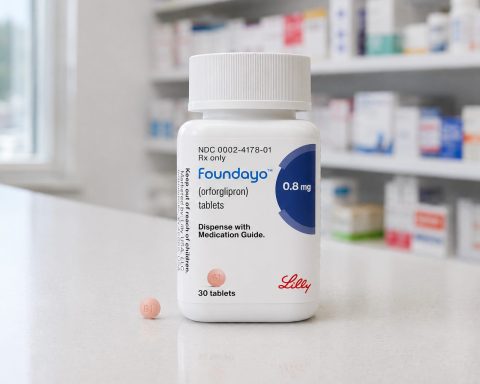
Obesity drug makers were back in the spotlight Tuesday as Kailera Therapeutics and Jiangsu Hengrui Pharmaceuticals reported their experimental oral therapy led to as much as 12.1% weight loss over 26 weeks in a Chinese mid-stage trial. Reuters noted the candidate is a GLP-1, putting it in the same class as Lilly’s orforglipron and Novo’s oral Wegovy, a sign of just how packed the obesity drug race is getting.
Lilly posted a solid earnings update last week, projecting 2026 earnings per share between $33.50 and $35, and revenue in the range of $80 billion to $83 billion, driven largely by robust demand for Mounjaro and Zepbound. Still, executives flagged pricing pressure as a concern. “Price is expected to be a drag,” CFO Lucas Montarce said on the earnings call, according to Reuters. Reuters
Still, Orna’s decision injects fresh uncertainty into a stock that’s been trading on high expectations. Milestone-driven deals, easy enough to justify up front, often turn costly if the programs actually work. A single hiccup in obesity-drug pricing or demand? That story takes over fast.
The next big moment for investors comes from regulators: Eli Lilly’s weight-loss pill orforglipron faces a U.S. FDA verdict on April 10, 2026, according to internal documents seen by Reuters.
Related articles: NYSE:LLY