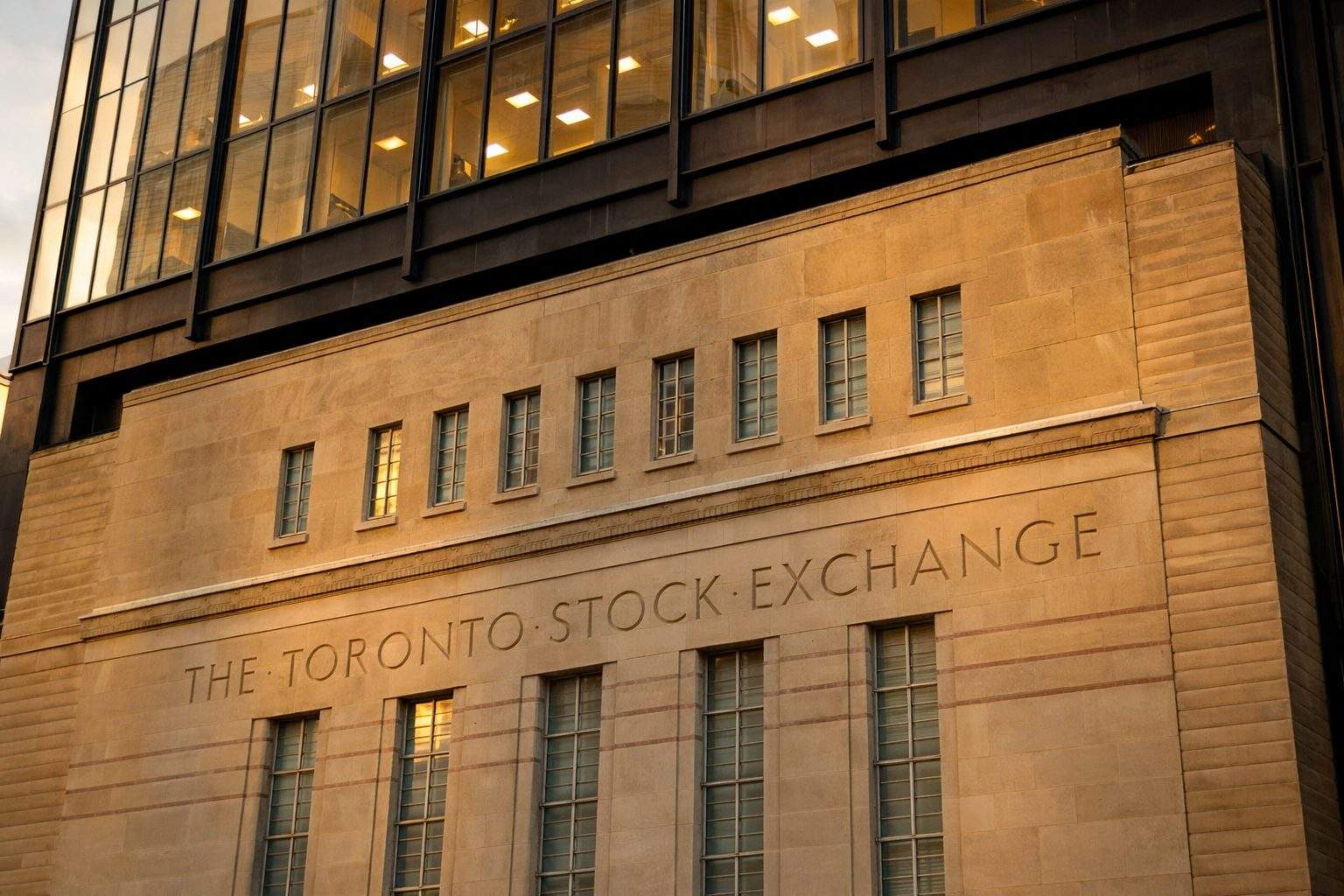
Toronto, February 28, 2026, 01:44 (ET) — The market has closed.
The S&P/TSX Composite Index wrapped up the week of Feb. 27 at 34,339.99, slipping around 0.5% on Friday. Still, that left the index up about 1.5% compared to the previous week’s finish. February locked in a gain of nearly 7.6%—the best monthly run seen since November 2020.
The late-month slide took a bite out of the market leaders. Financials dropped 1.9%, tech names were off 2.5% on Friday, snapping the index’s three-day record streak—even as gains in oil and gold managed to keep energy and materials in positive territory. Angelo Kourkafas, senior global investment strategist at Edward Jones, pointed out that concerns about artificial intelligence are starting to impact financial stocks too, with “private credit issues”—that is, loans beyond the banking sector—adding to the pressure, while capital shifts back to materials and energy. Reuters
The outlook for Canada soured heading into March. Statscan data showed the economy shrank at a 0.6% annualized pace in the fourth quarter, with 2025 growth easing back to 1.7% as firms cut inventories instead of stepping up production. “The details … were much firmer than the headline suggests,” said Doug Porter, BMO Capital Markets’ chief economist. Still, he noted, the economy was “hardly thriving” given tariff and trade uncertainty. Reuters
Bay Street doubled down on its old standbys—banks and resources—earlier this week, and that classic strategy delivered, at least for a while. On Thursday, the TSX closed at yet another record, climbing 1.1% to finish at 34,501.96. TD Bank and CIBC both beat profit expectations; Enerflex surged 17.7% after reporting its quarterly numbers. “Bank stocks continue to knock the lights out,” said Allan Small, investment adviser at iA Private Wealth. Reuters
AI volatility isn’t confined to Toronto. U.S. investors have been bouncing between stocks seen as likely AI winners and those facing disruption, trying to gauge just how much the technology will reshape business models. Nerves over AI have started to ripple through software-heavy sectors elsewhere, too. “There continues to be this … back and forth about who might be the victim,” said Kristina Hooper, chief market strategist at Man Group. Next week’s U.S. jobs report is shaping up as a major test for rate bets. Reuters
Still, risks abound. Oil-driven rallies may evaporate fast should supply fears recede or Middle East strains calm down, and gold stocks aren’t immune if safe-haven demand tapers off. A deeper Canadian slowdown—more drag in hiring, weaker consumer spending—could spell higher credit losses for banks, all while investors keep a close eye on potential cracks in non-bank lending.
Canadian markets are back in action Monday, but there’s not much on the data front until fourth-quarter labour productivity and unit labour costs arrive March 4. Those figures tend to influence investor views on wage trends and inflation, which in turn can sway rate expectations.
There are still two key dates ahead in March: the February labour force survey drops March 13, followed by the Bank of Canada’s policy-rate decision set for March 18. Friday’s GDP pullback has already rattled investors. If the jobs numbers show weakness, rate-sensitive names on the TSX could take another hit.
The first major event for global markets comes with February’s U.S. Employment Situation report, set for release at 8:30 a.m. ET on March 6. These numbers have the power to jolt bond yields—and that usually spills over to impact the mood in TSX banks, tech, and commodity stocks.