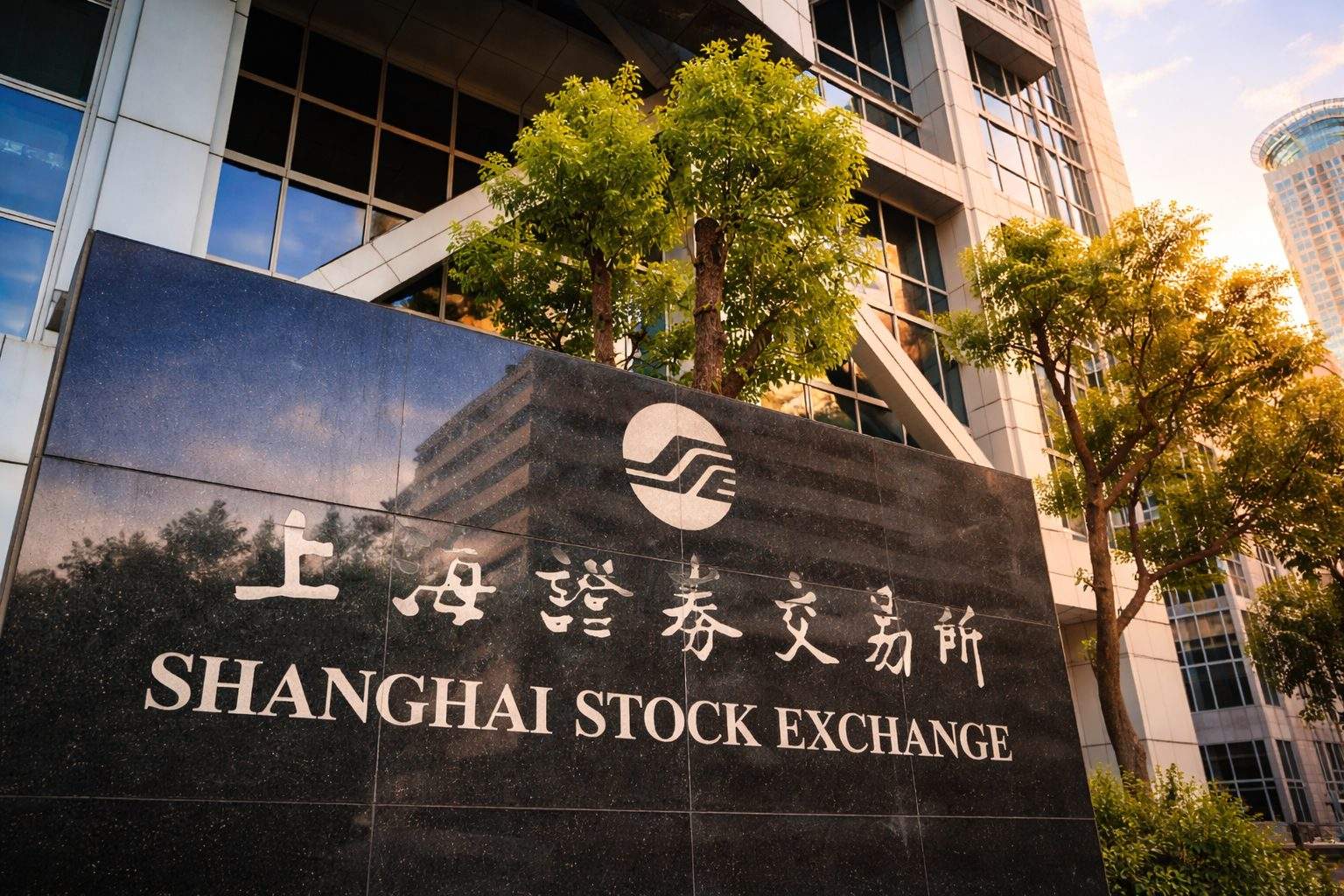

Shanghai, March 1, 2026, 13:57 CST — Market closed.
- Shanghai Composite edged up 0.39% by the close on Friday, while the CSI 300 dropped 0.34%.
- The Politburo called for stepping up fiscal support and signaled a tilt toward a somewhat looser monetary approach.
- Traders are watching for February PMI numbers due March 4, plus key policy targets from the annual legislature session.
The Politburo in China is urging policymakers to get “more proactive and effective” with their approach, pushing for stronger coordination—an agenda that’s putting Shanghai stocks on alert this week as market participants try to parse what’s next on fiscal support and growth. This call followed official figures showing a 5.0% economic expansion for 2025, and lands just as Beijing gears up to draft documents for the next five-year plan along with the government work report. Reuters
This timing is key: Monday’s open comes just ahead of China’s big “Two Sessions” gatherings, where lawmakers and top advisors lay out growth and budget targets. Banks, industrials and the state-backed names running the main Shanghai board usually see their outlooks shaped by those headline figures.
The Shanghai Composite Index finished up 0.39% at 4,162.88 on Friday. Over in Shenzhen, the Component Index slipped 0.06%, ending at 14,495.09. With the weekend break underway, investors are left to mull potential policy shifts before markets reopen.
The CSI 300 index, which covers heavyweight stocks in Shanghai and Shenzhen, slipped 0.34% to end at 4,710.65. That marks a clear divide between major benchmark names and the rest of the market.
Shanghai’s STAR Market saw the STAR Composite Index up 0.36% at 1,849.77, while the STAR 50 Index edged 0.15% higher to finish at 1,488.02.
Tech earnings gained momentum heading into the weekend. Cambricon, the AI chip designer, disclosed in a Shanghai Stock Exchange filing that 2025 net profit landed at 2.06 billion yuan, with revenue soaring 450% to 6.5 billion yuan; shares ended up 0.8% at 1,178 yuan. Moore Threads and MetaX delivered 2025 revenue of 1.5 billion yuan and 1.6 billion yuan, marking year-on-year surges of 243% and 121%, respectively.
Not much room on the calendar. Lin Li and the MUFG team flagged that the Two Sessions kicks off March 4, with the government work report landing March 5. They’re looking for the growth target to stay about the same, but say the budgeted deficit ratio could edge up to around 4.0%, maybe a bit more.
Forecasts are all over the map. Ho Woei Chen, economist at UOB, anticipates the National People’s Congress will settle on a “more moderate” real GDP growth goal in the 4.5%–5.0% range for 2026, while keeping the fiscal deficit close to 4% of GDP. Mitrade
China’s statistics bureau is set to publish the February purchasing managers’ index (PMI) on March 4, the same day political meetings kick off. The release, pushed back by the Spring Festival holiday, appears on the bureau’s calendar. Fifty is the dividing line on this factory-activity gauge—anything above signals growth, below points to contraction.
Some economists anticipate the main growth target could be lowered, despite continued policy support. BofA Securities noted that 17 out of China’s 31 provinces have already cut their 2026 growth ambitions, citing sluggish domestic demand as well as persistent challenges from property sector issues and local government debt.
Shanghai stocks have a reputation for reacting sharply to details. A small-scale policy move or disappointing PMI would pressure cyclicals. Energy market swings are in play, too, particularly for transport and consumer stocks. Citing the Iran war, Reuters columnist Ron Bousso flagged oil as facing its worst shock in decades—prices could see violent action once markets open Monday.
Markets are back in action Monday, March 2. Investors are eyeing two big catalysts this week: the PMI lands March 4, followed by the government work report March 5. Attention will center on the growth target, the deficit number, and whether new measures to lift domestic demand make the cut.