KENMORE, N.Y., March 5, 2026, 05:26 EST
- Firefly wrapped up 2025 counting 99 commercial users, a surge that took its commercial footprint up over 20 times.
- EEG/ERP scan volumes shot up 33 times, with the company’s partners completing over 10,800 brain scans.
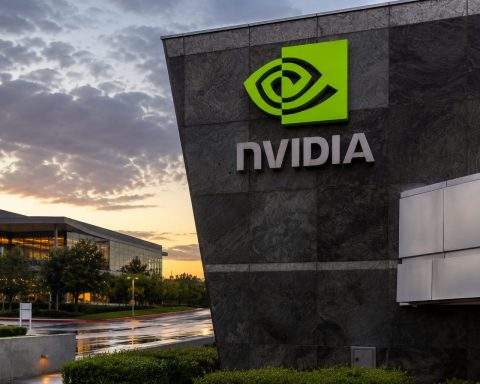
- Firefly is rolling out NVIDIA L40S GPUs to accelerate EEG/ERP processing, with the company pursuing a “foundation model” initiative.
Shares of Firefly Neuroscience, Inc. (AIFF) surged Wednesday, following word that the brain-health analytics firm has significantly grown its commercial user base for its brain-wave platform. The company is also boosting computing power to support a new AI model that relies on EEG data.
This is notable: “foundation models” have quickly come to stand in for AI heft — a level of scale that’s tough to replicate. Firefly is selling the idea that piling up more brain scans, while speeding up analysis, might elevate what’s now a niche analytics play into a broader tech story.
This comes as investors continue their search for smaller AI names that grab headlines. Firefly’s update delivered on two usual catalysts for the group: usage is up, and there’s a direct link to NVIDIA hardware.
Firefly on Wednesday reported closing out 2025 with 99 commercial users and more than 10,800 EEG/ERP brain scans completed. The company pointed to a 33-fold jump in scan volume and said its “commercial footprint” swelled over twenty times. Growth came on the back of its Evoke Neuroscience, Inc. acquisition and internal efforts, Firefly said. https://www.globenewswire.com/news-release…
Chief Executive Greg Lipschitz described the expansion as “significant,” emphasizing Firefly’s push to “harness the power of AI” using EEG/ERP data. He added that Firefly is rolling out NVIDIA L40S GPU acceleration for its next-gen processing, aiming to build what it calls the world’s first EEG/ERP-based “foundation model” of the human brain.
EEG measures the brain’s electrical signals. ERP, short for event-related potentials, captures how those signals shift when the brain encounters a specific trigger. The term “foundation model” refers to a big AI system, trained on a huge, varied dataset and designed to be flexible for multiple applications; Firefly’s approach is to bring that same concept to the world of brain-wave data, instead of sticking with text or image inputs.
Shares of Firefly finished the session at $1.55, marking a 126.28% surge in the previous 24 hours, TradingView data show.
Firefly pitches its Brain Network Analytics (BNA) as an FDA-cleared software tool for analyzing EEG and ERP signals, matching results to an age-based normative group, according to the company.
Competition is thick, whatever the branding. Ceribell, to name one, offers an AI-based EEG system designed for acute care, focusing on fast diagnosis and patient monitoring. The company says the device holds FDA 510(k) clearance.
FDA clearance has been around for EEG software for some time. Persyst Development Corp, for example, has its EEG review and analysis software included in the FDA’s 510(k) database. The product falls under the automatic event-detection software category for full-montage EEG.
The jump from collecting more scans to actually producing a widely useful AI model remains unresolved. Firefly hasn’t put out a timeline for either building or releasing its foundation model. In its annual report covering the year ended Dec. 31, 2024, the company flagged liquidity concerns that cast “substantial doubt” on its ability to keep operating, saying it’s still seeking more funding. https://www.sec.gov/Archives/edgar/data/80…