
NEW YORK, March 30, 2026, 12:03 ET.
Stocks attempted to find their footing Monday, following five weeks of declines that pushed the S&P 500 near correction territory. Investors looked for signs the rout—sparked by the Iran war and surging oil—might be easing. By midday, the Dow climbed 0.5%, the S&P 500 edged up 0.2%, and the Nasdaq stayed mostly flat as crude leapt higher once again.
This isn’t just about stocks posting a rough month. Brent crude has jumped roughly 60% in March, while traders have erased bets on Fed rate cuts this year. Incoming data on payrolls, retail sales, and more—set for release this week—will show whether pricier energy is already slowing growth. Speaking Monday, Powell said the Fed is still focused on hitting that 2% inflation goal, even as tensions in the Middle East continue.
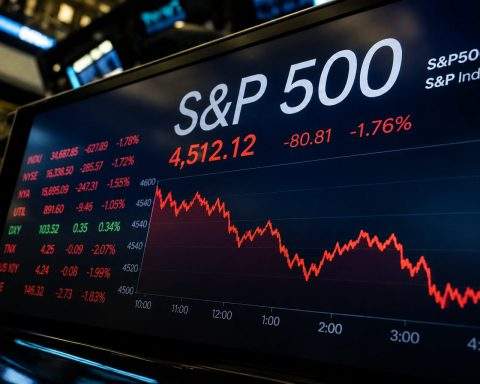
Friday wrapped with the S&P 500 at 6,368.85—off 1.7% for the session and now sitting roughly 8.7% under its Jan. 27 high. The Dow and Nasdaq have each slipped more than 10% from their peaks. That 10% threshold? Wall Street calls it a correction.
Seeking Alpha, in a weekend note, highlighted the S&P 500’s ongoing technical trouble: the index has stayed under its 50-day moving average since Feb. 27 and slipped beneath the 200-day mark as of March 19. Those two thresholds are key for traders tracking momentum shifts.
But that drop has also pulled valuations lower. Jacob Sonenshine, in a recent Barron’s piece, pointed out that the S&P 500 is now priced at just under 20 times projected earnings—down from over 22 at the close of 2025. On top of that, earnings growth estimates for the coming 12 months have jumped to 17%.
That’s the bull case for a rebound. Morgan Stanley’s Mike Wilson pointed to setups in 2015 and 2023, both of which delivered a median gain of 10% over the next six months. He’s framing the current move as a “correction in a bull market”—a temporary pullback in a broader uptrend. On the other hand, David Rosenberg maintains the market still lacks true “capitulation,” arguing investors haven’t flushed out risk yet. mint
Some analysts call it just a bounce. Sam Stovall at CFRA called Monday’s action “more of a technical bounce,” pointing to several sectors that were oversold and ripe for a quick pop from bargain hunters. Chris Harvey at CIBC Capital Markets sounded a bit more optimistic, writing there was “plenty of light” if diplomatic efforts gain traction. Reuters
Another divide has cropped up under the hood. Data from Seeking Alpha shows the regular S&P 500—where giants carry outsized influence—has dropped 6.96% this year. The equal-weight S&P 500, though, is down just 1.56%. That points to heavy losses coming mainly from the index’s largest names.
Yet caution remains the mood on Wall Street. On Monday, Morgan Stanley shifted global equities to “equal weight”—a neutral stance—and flagged that valuations could dive almost 25% if oil holds between $150 and $180. LPL Financial’s Adam Turnquist pointed out: once traders saw 6,500 give way as a support, 6,150 turned into the new line in the sand, with 6,000 looming after that. Reuters
Pressure isn’t limited to equities. Bid-ask spreads for fresh two-year Treasuries jumped about 27% in March compared with February—a clear signal that liquidity is drying up, with market makers dialing back risk.
Wall Street is juggling conflicting signals: valuations have improved, yet oil prices could quickly offset that. Should crude prices ease and this week’s numbers stay solid, the floor that some strategists are watching for might finally materialize. But if shipping in the Strait of Hormuz stays tight and inflation intensifies, those five losing weeks might simply be a prelude.
Related articles: NYSE:MS