
LONDON, March 31, 2026, 20:07 BST
European natural gas prices dropped early Tuesday, with the Dutch front-month TTF contract—Europe’s flagship wholesale gas price—off 2.5% at 53.55 euros per megawatt hour as of 09:03 GMT. Some traders locked in profits after the recent rally and reacted to flickers of de-escalation in the Middle East. The catalyst: a Wall Street Journal piece saying Donald Trump was open to ending action against Iran even if the Strait of Hormuz remained mostly shut, though Reuters couldn’t confirm the story.
The drop isn’t the real story—it’s about the level. Gas prices in Europe are still sitting more than 70% higher than they were before the war began on Feb. 28, putting Brussels back in crisis mode. The European Commission has told member states to start topping up storage in April, after EU stocks slipped to just 28% last week. “It will not be short,” warned EU Energy Commissioner Dan Jorgensen, referring to the disruption. Reuters
Things are still jumpy in the market. The TTF contract climbed to 55.36 euros/MWh on Monday after Houthi strikes over the weekend pushed the conflict wider. LSEG analyst Wayne Bryan flagged “geopolitical risk remains elevated,” but noted that firmer wind output and other short-term factors softened the rally. Baird Maritime / Work Boat World
Elsewhere, the picture looks different. U.S. Henry Hub natural gas for May delivery traded near $2.84 per million British thermal units, or mmBtu, the industry’s standard yardstick. Over in Asia, April Japan-Korea Marker LNG futures held close to $20.13/mmBtu. According to StoneX’s Thomas Saal, the U.S. is now deep in the “shoulder month period”—that stretch between the main heating and cooling seasons—so prices might stay just a notch under $3. CME Group
The effects of the wholesale shift are turning up in what people pay at home. Analysts at Cornwall Insight expect Britain’s regulated household energy price cap to jump 18% in July, taking the annual bill for a typical household to 1,929 pounds—a 288-pound increase from April. Wholesale gas prices still dominate Ofgem’s calculation.
Investors are weighing a renewed uptick in inflation. Euro zone headline inflation reached 2.5% in March, up from February’s 1.9%. Energy prices jumped 4.9%. That combination may muddy the European Central Bank’s policy path.
Supply is easing, but not fast. On Monday, Golden Pass LNG—a QatarEnergy and Exxon Mobil partnership in Texas—turned out its first LNG, aiming for an initial shipment sometime in the second quarter. Cheniere Energy’s Jack Fusco said last week the company was maxed out, “trying to do whatever we can do” as Asian buyers scouted for alternative cargoes. Reuters
The risk that still looms: the Strait of Hormuz. About 20% of the world’s LNG typically passes through there. Fitch flagged that a hit to Qatar’s Ras Laffan facility could sideline around 17% of its LNG output for as long as five years. Oil prices took another volatile turn Tuesday, underlining how a slip in diplomacy could send gas spiking again right as Europe gears up to refill storage.
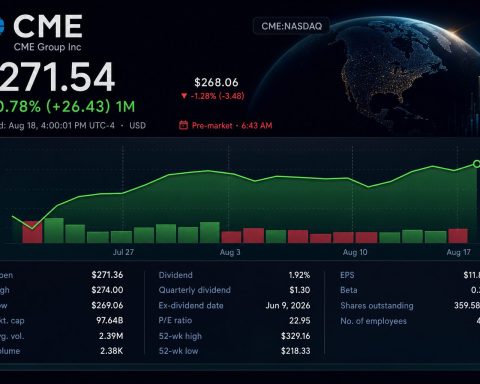
Related articles: NASDAQ:CME