
London, April 10, 2026, 11:21 BST
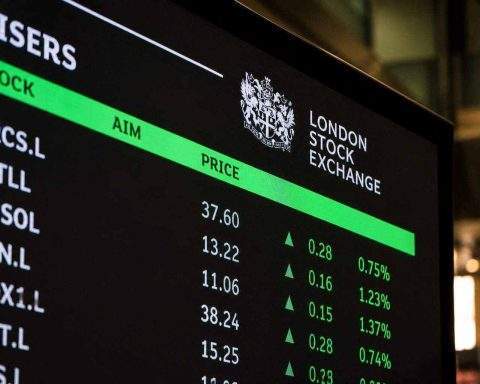
The FTSE 100 edged up 0.38% to 10,644.28 late Friday morning in London, with investors tiptoeing into risk ahead of U.S.-Iran talks set for the weekend in Pakistan. The FTSE 250 posted a firmer 0.79% gain, landing at 22,381.33.
British stocks have been on a wild ride this week, yanked up and down as Middle East headlines kept shifting the outlook for oil prices and inflation. The FTSE 100 surged 2.5% Wednesday after word came of a two-week ceasefire, but edged down 0.1% Thursday with skepticism creeping back in. Now, traders are eyeing whether negotiators can manage to reopen the Strait of Hormuz, a critical route for roughly a fifth of the world’s energy flow.
London tracked the wider European advance. The DAX in Germany added 0.28%, France’s CAC 40 climbed 0.39%, and the STOXX 600 edged up around 0.4%, lifted mostly by healthcare and tech stocks.
Bernstein strategist Rupal Agarwal called the talks “the beginning of the end” for the war, saying they could let investors shift back to pre-war fundamentals. Still, Agarwal isn’t dropping her guard just yet. Reuters
Lloyds Bank’s Sam Hill and Nicholas Kennedy said markets were “pinning their hopes on positive developments” in Pakistan during the weekend. On Friday, sterling slipped a touch, but remained on track for its strongest weekly gain since mid-January. Reuters
London equities keep leaning on Middle East oil. Brent crude climbed roughly 1% to $96.83 a barrel. Shell flagged that softer gas output would get a lift from better oil trading—a sign those price jolts are making their mark on first-quarter earnings.
Back in UK corporate news, AO World expects its annual profit to come in at the upper end of guidance. Unite Group, for its part, maintained its outlook and is accelerating sales of some assets.
The risk scenario lingers. The Strait stays mostly shut. Britain’s 10-year gilt yield was last seen at 4.807%. Eyes now turn to Friday’s U.S. inflation print, which could stoke fresh worries that the energy shock will mean higher rates stick around.
UK consumers are already feeling the pinch. Tesco is on the docket next week, with Shore Capital’s Clive Black pointing out investors will be eyeing how the retailer navigates that “delicate balance” between keeping prices attractive and dealing with near-term costs. Grocery inflation stuck at 4.3% over the four weeks to March 22, according to Worldpanel data cited by Reuters. Reuters
The FTSE 100 is currently trading roughly 40 points higher than Thursday’s close at 10,603.48, hovering just under Friday’s session peak of 10,657.56. By comparison, that’s a small shift, especially after Wednesday’s 2.5% relief rally. London markets look hesitant as the weekend approaches.
Related articles: LSE:LLOY