
LONDON, April 19, 2026, 18:42 (BST)
- Spot gold was last seen at $4,829.40 an ounce. The spot market remained shut before trading picks up Monday.
- Oil, inflation, and the outlook for rate cuts are once again driving gold, after Iran shut the Strait of Hormuz for a second time.
- Spot prices for silver, platinum, and palladium climbed as well, signaling buyers are stepping in across the precious metals space.
Gold kicks off Monday carrying a renewed risk premium, as Iran’s closure of the Strait of Hormuz over the weekend rattled markets and threatened to wipe out Friday’s relief gains—throwing bullion’s recent rally into sharper focus.
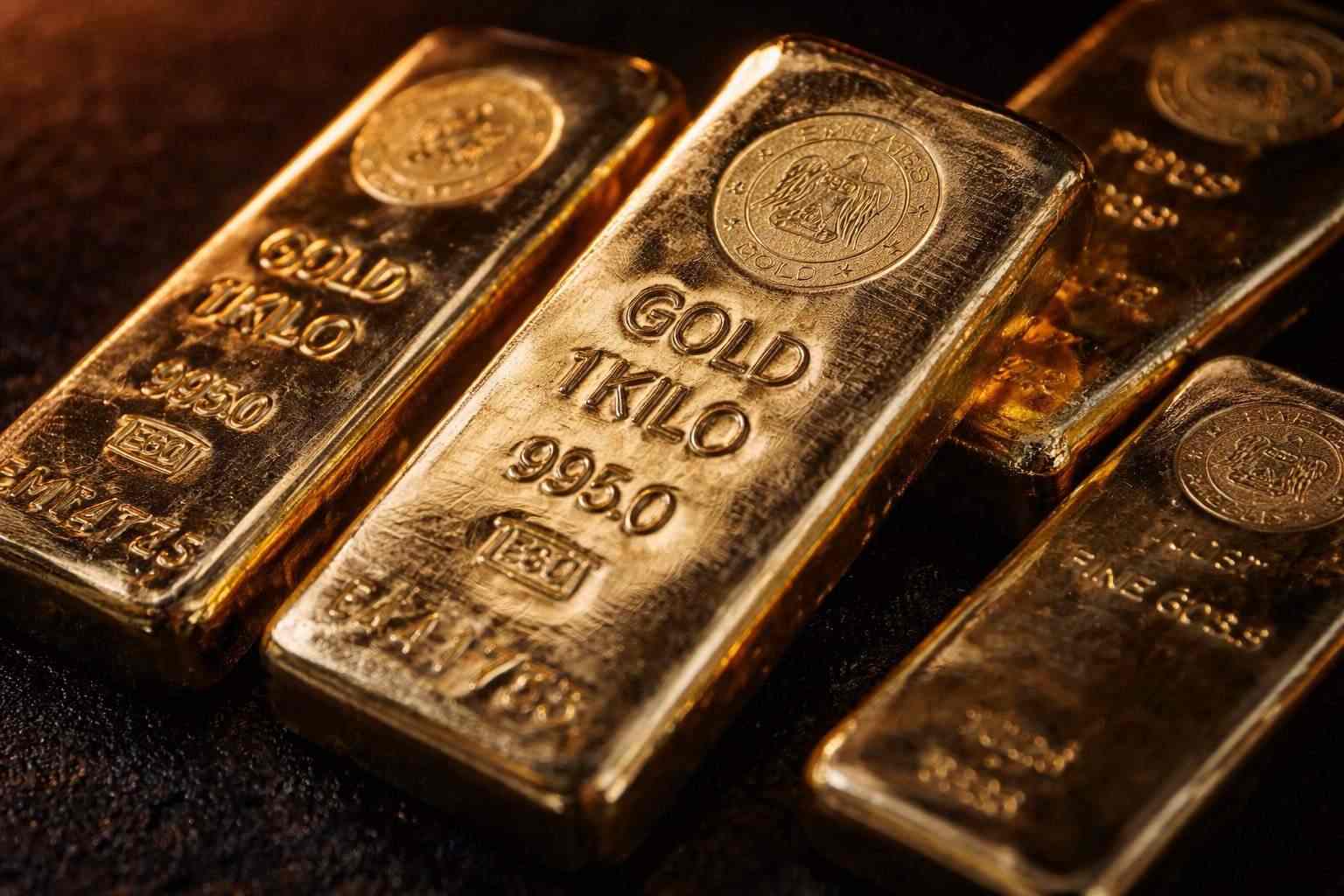
Spot gold’s latest quote from Kitco showed $4,829.40 an ounce, ask side at $4,831.40. The market shut its doors following Friday’s session, where gold briefly touched $4,889.60.
Timing proved crucial. Gold’s rally on Friday tracked a weaker dollar, falling oil, and speculation that fading energy shocks might open the door for Federal Reserve rate cuts. But by Sunday, the narrative had shifted. Reuters said the strait was still closed—after Iran pulled back on reopening—and marine traffic data confirmed no new vessel movements since midnight.
Spot gold jumped 1.5% to $4,861.32 an ounce by 1:58 p.m. ET on Friday, according to Reuters, putting it ahead more than 2% for the week. U.S. gold futures finished the session up 1.5% at $4,879.60. Gold hovered near—but didn’t quite breach—the $5,000 mark eyed by some traders.
Peter Grant, vice president and senior metals strategist at Zaner Metals, described the Hormuz reopening as “a key event” and noted that cheaper oil might turn out to be “good news for gold.” In his view, gold prices could make a push above $5,000 an ounce in the near term. All this, though, was said ahead of the weekend reversal. Reuters
U.S. President Donald Trump on Sunday announced that American envoys are headed back to Pakistan for renewed discussions with Iran. He warned, too, that more strikes could be on the table if Tehran refuses to meet U.S. demands. Iran’s lead negotiator, Mohammad Baqer Qalibaf, told Reuters that while there’s been some movement, both sides still have major disagreements—particularly over nuclear matters and the Strait of Hormuz.
Risks cut in both directions. If a deal manages to reopen Hormuz, oil prices could slide, risk appetite might rebound, and gold’s safe-haven pull could fade. A drawn-out shutdown, though, threatens to boost energy costs, prop up bullion as a chaos hedge, and keep inflation sticky—possibly making it tougher for the Fed to cut rates.
Fed Governor Christopher Waller on Friday suggested that if the war wraps up soon, rate cuts may still be possible this year. But he cautioned that if high energy costs persist and restrictions in the strait linger, inflation could get stuck and hiring might take a hit. Gold, which offers no yield, often benefits when rate-cut bets increase because rivals that pay interest look less attractive.
The dollar’s still moving markets. On Friday, the dollar index slipped 0.3% to 97.96—Reuters noted that put it at a seven-week low, after Iran gave a reopening signal. “It’s mostly the market taking off the geopolitical risk premium,” said George Vessey, Convera’s lead FX and macro strategist in London. Reuters
Gains spread across the precious metals space. Kitco reported silver at $80.70 an ounce, marking a 3.06% increase. Platinum edged up 0.82% to $2,100, while palladium added 0.46% to $1,542. Citing separate figures, Reuters noted spot silver climbed 4.2% on Friday, bringing its weekly rise to over 7%.
Gold’s 2026 rally remains hefty. The metal jumped to $4,833.56 per troy ounce on April 17, gaining 0.94% for the day and marking a 40.74% surge compared to the same time last year, Trading Economics reported, citing CFD trades tracking the benchmark price.
Monday’s test isn’t about technicals—the focus is on tanker traffic, oil’s reaction, and whether the dollar holds onto Friday’s drop. Gold buyers are getting the headline-driven action they tend to chase. Inflation risk? That one’s not so welcome.
Related articles: Gold