
Cape Canaveral, Florida, April 19, 2026, 09:46 EDT
- Blue Origin sent New Glenn up from Cape Canaveral at 7:25 a.m. EDT, recovering a reused booster later at sea.
- AST SpaceMobile’s BlueBird 7 satellite hitched a ride to low-Earth orbit on the flight.
- Jeff Bezos’ space firm just gained more ground in the reusable heavy-lift launch business with the landing, taking on a segment long led by SpaceX.
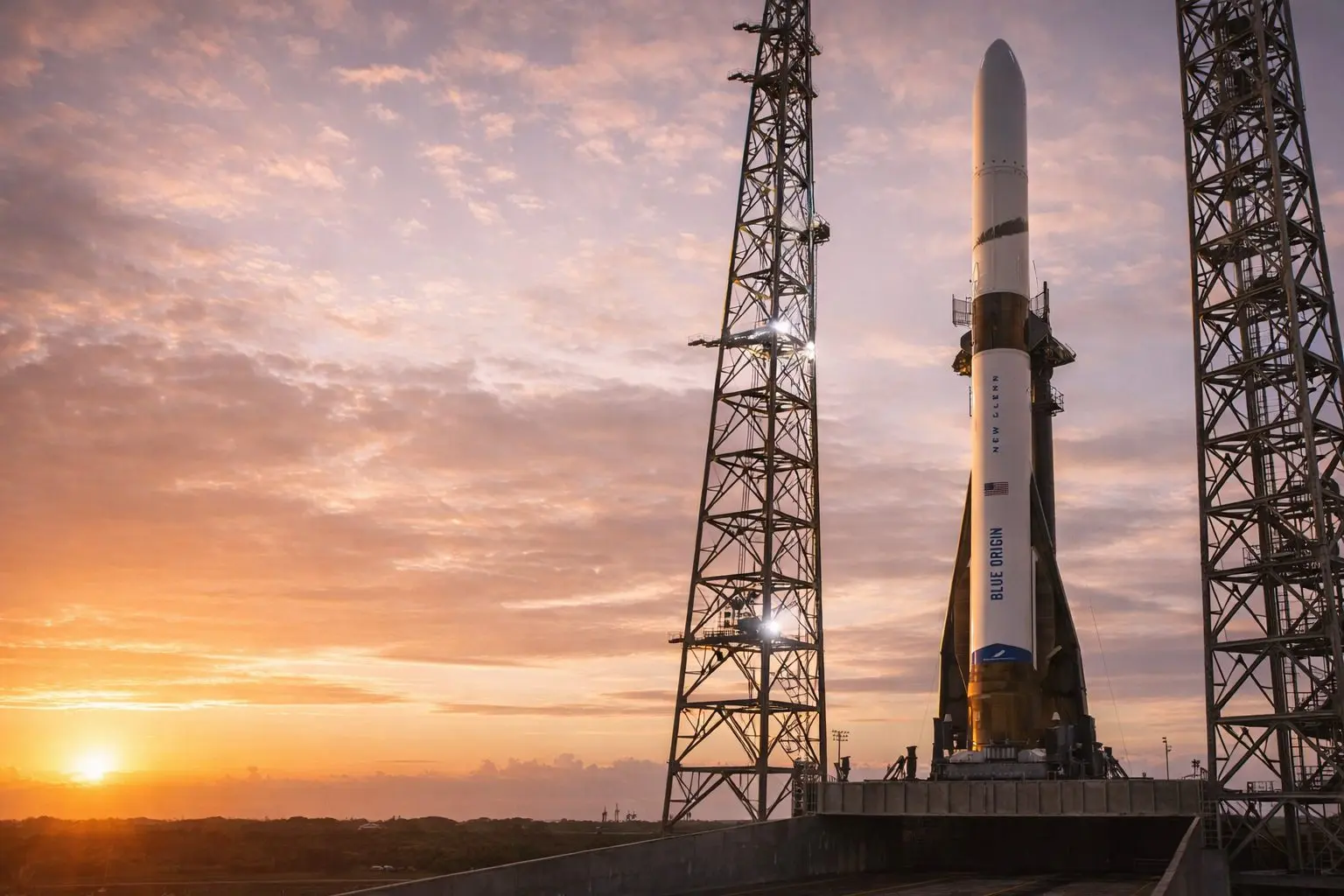
Blue Origin managed to bring back a reused New Glenn rocket booster in the Atlantic on Sunday, marking the first time it’s pulled off this recovery following a second launch—a move that pushes its heavy-lift rocket closer to matching SpaceX’s Falcon 9. The 29-story booster blasted off from Cape Canaveral around 7:25 a.m. EDT, hauling AST SpaceMobile’s BlueBird 7 satellite skyward.
It all comes down to cost and speed. Reusing the booster — that’s the lower stage delivering the initial lift — is at the heart of lowering launch expenses and upping flight frequency. That strategy has powered SpaceX’s rise to the top of commercial orbital launches for years.
Satellite operators are scrambling to set up direct-to-phone networks—connecting regular mobile phones to spacecraft, skipping the need for dedicated satellite devices. BlueBird 7 fits into AST SpaceMobile’s broader push to create a cellular broadband network in low-Earth orbit, the same region that hosts a slew of communications satellites.
“Never Tell Me The Odds,” the booster that first flew on Blue Origin’s NG-2 mission last November, made its way back to the Jacklyn platform after Sunday’s flight. It dropped away from the upper stage just minutes after launch, then coasted down to the same Atlantic barge about 10 minutes after liftoff. Reuters
According to Blue Origin’s mission page, NG-3 was slated to have its first stage make an autonomous descent to Jacklyn. The second stage would carry on into space, deploying BlueBird 7. The company noted the upper stage would eventually be made safe and sent down for disposal via a controlled ocean re-entry.
Micah Walter-Range, who heads up space consultancy Caelus Partners, wrote ahead of the launch that if New Glenn-3 pulled it off, SpaceX’s nine-year stretch as the lone player in reusable orbital rockets would be over. That’s the narrative Blue Origin pushed for, though one touchdown doesn’t yet match the regular launches SpaceX turns out.
Before liftoff, Blue Origin CEO Dave Limp noted the team swapped out all seven engines on the reworked booster and ran tests on improvements like new thermal shielding for a nozzle. “We plan to use the engines we flew for NG-2 on future flights,” he said in a message cited by Spaceflight Now. Spaceflight Now
AST SpaceMobile has now launched its second next-gen BlueBird satellite. According to the company, these satellites feature phased-array antennas that span nearly 2,400 square feet, built to provide 4G and 5G broadband straight to regular smartphones.
The field is filling up fast. AST’s satellite network is positioned close to SpaceX’s Starlink and Amazon’s Leo, with each project trying to boost communications bandwidth from space down to Earth. Blue Origin touts New Glenn’s seven-meter fairing—the protective nose cone—as a selling point for heftier satellites and rideshares involving multiple payloads.
The real challenge is repeating the feat. Blue Origin managed to recover and reuse the New Glenn booster—one milestone down. Next up: demonstrating quick turnaround, reusing those engines, and keeping launches frequent without delays or cost overruns that would erode any gains from reusability. SpaceX, for now, still leads on execution, not just hardware.
New Glenn flew for the third time on Sunday, this one doubling as its first reuse trial. Its debut launch in January 2025 made it to orbit, though the booster didn’t stick the landing. November’s second launch—NASA’s ESCAPADE Mars mission—saw New Glenn notch its first successful booster recovery.
Related articles: NASDAQ:ASTS