
April 24, 2026, Nashville — 16:02 CDT.
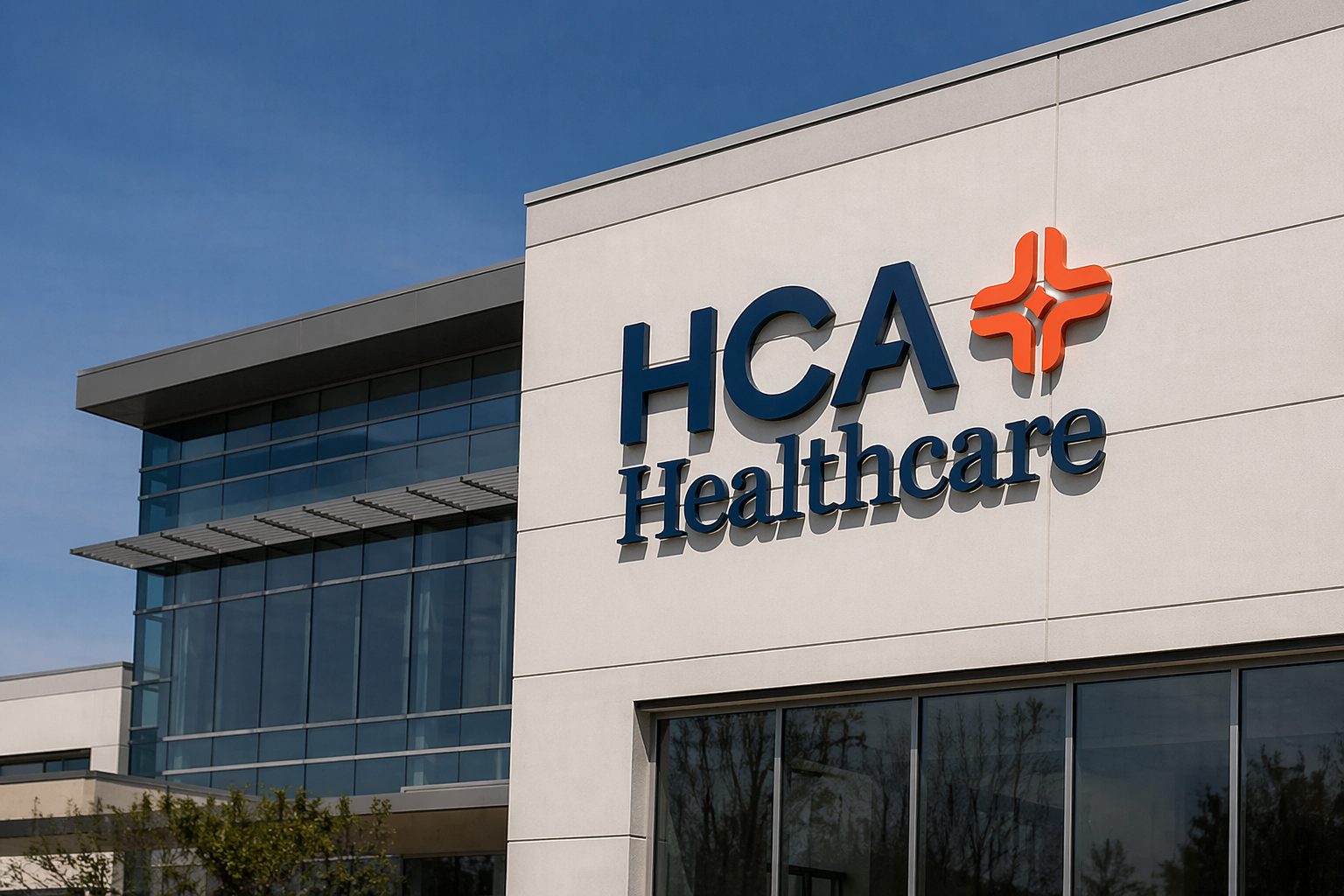
HCA Healthcare shares slipped Friday. The hospital operator managed to edge past Wall Street’s first-quarter profit expectations, but investors zeroed in on weaker patient volumes and early evidence that changes in the insurance market are starting to take a toll.
The stock dropped 8.8% to $432.46, market data showed. Tenet Healthcare and Universal Health Services didn’t escape the pressure—those shares slid roughly 4% and 3.8% apiece, after HCA’s update heightened concerns over volume and payer-mix risk across the sector.
Timing comes into play here. HCA, a giant among U.S. hospital operators, often signals trends in patient volumes, labor expenses, and reimbursement strain. Its latest numbers dropped just as hospitals contend with fallout from shifts to Affordable Care Act exchange plans—those are the ones where individuals pick up their own coverage—and a bump in the share of uninsured treatments, which typically prove tougher to recoup.
First-quarter revenue landed at $19.109 billion for the company, a 4.3% increase from the same stretch last year. Net income attributable to HCA hit $1.620 billion, translating to $7.15 per diluted share. Adjusted EBITDA—a number stripping out interest, taxes, depreciation, and a handful of other items—came in 1.9% higher at $3.802 billion.
HCA flagged a lack of the typical seasonal bump from respiratory illnesses this time around. Respiratory admissions slumped 42% year-over-year, while ER visits tied to those conditions slid 32%. The company also pointed to a January winter storm that dragged down volumes in several markets — namely Texas, Tennessee, North Carolina and Virginia.
Chief Executive Sam Hazen described the year’s opening stretch as a “dynamic environment,” framing the respiratory and storm impacts as first-quarter matters. Chief Financial Officer Mike Marks told analysts those two items knocked an estimated $180 million off adjusted EBITDA, but emphasized HCA considered them “temporal and not structural.” The Motley Fool
The tape may have looked soft, but numbers told a different story. Same-facility admissions picked up 0.9%, and equivalent admissions—HCA’s own metric pooling inpatients with adjusted outpatient activity—gained 1.3%. Emergency room visits nudged 0.3% higher as well.
HCA stuck to its 2026 outlook, still projecting revenue between $76.5 billion and $80.0 billion, adjusted EBITDA in a $15.55 billion to $16.45 billion range, and earnings per share of $29.10 to $31.50. According to the company, Medicaid supplemental programs—state payments that boost hospital reimbursement—helped cushion the impact from lighter patient volumes.
Still, not everyone was reassured. Barclays’ Andrew Mok flagged the quarter as a “somewhat concerning start to the year,” and noted risks if headwinds from the Affordable Care Act or commercial insurance trends pick up. J.P. Morgan’s Benjamin Rossi pointed out that HCA’s steady outlook matches its habit of not changing first-quarter guidance, even when volumes lag early on. Reuters
There’s a risk volume weakness might stick around longer than management anticipates. Marks is sticking with the $600 million to $900 million full-year hit tied to exchange-plan changes, saying it’s “a little early” to know if results will end up toward the low end. Hazen, for his part, said Medicaid conversion trends haven’t settled down: “We just need a little bit more time to judge it.” The Motley Fool
Payer behavior is still weighing on results. Marks cited persistently high denial rates and underpayments, especially for Medicare Advantage, the private Medicare option. “The denials and underpayments are still really high,” he said. HCA’s response? More tech, more resources—tools Marks says are helping limit the hit to earnings. The Motley Fool
HCA continued buying back its own stock, snapping up 3.157 million shares for $1.571 billion during the quarter. The board also signed off on a 78-cent quarterly dividend, set for payout on June 30 to holders as of June 16. As of March’s close, the company operated 189 hospitals along with roughly 2,600 ambulatory care locations.
Related articles: Earnings Reports