
EDISON, N.J., April 24, 2026, 13:07 (EDT)
Eos Energy Enterprises will post its first-quarter results before U.S. trading begins on May 13, with the zinc-battery company facing scrutiny over whether its factory ramp can start driving consistent revenue. An earnings call is scheduled for 8:30 a.m. ET that day. Shareholders can send in questions via Say Technologies between April 27 and May 10.
Timing is key here, as Eos has already given investors a sneak peek at the quarter. Back on April 9, the company flagged preliminary first-quarter revenue in the $56 million to $57 million range. Shipments climbed 17% compared to the previous quarter, and battery output increased by 10.4%. Eos also said its second battery line finished factory acceptance testing, with first production slated for the end of the second quarter.
At 12:50 p.m. EDT, EOSE was changing hands around $7.78, up about 12% compared to its previous finish. Earlier, the stock hit an intraday peak at $8.05. Roughly 25.6 million shares traded so far, putting the company’s market cap close to $2.1 billion.
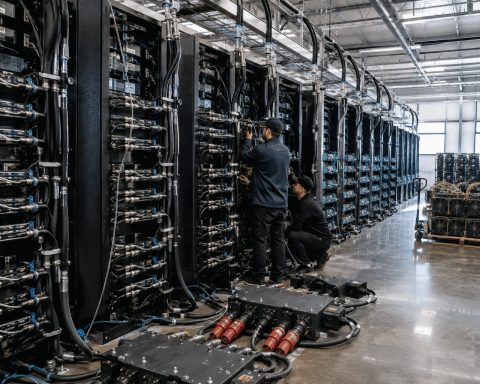
Eos produces battery energy storage systems, or BESS—essentially big batteries that can hold electricity and discharge it as needed—built around zinc-bromine chemistry instead of the lithium-ion tech used by much of the industry. The U.S. Energy Department describes Eos’ Z3 batteries as designed for long-duration grid storage, supporting everything from utilities to industrial facilities and renewable energy projects.
The stock bounced back after a bruising reset. Back in February, Eos posted 2025 revenue of $114.2 million, with shareholders taking a $969.6 million net loss. The company put out a 2026 revenue target in the $300 million to $400 million range. CEO Joe Mastrangelo called the company “disappointed in not meeting revenue expectations,” but added it closed out the year showing “clear operational momentum.” Eos Energy Enterprises, Inc.
The AI power race just got a jolt. Eos and TURBINE-X on April 15 unveiled a joint development deal to build private power infrastructure for AI and other energy-hungry facilities. Under the agreement, TURBINE-X plans to deploy up to 2 gigawatt-hours of Eos storage systems over the next 36 months, with the first installations slated for 2027. “Power is now on the critical path,” said Justin Vagnozzi, Eos’ SVP of technical sales and commercial operations. Eos Energy Enterprises, Inc.
Eos finds itself competing in a busy, expanding field. Fluence Energy pitches battery storage as a solution for data centers looking to ramp up power quickly, while ESS Tech focuses its iron-flow technology on serving the sustained needs of AI-driven data centers and other heavy users. Last month, Reuters Events noted that surging AI demand is moving long-duration storage into the data-center spotlight—even as lithium-ion batteries still hold the lead for shorter-term needs.
Governance questions are coming up. In a Schedule 13D/A dated April 20, Cerberus-linked entities reported a beneficial ownership of approximately 159.6 million Eos common shares—about 32%. The same filing disclosed that Nathaniel Fick, an executive affiliated with Cerberus, took a seat on the Eos board as of March 24.
The risk hasn’t gone away. Back in March, Bloomberg Law detailed an investor lawsuit accusing Eos of promoting its production process while failing to reveal it couldn’t actually meet the scale required for its revenue goals. The law firm Bleichmar Fonti & Auld has put the lead-plaintiff deadline at May 5 for the proposed securities class action. These are still just allegations—no findings yet.
For Eos, May 13 isn’t really about the date anymore—it’s about what’s still not on the table. The company has already put out revenue figures. What’s still unclear: margins, cash burn, backlog conversion, and confirmation that Line 2 will be up and running on schedule.