
Taipei, April 25, 2026, 02:03 (Taipei Time)
- Taiwan relaxed its single-stock restrictions for local equity funds and active ETFs.
- TSMC finished the session at a record NT$2,185, rising 5.05%.
- TSMC is rolling out its updated A13 chip roadmap and stepping up U.S. packaging ambitions as this move takes shape.
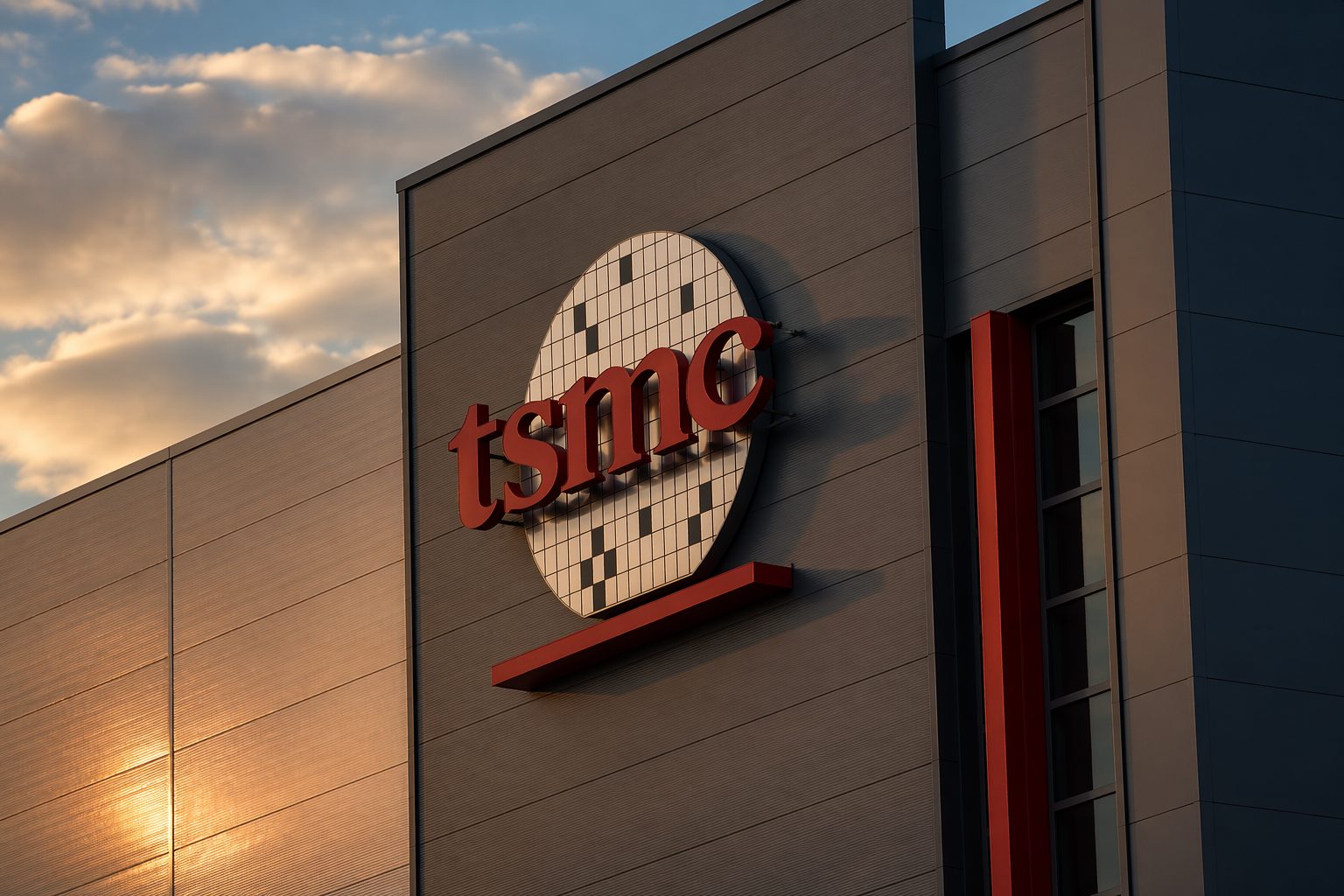
Taiwan Semiconductor Manufacturing Company Limited surged to an all-time closing high in Taipei on Friday, lifted after the island’s financial regulator loosened restrictions on how much local funds can allocate to a single stock—a move that primarily favors the world’s top contract chipmaker. Shares wrapped up the session at NT$2,185, climbing 5.05%, according to figures from MarketScreener.
This tweak matters: TSMC’s market heft has outgrown old portfolio limits. Local equity funds and active ETFs are now allowed to put up to 25% of their assets into any company making up more than 10% of the Taiwan Stock Exchange, a jump from the previous 10% ceiling. As it stands, only TSMC qualifies, according to the Wall Street Journal.
It’s a flow story, but there’s more to it. With TSMC making up over 40% of Taiwan’s stock market, local fund managers were left little choice but to underweight the stock—even as it surged with the AI chip frenzy. Demand for processors to power big AI models has sent shares up, but the concentration cap kept funds sidelined. Barron’s notes this could help close the distance between TSMC’s Taiwan shares and its U.S.-traded ADRs, those American depositary receipts that track the stock in New York.
The ADRs climbed $22.85 to $405.51 in New York, with volume topping 15.7 million shares, market data showed. One ADR equals five ordinary shares; the U.S. listing tends to fetch a premium when international buyers face limited access in Taipei.
Chip stocks caught the wave—MediaTek jumped 8.1%, UniMicron Technology added 7.7%, and the Taiex advanced 2.7%, according to the Wall Street Journal. Even so, the surge centered on TSMC. The regulation targets outsized index weights, and no other Taiwan firm is in that league.
Stacked on a firmer earnings picture, the latest round of buying comes just after TSMC lifted its full-year revenue outlook last week. The chipmaker now expects capital spending to hit the upper end of its $52 billion to $56 billion range. First-quarter profit reached T$572.5 billion, a 58% jump from the prior year. “Extremely robust” is how Chief Executive C.C. Wei characterized AI-driven demand to analysts. Reuters
The technology story’s still moving. TSMC rolled out its A13 process this week, aiming for 2029 production. They’re touting a 6% area saving over A14, and designs will still mesh with A14’s rules. “Reliable stream of new silicon technologies,” is how Wei put it in the company statement. TSMC
TSMC aims to skip buying ASML’s latest high-NA extreme ultraviolet systems for the rest of the decade. EUV, the method for etching fine circuits on silicon, is already standard—high-NA just pushes the technology further, but at a much steeper price. According to Reuters, each high-NA machine runs around $400 million, about twice as much as the previous generation of EUV equipment.
Kevin Zhang, deputy co-chief operations officer and senior vice president at TSMC, said the company is “leveraging existing EUV technology” yet sticking to a fast-paced scaling roadmap, he told Reuters. That’s important for ASML—the crucial supplier—and also for competitors like Samsung Electronics and Intel Foundry, both pushing to catch up in advanced chipmaking. Reuters
Packaging is also in the spotlight. Advanced packaging, which combines several chips and memory stacks within a single module, has become essential for processors like those used by Nvidia. TSMC has its sights set on a new advanced packaging facility in Arizona, aiming for a 2029 opening. Zhang told Reuters the company is “aggressively expanding” its capacity there. Reuters
Still, those risks remain. The rule change might draw in fresh fund flows, but there’s no promise of stronger chip demand, better yields, or fatter margins; it’s also piling more market weight onto a single stock in Taiwan. Technically, Dan Hutcheson, vice chair at TechInsights, told Reuters that “Moore’s law is morphing” as the industry shifts to multi-die packages. Ian Cutress from More Than Moore pointed out that TSMC hasn’t spelled out solutions for heat, bending, or cracking issues in larger packages. Reuters
Investors are sticking to basics here: Taiwan loosened the rules, making TSMC more accessible for domestic funds. With the market already riding the AI wave, that alone pushed the chip giant to fresh highs.
Related articles: Technology