
Seattle, April 27, 2026, 08:03 PDT
- Boeing narrowed its first-quarter loss and held a record $695 billion backlog, but it still used $1.5 billion in free cash flow.
- Management is targeting positive free cash flow of $1 billion to $3 billion this year, with the second half expected to turn positive.
- The key risk is execution: 737 output, 787 supplier delays, aircraft certifications and any fresh safety or quality problem.
Boeing’s first-quarter results have pushed the stock’s story from crisis repair to execution, after the U.S. planemaker posted a smaller-than-expected loss and a fresh Seeking Alpha note said the company is “slowly moving forward” on aircraft construction and deliveries, though peak output may not come until 2028. Shares were little changed in early New York trading on Monday at about $231.54. Seeking Alpha
That matters now because Boeing is trying to prove it can raise factory output without repeating the quality lapses that hurt the 737 MAX program and slowed cash generation. A Yahoo Finance-distributed Insider Monkey article last week included Boeing among long-term U.S. stock picks, but the nearer market test is more basic: deliveries, cash and regulatory approvals.
Boeing reported first-quarter revenue of $22.2 billion, up 14%, and a GAAP loss of 11 cents a share. Its core loss, a non-GAAP measure that strips out some costs, was 20 cents a share, while the company’s net loss narrowed to $7 million from $31 million a year earlier.
Chief Executive Kelly Ortberg told analysts Boeing was “headed in the right direction” and said the company remained focused on safety, quality and operational performance. Chief Financial Officer Jay Malave called it “a clean quarter,” but also noted Boeing still used $1.5 billion in free cash flow, which is cash left after capital spending.
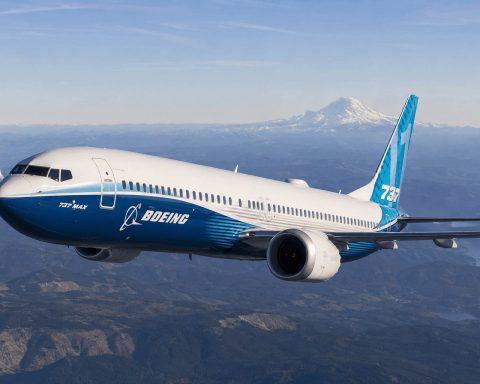
The commercial aircraft unit is still not fixed. It delivered 143 airplanes in the quarter and revenue rose 13% to $9.2 billion, but the business posted a $563 million operating loss. Boeing said the 737 program is producing at 42 jets a month and expects to move to 47 a month this summer.
The competitive read was notable. Boeing handed over 143 commercial jets in the quarter, while Airbus delivered 114 aircraft, Reuters reported, a rare quarterly delivery lead for Boeing over its European rival. Boeing’s own delivery release showed 114 of its first-quarter commercial deliveries were 737 aircraft.
Investors are watching cash as closely as aircraft counts. Malave said Boeing still expects positive free cash flow of $1 billion to $3 billion for 2026, with the second half of the year turning positive, helped by higher commercial deliveries and stronger defense and services performance.
The defense business gave Boeing some cover. Defense, Space & Security revenue rose 21% to $7.6 billion, and its backlog reached a record $86 billion, with the company pointing to KC-46 tanker work, missiles and weapons, and classified programs. That puts Boeing in a defense-spending cycle also watched by peers such as Lockheed Martin and RTX, though Boeing’s mix is still heavily tied to commercial jet recovery.
There are still hard spots. Boeing said 25 aircraft were affected by a 737 wiring nonconformance, though management said rework had been completed and the issue would not change full-year delivery goals or the planned rate increase. On the 787, Ortberg said seat certifications and engine deliveries had held back some deliveries, adding, “I don’t see any showstoppers,” but the work was taking longer than expected.
Certification is another swing factor. Boeing expects the 737-7 and 737-10 to be certified this year, with first deliveries in 2027, while the 777X remains on track for first delivery in 2027 after further flight-test progress. Delays there would push out revenue and keep pressure on customer schedules.
The risk case is not subtle: higher fuel prices, Middle East instability, supplier delays or another quality escape could slow deliveries and undercut the cash-flow target. Ortberg told analysts Boeing had seen no delivery impact so far from regional instability, but said the company was watching flight hours and services demand; Malave said no customer requests had created meaningful cash-flow variability yet.
For now, the market is giving Boeing credit for progress, not a pass. Reuters said the stock rose about 5% after the earnings release last week, helped by the smaller loss and better delivery momentum, but the share price on Monday suggested investors still want proof that higher output can hold through the year.
Related articles: NYSE:BA