
STEINHAUSEN, Switzerland, April 28, 2026, 16:04 CEST
- Beach Energy kicked off Phase 2 of its offshore Otway Basin drilling with Transocean’s Equinox rig after the quarter wrapped up—operations are now in progress at Thylacine West.
- Since early April, Transocean has reported roughly $1.6 billion in new backlog, with awards covering Brazil, Norway, and the Eastern Mediterranean.
- Transocean stock hovered near flat in early U.S. hours as the market looked ahead to the company’s upcoming Q1 results and fleet status update, slated for release May 4 after the close on the New York Stock Exchange.
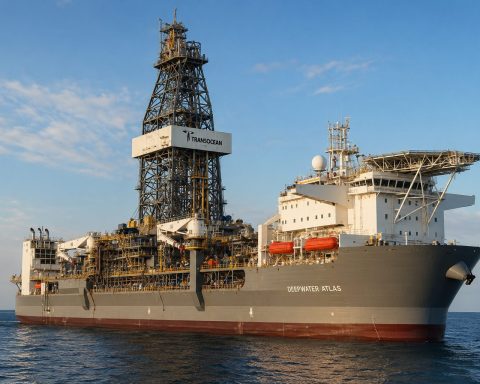
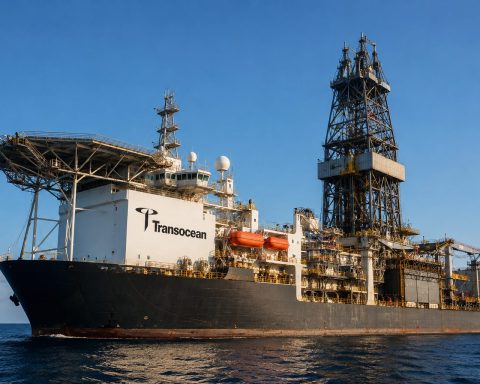
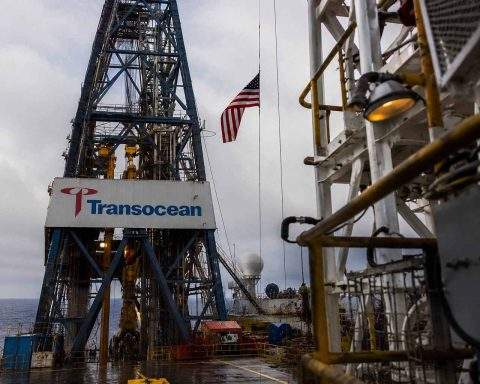
Transocean Ltd. has redeployed its Equinox rig for Beach Energy in the offshore Otway Basin, Australia—just ahead of the company’s upcoming first-quarter earnings and its next fleet status update.
This is relevant as investors look to see if Transocean’s flurry of contract wins in April might translate to more reliable cash generation. For a driller still aiming to whittle down debt and keep expensive rigs in use, backlog — revenue secured through signed deals but not yet realized — remains the key metric.
In its Tuesday activities report, Beach said it took delivery of the Transocean Equinox from a consortium member after the quarter wrapped up and quickly kicked off Phase 2 of the campaign. The company also noted that a well intervention at Thylacine West—work aimed at boosting or restoring output from an existing well—is happening now and should run for roughly three weeks.
Beach Managing Director and CEO Brett Woods described the quarter as “pivotal,” highlighting the return of the Equinox rig as a key development. Production from the Otway Basin dropped 9% compared to the previous quarter, with Woods attributing the decline to reduced customer gas nominations and a bit of maintenance downtime.
Transocean has had a packed April. On April 16, the company announced the Deepwater Asgard secured a five-well, 390-day contract in the Eastern Mediterranean. The operator remains undisclosed. That deal tacks on roughly $158 million in backlog. Since the start of April, Transocean’s total backlog additions have come to about $1.6 billion.
Transocean kicked off the month by disclosing about $1.0 billion in new business. That tally includes a $490 million Norway deal for the Transocean Barents with Vår Energi, plus contract extensions from Petrobras on both the Deepwater Orion and Deepwater Aquila. The company also reported retiring $358 million of its 2028 senior secured notes, citing accelerated deleveraging and reduced interest expense.
Brazil is still a major part of the order book. Transocean announced on April 14 that Petrobras extended the Deepwater Corcovado for another 1,156 days, which bumps up the backlog by roughly $445 million. However, before the new deal kicks in, around $20 million will come off the existing backlog.
Transocean slipped just below the prior close, trading at $6.52 early in the U.S. session. Shares of Valaris—set to be acquired by Transocean after a February deal—edged up roughly 0.3% to $97.67.
The main focus remains the Valaris deal. Back in February, Reuters said Transocean planned to acquire Valaris in an all-stock deal worth $5.8 billion, which would result in a combined group valued near $17 billion, fielding a fleet of 73 rigs. Transocean shareholders would end up with roughly 53% of the merged company.
Chief Executive Keelan Adamson, speaking on a conference call quoted by Reuters, acknowledged the company’s debt has been dragging on its equity value, but said the deal would tackle that problem. He projected leverage dropping to roughly 1.5 times within 24 months after the close.
Leslie Cook at Wood Mackenzie noted the deal would bolster Transocean’s standing in high-spec ultra-deepwater rigs — those designed for drilling at extreme depths — and also push it into the top five for high-spec jackups, which operate in shallower waters. “Acquiring new backlog makes sense for Transocean,” Cook said. Wood Mackenzie
The race for backlog is getting close. According to Westwood Global Energy, Noble leads with the highest number of backlog days locked in for 2027 and 2028. Should Transocean and Valaris complete their merger, that combo would control the most backlog days already set for 2026.
Risks haven’t changed much. Beach pared back its FY26 output target to 19.4–20.3 million barrels of oil equivalent, blaming wet weather and interruptions at the Waitsia gas facility. Over at Transocean, management flagged potential bumps from contract schedules, dayrates, downtime, weather swings, commodity prices, and the Valaris closing. Eyes now turn to the next fleet update on May 4.
Related articles: NYSE:RIG