
NEW YORK, April 29, 2026, 07:07 EDT
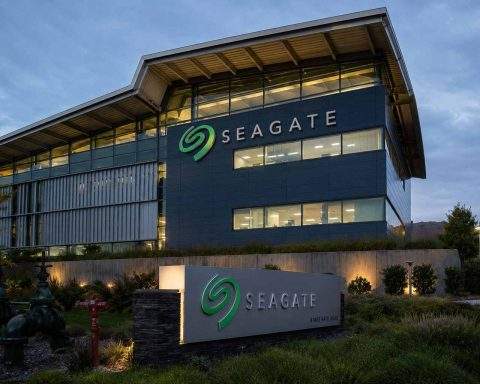
- Seagate projected revenue and adjusted earnings for its fiscal fourth quarter that topped Wall Street forecasts, citing increased demand tied to AI-related storage.
- The stock surged ahead of the open, pulling up Western Digital, SanDisk, and Micron, too.
- Investors are now pushing to see if the AI build-out will keep driving hardware spending, after a sharp run in tech stocks sparked the latest gains.
Seagate Technology Holdings plc jumped in premarket trading Wednesday, with shares rallying after the data-storage firm projected a better-than-anticipated fiscal fourth-quarter. Bullish guidance from Seagate is fueling confidence that artificial intelligence investments keep reaching deeper tech infrastructure.
It’s a notable shift: AI isn’t just hungry for chips; it devours storage, too. Training and running models takes massive troves of text, images, video—big, cheap, dense. That’s pushed hard-disk-drive makers like Seagate back onto investors’ radar, reversing a period when the sector seemed to have settled into slow growth.
Seagate is calling for fiscal Q4 revenue to hit $3.45 billion, give or take $100 million, and sees non-GAAP diluted EPS at $5.00, with a 20-cent swing either way. For comparison, the LSEG consensus from Reuters had revenue pegged at $3.16 billion and adjusted earnings at $3.97 per share.
Seagate posted revenue of $3.11 billion for its fiscal third quarter ended April 3, a jump from $2.16 billion in the prior-year period. GAAP diluted earnings climbed to $3.27 per share, compared with $1.57, and non-GAAP diluted earnings shot up to $4.10, more than doubling year over year.
Chief Executive Dave Mosley called Seagate’s March quarter results “outstanding,” highlighting revenue and EPS that topped the company’s guidance range, record margins, and nearly $1 billion in free cash flow. businesswire.com
Mosley described Seagate as moving into “a new era of structural growth” with AI driving up data creation and, by extension, storage needs. The company’s bet centers on areal density—the amount of data a disk surface can store—since squeezing in more capacity without expanding physical size appeals to customers. Seagate Investors
Seagate led the surge, jumping almost 18% ahead of the open, according to Reuters. Western Digital was up 9.5%, SanDisk advanced close to 5%, and Micron Technology picked up about 3%. If those moves stuck, the group would tack on roughly $42 billion in total market value.
During the earnings call, Mosley pointed out that AI is driving up demand in areas like video. Major cloud players are layering in AI features aimed at lifting engagement and new revenue streams, which ends up producing more video content to store.
Seagate leaned heavily on its data-center segment this quarter. According to the call transcript, total exabyte shipments jumped 39% year over year, with data-center exabyte shipments up 47%. For context, an exabyte equals one billion gigabytes—a measure for especially large storage needs.
The company highlighted stronger cash generation. Seagate reported $1.1 billion in operating cash flow and $953 million in free cash flow for the quarter. Debt reduction came in at roughly $641 million, and $191 million was sent back to shareholders via dividends and buybacks.
There’s a risk the AI rally might have peaked too soon. This week, Reuters flagged a drag on broader tech, with worries about how quickly AI will really be adopted following a Wall Street Journal piece on OpenAI’s targets. Kyle Rodda at Capital.com pointed out that, after a strong run in U.S. tech, old worries about lofty valuations and the payback timeline have crept back in.
Seagate’s guidance factors in just a slight effect from existing global tariffs and ongoing Middle East tensions as of the release. But if trade expenses jump, supply snarls worsen, or big cloud buyers start pausing orders after securing capacity, the forecast could run into headwinds.
Seagate’s latest results are fueling market speculation that AI-driven demand is reaching further than just graphics processors and memory chips. The next challenge: keeping prices steady and production tight, with Western Digital and other competitors eyeing the same cloud and enterprise spending.
Related articles: NASDAQ:STX