
DEARBORN, Michigan, April 29, 2026, 17:02 ET
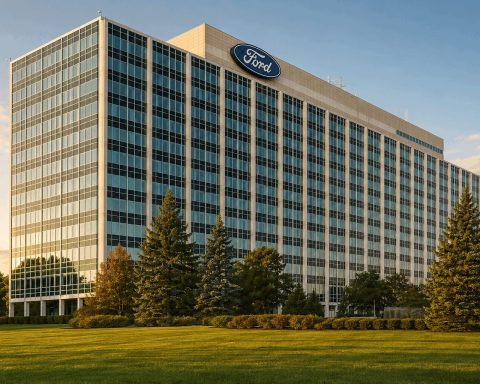
Ford Motor on Wednesday bumped up its 2026 profit outlook, crediting a $1.3 billion tariff windfall that pushed first-quarter net income to $2.5 billion. Revenue increased 6% to $43.3 billion. Adjusted EBIT — the company’s preferred gauge for operating profit — hit $3.5 billion, sharply higher than the $1.0 billion posted a year ago.
Timing is key here. U.S. automakers have started factoring in expected tariff refunds after the Supreme Court’s February ruling, though other duties and supply expenses are still squeezing profits. Ford noted its benefit applies to tariffs paid from March 2025 through February 2026, mostly touching Ford Blue and Ford Pro.
Ford nudged its full-year adjusted EBIT forecast up, now expecting $8.5 billion to $10.5 billion, compared with the previous $8.0 billion to $10.0 billion range. That bump falls short of the full tariff benefit, hinting at lingering pressure from rising costs and stubborn parts shortages, not an easy profit surge.
Aluminum is driving the squeeze. Ford bumped its 2026 forecast for commodity-related headwinds to roughly $2 billion—double the prior figure—largely because of aluminum costs. The company is also bracing for about $1 billion in tariffs, not counting any IEEPA offset or short-term expenses linked to Novelis. IEEPA, or the International Emergency Economic Powers Act, underpinned the key tariff refund clash.
Ford leaned hard on its traditional and commercial segments this quarter. Ford Blue, which handles gas and hybrid models, turned in $1.9 billion in EBIT, drawing from $23.9 billion in revenue. Over at Ford Pro, the commercial side booked $1.7 billion in EBIT on $14.7 billion in revenue, and paid software subscriptions shot up 30% to 879,000.
EVs kept weighing on results. Ford Model e posted a $777 million first-quarter loss—better than last year’s $849 million hit—but costs tied to the Universal EV platform and Ford Energy haven’t let up. For the year, Ford still sees Model e losing between $4.0 billion and $4.5 billion.
Ford CEO Jim Farley called it “a more modern, resilient Ford” as the company moves into a significant wave of new products, software, and services. CFO Sherry House echoed the upbeat tone, saying the “path to higher margins is clear” and adding that Ford is still aiming to hit its full-year cost-cut targets. Q4 Networks
Still, Ford kept some caution in its guidance. The company noted its forecast leaves out any impact from an ongoing Middle East conflict or a notable downturn in the U.S. economy. Ford is working off the assumption that U.S. industry sales will reach a seasonally adjusted annual rate between 16.0 million and 16.5 million vehicles, with industry pricing seen as flat.
The immediate focus is on F-150 inventory. According to Reuters, stockpiles of the flagship pickup dropped 38% year-on-year in April, based on data from Catalyst IQ, after the Novelis fires disrupted aluminum deliveries. Ford could be facing “a more difficult time recovering” from the Novelis incident than anticipated, JPMorgan’s Ryan Brinkman noted. Reuters
General Motors is the nearest comparable. The Detroit automaker bumped up its 2026 profit guidance by $500 million this week—exactly in line with an anticipated tariff refund—but flagged that higher costs for raw materials, chips, and logistics could shave $1.5 billion to $2.0 billion off earnings this year.
Ford’s 2026 outlook looks better after the quarter, though there’s a catch. Tariffs eased up, juicing the headline, while truck and commercial sales padded margins, and services kept climbing. But questions linger—aluminum supply, ongoing EV losses, and shifting tariffs could still shake the new forecast.
Related articles: NYSE:F