SUNNYVALE, California, May 6, 2026, 16:02 (PDT)
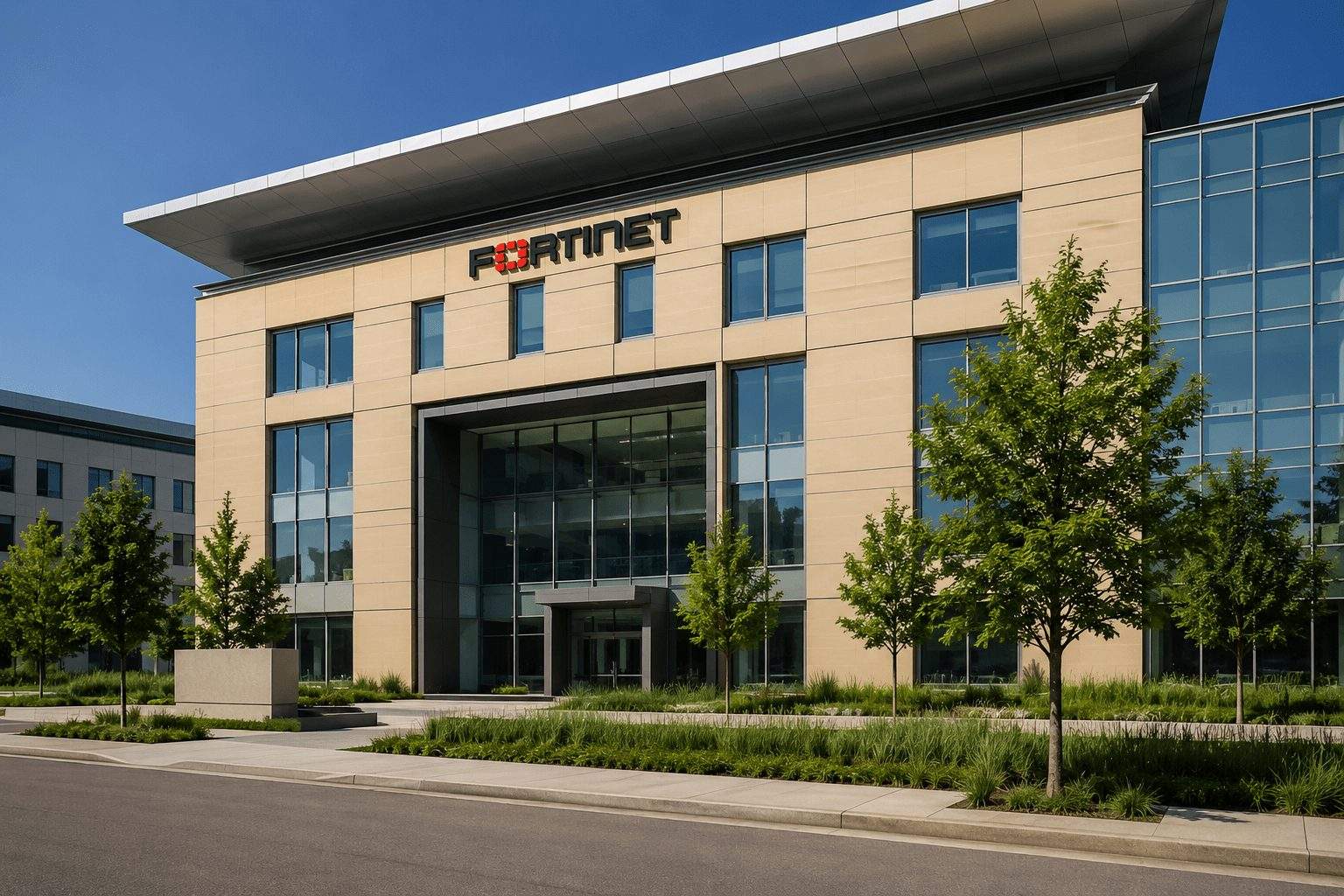
Fortinet Inc. jumped up to 24% after hours, lifted by a hike in its full-year revenue outlook and billings growth not seen in more than three years. The cybersecurity name returned to focus, delivering a quarter that cleared Wall Street’s bars on revenue, profit, and sales commitments.
Timing plays a role here. Cybersecurity investors have been wrestling with the question of whether artificial intelligence might dampen software demand or simply raise the stakes for corporate security. Fortinet’s latest quarter shed some light: clients are still buying firewalls, secure networking gear, and infrastructure prepped for bigger AI-driven data loads.
Fortinet’s first-quarter revenue hit $1.85 billion, climbing 20% over last year. Adjusted earnings landed at 82 cents per share. That easily cleared the bar: Wall Street had pegged adjusted earnings at just 61 to 62 cents, with revenue forecasts in the neighborhood of $1.73 billion, according to reports citing analyst estimates.
Billings climbed 31% to $2.09 billion, capturing contracted or invoiced sales that haven’t yet hit the revenue line. Free cash flow also set a new record at $1.01 billion—cash remaining after capital expenditures.
Ken Xie, who serves as founder and CEO, pointed to “broad-based demand across our portfolio and geographies” during the quarter, citing an increasingly complex threat landscape, “intensified by AI.” According to Xie, Fortinet’s focus on integrating networking and security continues to drive its strategy. Fortinet
Chief Financial Officer Christiane Ohlgart told analysts AI is “expanding the attack surface” and pushing up performance demands—factors she said are fueling steadier security spending. Ohlgart highlighted momentum among larger enterprises, noting deals over $1 million and overall deal value jumped more than 60%. The Motley Fool
Fortinet is looking for second-quarter revenue between $1.83 billion and $1.93 billion, with adjusted earnings per share expected to land in the 72 to 76 cent range. For 2026, the company projects revenue of $7.71 billion to $7.87 billion, billings between $8.80 billion and $9.10 billion, and sees adjusted EPS hitting $3.10 to $3.16.
The company is pushing to frame its product refresh as part of a wider AI-security angle. Early Wednesday, it rolled out the FortiGate 3500G and 400G firewalls—built for encrypted traffic, AI workloads, and sprawling, distributed setups. Company materials positioned these units directly against high-end hardware from Palo Alto Networks, Cisco, and Check Point in the upper tier of network security.
The competitive angle matters here, since Fortinet’s jump is happening in a sector packed with security names. Investors still tend to look to Palo Alto Networks, Zscaler, and Check Point as benchmarks when they’re sizing up whether IT budgets are moving toward bundled platforms, cloud-first solutions, or sticking with hardware-heavy network protection. Fortinet, for its part, highlighted “broad-based demand” and a threat environment only growing more intense with AI, according to RBC Capital’s Dan Bergstrom. Investors
Repeating this quarter’s performance could get tricky. Fortinet flagged plenty of hurdles in its outlook—economic softness, supply-chain snags, rivals stepping up, sales execution, shifting AI trends, and potential tariffs or trade barriers—all cited as risks that could throw results off target.
At this point, it’s straightforward: Fortinet delivered a beat, bumped its outlook higher, and offered investors a fresh angle on AI—as a spending catalyst, not just a disruption threat. The question now is whether billings can outpace revenue, with competitors also targeting those same security dollars.