MUMBAI, May 14, 2026, 15:03 IST
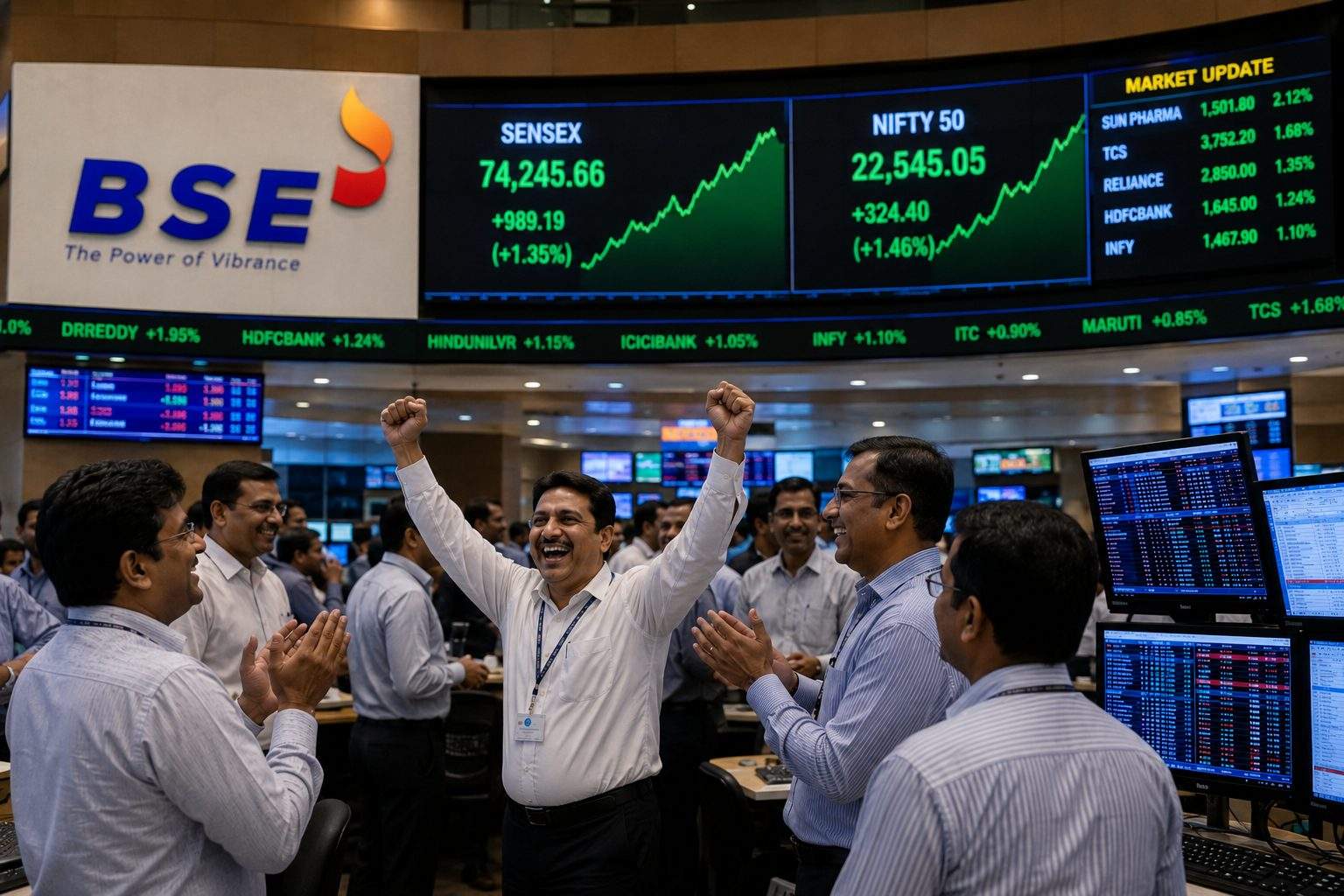
- Sensex jumped over 1,000 points during intraday trade, while the Nifty 50 pushed past 23,750.
- Rupee slipped to an all-time low, weighed down by surging oil prices and persistent foreign outflows from Indian assets.
- IT stocks struggled, but a bounce in pharma, banks, and a handful of heavyweight names pulled the market higher.
Indian equities surged on Thursday, snapping a four-day losing streak as the Sensex jumped more than 1,000 points during the session and the Nifty 50 pushed past 23,750. Bargain hunters stepped in, scooping up stocks hit hard in recent sessions. Still, the rupee slipped to yet another record low and crude oil prices stayed stubbornly above $100 a barrel, keeping the rebound on uncertain footing.
The shift is notable, with India’s equity market still working to steady itself after the Sensex and Nifty both dropped close to 4% over the last four sessions. That slide came against a backdrop of a softening rupee, pricier oil, and ongoing foreign portfolio outflows—the same pressures haven’t eased.
By 12:35 p.m. IST, the BSE Sensex had surged 1,007 points, or 1.35%, to 75,616.65. The NSE Nifty 50 also advanced, gaining 326 points, or 1.39%, at 23,738.95. Sensex briefly reached 75,652.52, while Nifty climbed to 23,763.65 in intraday trade, according to Business Standard.
Heavyweights like Bharti Airtel, HDFC Bank, ITC, and Reliance Industries saw fresh buying, fueling the rebound. Bharti Airtel—India’s No. 2 telecom operator—picked up early, lifted by a jump in quarterly profit as more users shifted to pricier plans and its Africa segment held up well.
The rally left caution in place. Reuters noted earlier that even as the benchmarks pushed higher, mid-cap and small-cap stocks lost ground. IT was under pressure—shares in the sector dropped 1.7%, with all 10 index components trading lower at that stage. Later, the Nifty IT index slid over 2%. Persistent Systems, Coforge, HCL Tech and Tech Mahindra dragged the group down, according to Economic Times.
Siddhartha Khemka, who oversees research for wealth management at Motilal Oswal Financial Services, pointed to “the final leg of the earnings season and selective policy tailwinds” as supportive factors, speaking to Reuters. Still, he noted, sentiment “remains fragile due to elevated crude prices.” Reuters
The rupee dropped to a record 95.9575 against the dollar before clawing back some ground, pressured by rising oil prices and portfolio outflows that hit both the current and capital accounts. India’s current account deficit signals the nation is burning through more foreign currency on imports and income payments than it’s bringing in from exports and other sources.
India relies heavily on imports for its energy, bringing in close to 90% of its oil and around half its gas. Brent crude traded 0.43% higher at $106.08 per barrel, while U.S. West Texas Intermediate was seen at $101.43, as investors tracked U.S.-China talks for any movement on the Iran war or possible blockages in the Strait of Hormuz.
Prediction markets aren’t betting on a speedy energy resolution. Over at Kalshi, traders gave just a 37% probability to Strait of Hormuz traffic getting back to normal before Aug. 1. On Polymarket, odds for normal traffic by the end of May sat at 7%, and for end-June, just 35%. That leaves Indian equities leaning hard on oil and the rupee as the main risk drivers.
Ajit Mishra, senior vice-president of research at Religare Broking, described the session as a “relief rebound” but made it clear he’s not convinced. Unless Nifty takes out the 24,000 mark in a convincing way, he sees little reason to call this more than a bout of short covering—just traders unwinding bearish positions under that line. mint
The catch is obvious. Should crude prices stay up, foreign funds keep flowing out, or the rupee edge closer to 100 against the dollar, Thursday’s gains might not last. VK Vijayakumar, chief investment strategist at Geojit Investments, warned that the rupee could hit 100 if expensive oil sticks around. He also noted that capital is still chasing stronger markets: the U.S., Japan, South Korea, and Taiwan.
The market’s managed to buy a little time. That macro shock, though—it’s still hanging around.