
NEW YORK, May 14, 2026, 05:37 EDT
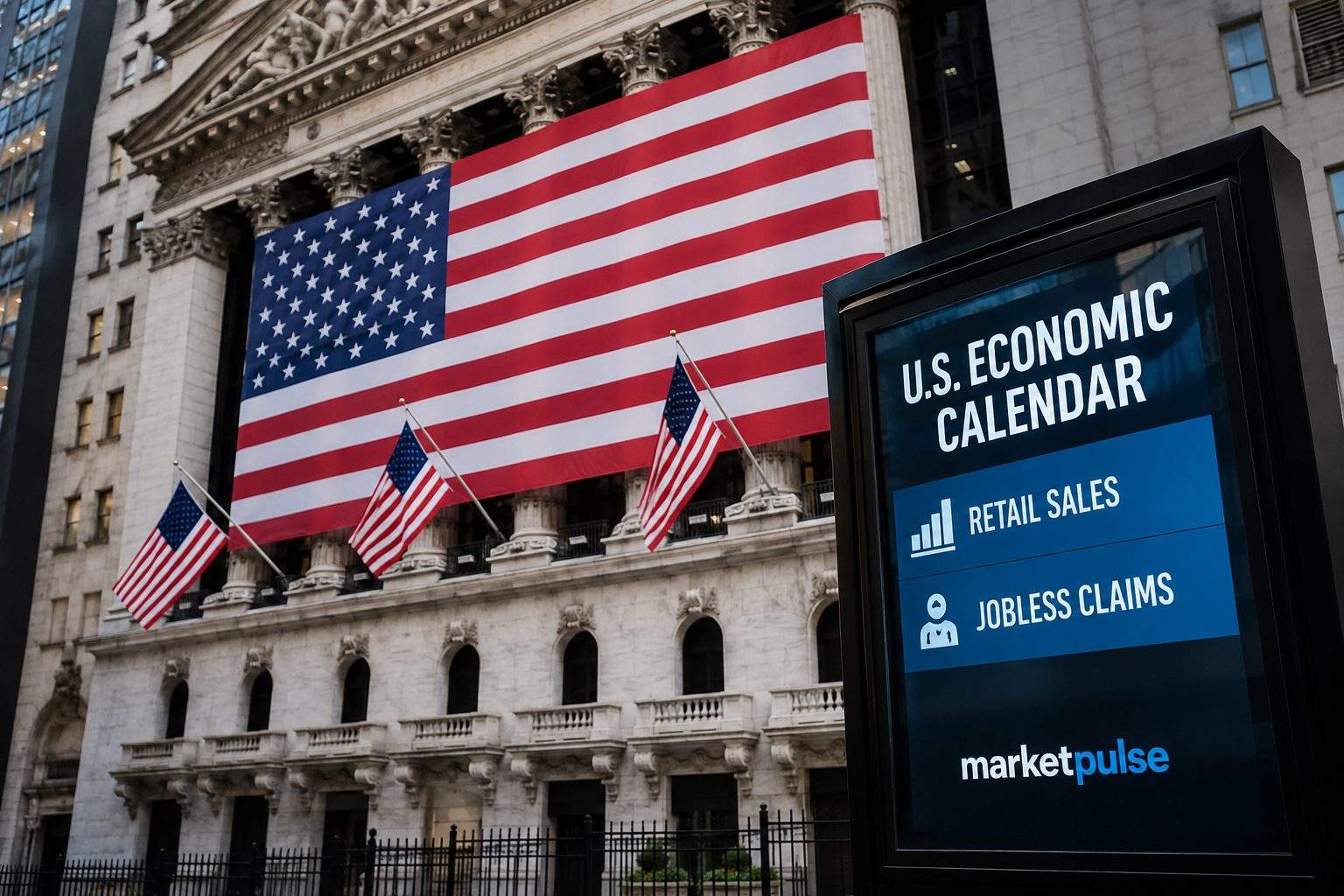
- At 8:30 a.m. EDT, watch for April retail sales, weekly jobless claims, and import-export prices. Business inventories will be out later, at 10 a.m.
- Retail sales are expected to climb just 0.5%, cooling after March’s sharp 1.7% increase. Initial jobless claims? Forecasts put them at 205,000.
- Traders on Kalshi and Polymarket have odds of a Fed pause in June sitting north of 96%, so rate markets still aren’t betting on any imminent shift.
Investors are set to parse fresh data on April retail sales and weekly jobless claims before the opening bell, as the U.S. economic calendar shifts focus back to the consumer and labor market. This comes just a day after wholesale inflation posted a sharp rise, fueling skepticism over potential Federal Reserve rate cuts.
This morning’s focus lands squarely on retail sales — a check on whether consumers kept opening their wallets despite higher energy bills. Jobless claims land right behind, giving a look at whether bosses are still hanging onto staff. The Labor Department notes that initial claims count new filings for unemployment aid; analysts still use that as a first signal of layoffs.
Data starts rolling in at 8:30 a.m. EDT. Markets get Census retail sales, jobless claims from the Labor Department, and import/export prices from the Bureau of Labor Statistics. Later, Census releases March business inventories at 10 a.m. EDT.
Projections from economists polled by Investing.com put April retail sales up 0.5%, easing back from March’s 1.7% jump. Core retail sales—excluding autos—are forecast to advance 0.7%, after climbing 1.9% previously. For the retail control group, which feeds directly into GDP calculations, a 0.4% increase is expected, a slowdown compared to the 0.7% gain last month.
The calendar is calling for 205,000 claims, slightly up from the previous week’s 200,000. Last week, continuing claims dropped to 1.766 million, marking the lowest level since January 2024, according to Reuters.
Import prices are drawing extra attention. The Bureau of Labor Statistics is due to release April’s import-export price indexes at 8:30 a.m. EDT, right as traders sift through producer price data for any hints that rising energy and shipping costs are making their way further along supply chains. Forecasts from Investing.com put import prices up 1.0% on the month, with export prices seen rising 1.1%.
Things aren’t getting much easier out there. According to the BLS on Wednesday, the Producer Price Index climbed 1.4% in April, bringing the year-over-year increase to 6.0%. Services rose 1.2%, goods moved up 2.0%, and gasoline prices shot higher—up 15.6%.
Consumer prices climbed 0.6% in April, and they’re up 3.8% over the last year, according to the BLS earlier this week. CPI tracks what shoppers pay, while PPI captures prices earlier in the pipeline. Fed officials get a sense of how widespread the inflation shock is by looking at those numbers alongside import prices.
Fresh inflation numbers have tempered bets on a Fed rate cut. According to DeFi Rate’s composite tracker, which pulls from Kalshi, Polymarket, and Gemini, there’s now a 97.5% chance the central bank stands pat at the June 16-17 meeting. Kalshi odds sit at 96.5%, Polymarket clocks in at 97.6% for no move.
Polymarket figures had traders putting the odds of no Fed rate cuts at 71% for 2026, while the chance of a rate hike this year was set at 30%. Market talk typically frames cuts or hikes in basis points—25 basis points making up a quarter percentage point.
Fed officials aren’t taking a breather. Minneapolis Fed President Neel Kashkari told Reuters the central bank is “dead serious” about tackling inflation. Over in Boston, President Susan Collins remarked she’s not expecting policy to get tighter, but didn’t rule it out—she noted a scenario where additional tightening might be necessary. Reuters
Morning numbers could go either direction. Strong retail sales paired with hot import prices would only feed the higher-for-longer narrative, particularly after that PPI surprise. On the flip side, if the control group disappoints or claims spike, it’s another signal inflation might be stalling demand and hiring.
The calendar isn’t lining up in the Fed’s favor right now. UBS, with Andrew Dubinsky at the helm, has delayed its expectations for rate cuts, saying a September reduction still looks unlikely, Reuters noted. Whether today’s data shifts that outlook—making the case clearer or even tougher—remains to be seen.
Related articles: Inflation