Helsinki, May 15, 2026, 17:06 EEST
- Nokia’s U.S.-listed shares dropped roughly 5% on Friday, paring some of their recent AI-fueled gains.
- Strong AI-infrastructure orders at Cisco have put a bid under networking stocks — Nokia among them.
- Nokia is making a bigger bet on AI networks, optical equipment, and 5G/6G infrastructure, even as carrier spending stays unpredictable.
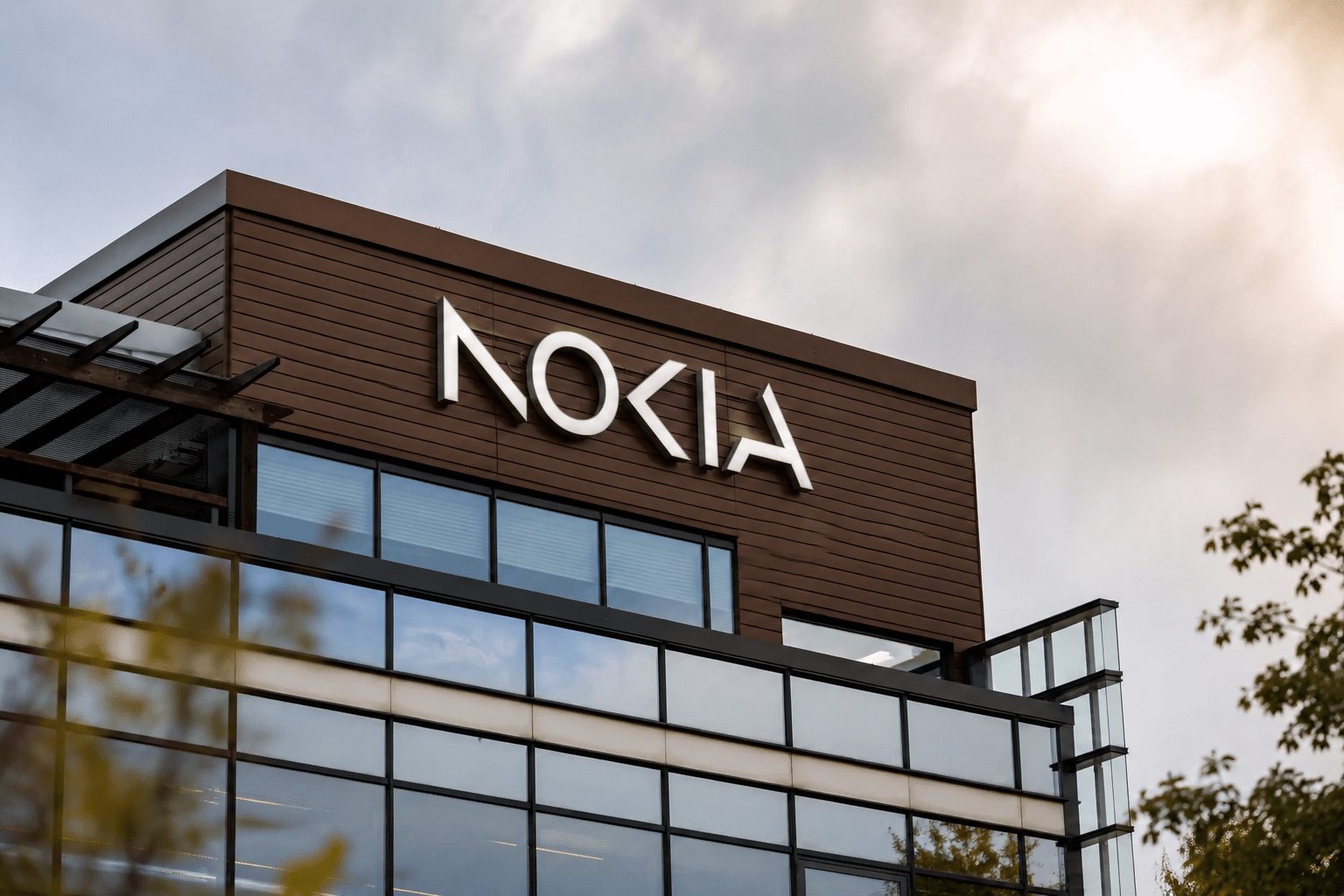
Nokia Oyj’s U.S. shares slipped Friday, giving back some ground after a run-up fueled by Cisco’s gains. The move had put the Finnish network-equipment firm within sight of its recent peak and brought more attention to its AI data center business. By 13:51 UTC, Nokia’s ADR had dropped to $13.74, compared to the previous close at $14.46, according to market data.
This pullback is important—not just because of telecom equipment. With Nokia, the focus now is on whether AI data center investments will continue to drive demand for the pipes, switches, and optical systems that link servers and cloud sites. Investors are watching to see if that spending still carries through.
This week, Cisco gave the market a nudge. The U.S. networking giant reported that AI infrastructure orders from hyperscalers — those massive cloud players — have totaled $5.3 billion so far in the fiscal year. It also bumped up its full-year order forecast, now expecting $9 billion, up from the previous $5 billion.
Nokia shares surged over 7% on Thursday, according to Investing.com, after Cisco posted results and guidance that topped Wall Street forecasts. Investors rotated into broader networking names, picking up Nokia on the back of Cisco’s beat.
Ryan Lee, senior vice president of product and strategy at Direxion, put it this way to Reuters: Cisco’s shift signals “hyperscaler capex spilling downstream” and proves that money pouring into AI is “more than just chips.” That’s exactly what’s propping up the bullish view on Nokia—AI’s appetite stretches beyond GPUs, demanding fibre, routing, and optical transport hardware. Reuters
Nokia pointed to its own results last month—a 54% jump in first-quarter comparable operating profit, reaching 281 million euros. That beat the 250 million euros analysts were looking for, according to Infront. Net sales tied to AI and cloud customers climbed 49%.
The company bumped up its forecast for annual AI and cloud addressable-market growth to 27% for 2025–2028, a jump from its earlier 16% projection. Chief Executive Justin Hotard noted Nokia was pacing “somewhat above” the midpoint of its full-year comparable operating profit guidance, which sits between 2.0 billion and 2.5 billion euros. Reuters
Nokia’s management shakeup lines up with its ongoing transformation. The company tapped Siemens executive Emma Falck for president of Mobile Infrastructure and added her to its group leadership team, starting Sept. 1. She’ll work out of Espoo and report directly to Hotard.
Hotard argued networks must shift to being “AI-native by design” as the industry heads into 5G Advanced and 6G. Falck pointed to customer needs for partners who offer “speed and predictability” while networks adjust to more AI-driven traffic. Nokia Corporation | Nokia
Nokia is bringing AI to fixed broadband, too. The company this week rolled out what it calls agentic AI for home and broadband networks—software agents designed to tackle network issues and handle tasks that typically require more manual oversight. Nokia says these new tools leverage insights gained from managing over 600 million broadband lines deployed so far.
Nokia’s fixed networks president Sandy Motley said the system hands “600+ million lines worth of broadband experience” directly to technicians, help-desk teams, and network engineers. Appledore Research partner Grant Lenahan argued that vendors with domain knowledge and large-scale, real-world deployments were in the strongest position to bring dependable AI automation. Nokia Corporation | Nokia
Competition keeps heating up. Cisco’s numbers back up the idea that AI budgets are shifting toward networking gear; Ciena stays in the mix when it comes to optical equipment; and Ericsson continues to chase Nokia on the mobile infrastructure side. Nokia’s buyout of U.S.-based Infinera has vaulted it among the world’s leading producers of optical transport systems—the hardware moving huge amounts of data across fiber.
That said, the trade comes with risks. Cisco’s slashing almost 4,000 jobs, redirecting funds into AI—a move that highlights pockets of strong demand but not enough to ease cost concerns across the board.
For Nokia, the risk is clear enough: if orders from hyperscalers can’t make up for slowing demand from telecom carriers, and the mobile infrastructure leadership shuffle fails to address execution issues, the downside opens up. Should AI data-center budgets cool off or drift to competing vendors, defending the stock’s recent gains could get tricky.