Singapore, May 17, 2026, 21:01 (SGT)
- Singapore Airlines said annual profit dropped 57.4%, even as revenue hit a record. Air India losses and the absence of a one-time gain hurt the bottom line.
- Fuel is the next pressure point. The airline said higher jet fuel prices showed up only partly in March and will impact FY2026/27.
- Management is putting more capacity on certain routes, backed by a solid balance sheet, even as some competitors cut service.
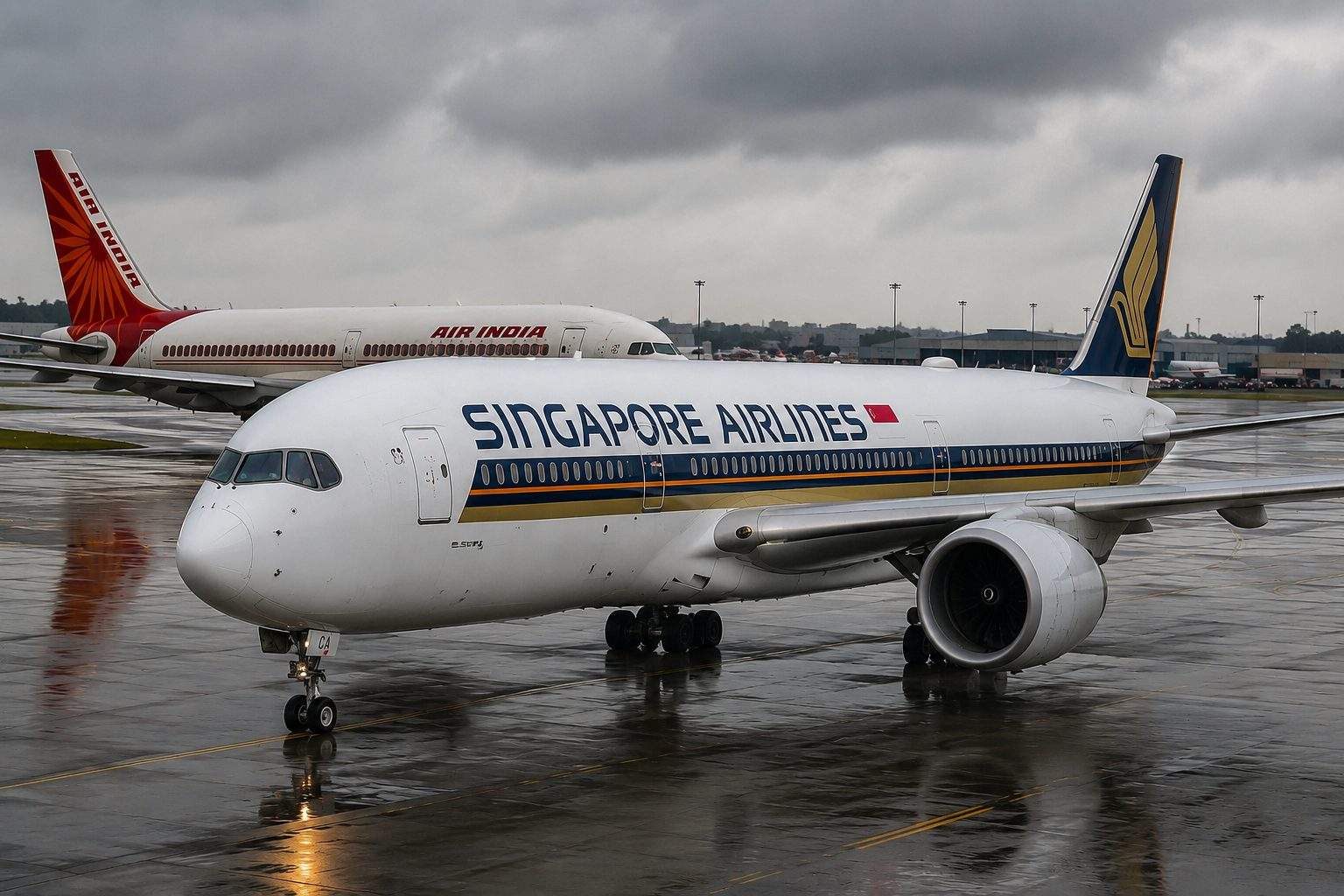
Singapore Airlines is looking at tighter margins from fuel costs this year after reporting annual profit that dropped by over half. Losses from Air India are weighing more on its India strategy, while the main airline operation stayed steady.
Pressure from the Middle East conflict is just starting to show up in the numbers, and timing is key here. Jet fuel, which aircraft run on, gets priced into the group’s costs with a delay. SIA said it expects to see the full hit from higher jet fuel prices in FY2026/27, while fare hikes at Singapore Airlines and Scoot haven’t matched the rise in costs.
Singapore Airlines said net profit dropped to S$1.18 billion for the year that ended March 31, down from S$2.78 billion last year. Revenue was up 5% to an all-time high of S$20.52 billion. Operating profit increased 39% to S$2.38 billion. The airline and its Scoot brand flew a record 42.4 million passengers.
SIA’s profit dropped, mostly because it didn’t repeat last year’s S$1.10 billion non-cash gain tied to the Air India-Vistara merger. The airline also reported a move to losses from associated companies, taking a full year of Air India losses into its results. SIA said associated company losses worsened by S$846 million from a year ago.
Air India reported a big loss, with SIA’s annual report listing a total comprehensive loss of S$3.56 billion for FY2025/26 at the Indian carrier. SIA took a S$945.2 million share of Air India’s losses. KPMG flagged “indicators of impairment” on the investment, which meant auditors saw a possible risk to the carrying value, but said no write-down was made.
CEO Goh Choon Phong stood by the investment, telling a May 15 briefing, “We know the market and how difficult it feels,” according to Fortune. He also called India a market with “tremendous potential.” Fortune
Goh told CNA that Air India’s turnaround will take time, calling it a “long game” and saying there’s “no shortcut”. He pointed to supply chain delays, the Middle East crisis, Pakistan’s airspace shutdown for Indian airlines, the AI171 crash and the weaker rupee as challenges. CNA
Competition is uneven right now. SIA cut or pushed back some Middle East routes, but it’s set to add more flights to London Gatwick, Manchester, Milan and Munich. Madrid via Barcelona is coming in October. According to Reuters, Cathay Pacific and Qantas have also trimmed capacity due to fuel costs. SIA executives are eyeing demand for routes that steer clear of Gulf hubs.
Singapore Airlines is boosting capacity, not cutting, Chief Commercial Officer Lee Lik Hsin told Reuters. Lee pointed to the carrier’s financial flexibility. At the end of March, the group held S$7.9 billion in cash and bank balances, S$1.7 billion in longer-term fixed deposits, and access to S$3.3 billion in undrawn committed lines.
But the fuel costs are still tough. S&P Global said Platts put FOB Singapore jet fuel/kerosene at $151.92 a barrel on May 14. April’s average was $200.42 a barrel, which is over twice the February average of $89.03.
DBS analyst Tabitha Foo sees passenger yields holding up, according to Reuters, but said the strength won’t fully make up for fuel costs and warned SIA could see “meaningful margin compression ahead.” Reuters
Two risks could hit at once: fuel prices stay high, and Air India takes longer or needs more money before it helps SIA’s results. Goh told Reuters that any fresh capital for Air India would need talks with the other shareholders. DBS analyst Jason Sum thinks Air India could still drag on SIA’s earnings for two or three years.
Singapore Airlines closed at S$6.42 on Friday, rising 2.39%, LSEG figures on Reuters showed. The stock is now shut for the weekend, with the Singapore Exchange running its standard weekday hours from 9 a.m. to noon and again 1 p.m. to 5 p.m. Investors will next be able to react to fuel and Air India risks on Monday.